Institute of Medicinal Biotechnology, Chinese Academy of Medical Sciences and Peking Union Medical College, Beijing 100050, China.
Key Laboratory of Uighur Medicine of Xinjiang Uygur Autonomous Region, Xinjiang Institute of Materia Medica, Urumqi 830004, China.
Biomed Res Int. 2021 Jan 28;2021:6613527. doi: 10.1155/2021/6613527. eCollection 2021.
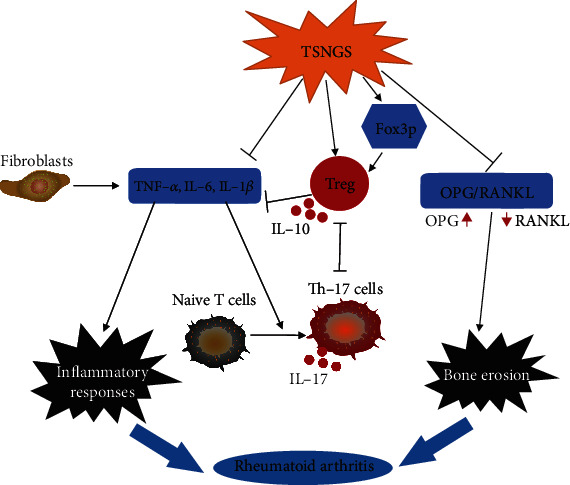
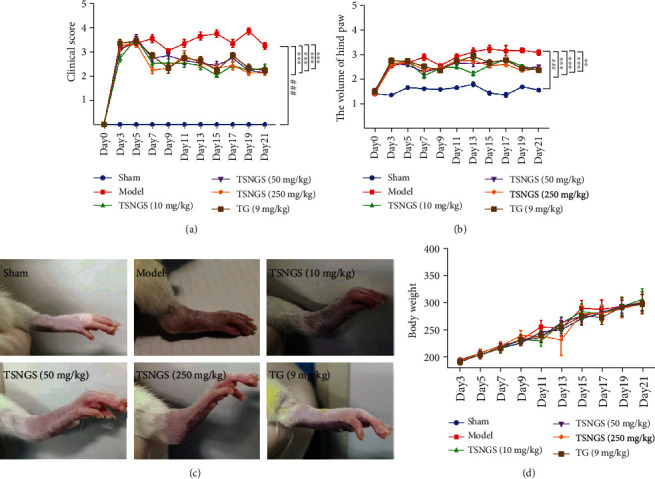
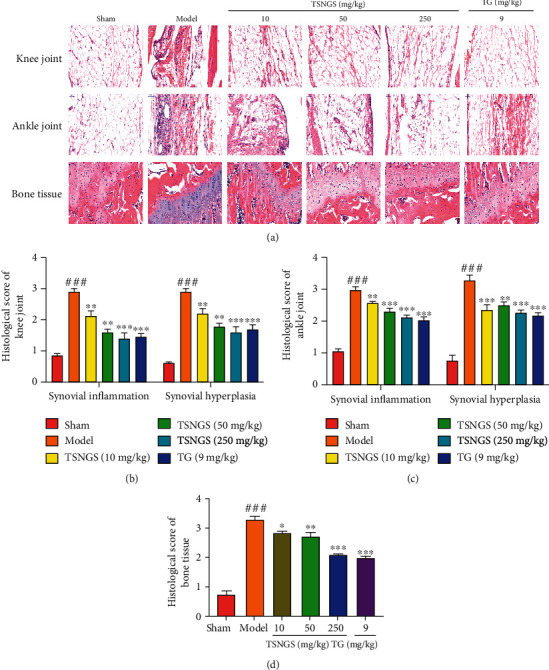
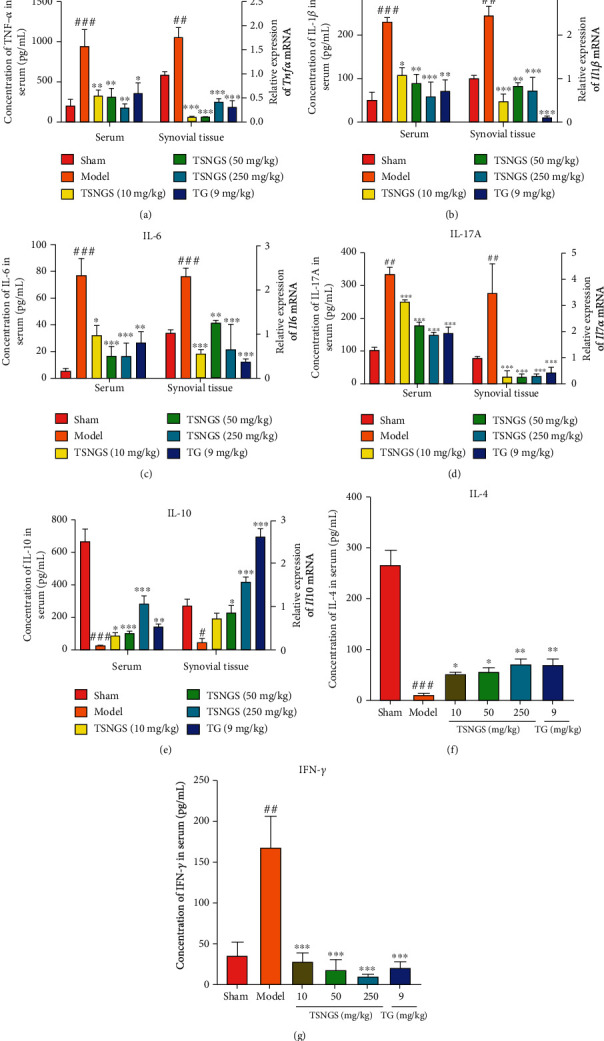
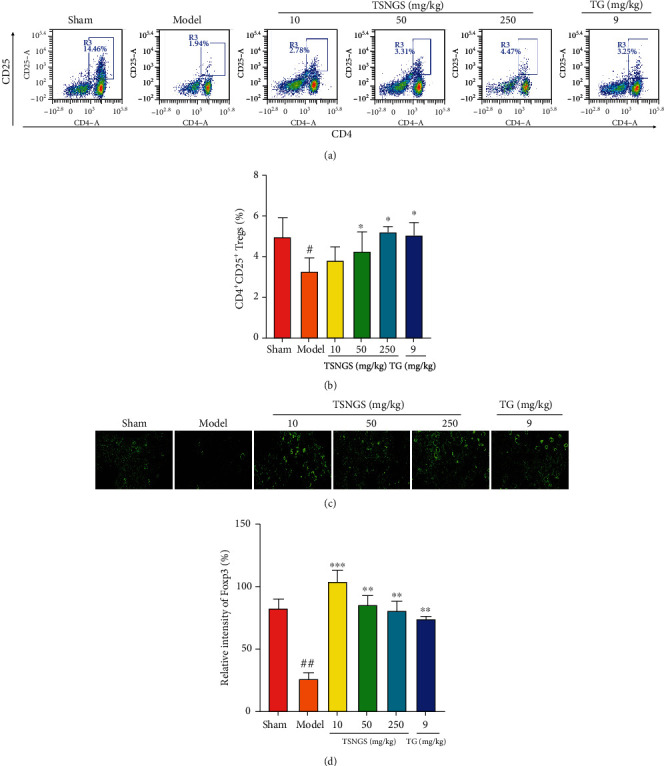
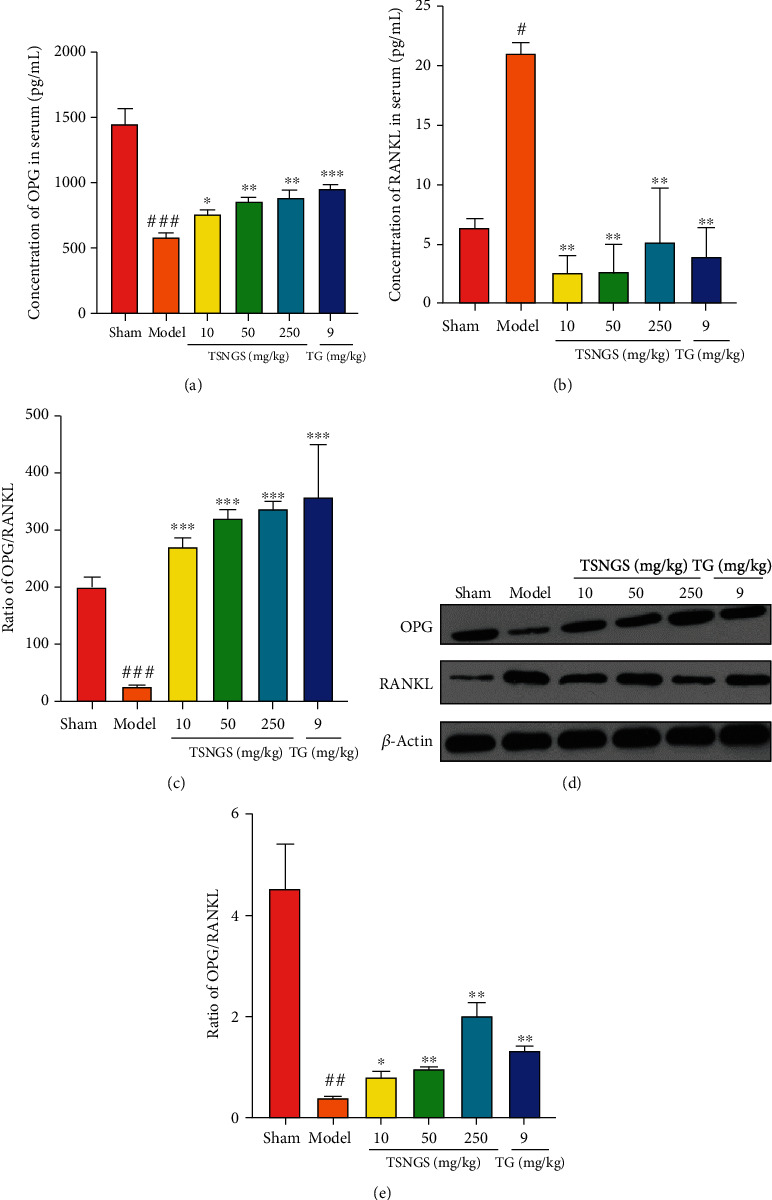
Rheumatoid arthritis (RA) is a widespread inflammatory disease whose clinical manifestations are joint swelling, pain, and disability, affecting approximately 1% of individuals worldwide. Conventional anti-RA drugs currently used in clinic have severe side effects. The present study is aimed at investigating the antiarthritic effects of total saponins from seeds (TSNGS) in rats with adjuvant-induced rheumatoid arthritis (AIA). Arthritis score, paw swelling, and body weight were monitored throughout the period of TSNGS treatment. The histopathological features and levels of cytokines, including IFN-, TNF-, IL-1, IL-4, IL-6, IL-10, and IL-17A, and OPG/RANKL signaling, were measured to determine the amelioration by TSNGS and its potential mechanisms on the inflammatory response and bone erosion. The differentiation of regulatory T cells (Tregs) in serum was assessed by flow cytometry. The results demonstrate that TSNGS at 10 mg/kg, 50 mg/kg, and 250 mg/kg inhibited AIA-induced clinical score, paw swelling, and histological changes. TSNGS reduced the immune-inflammatory reaction by restoring the secretion and expression of inflammatory cytokines and elevating the proportion of CD4 CD25 Tregs, accompanied by an increase in transcription factor Foxp3 levels. TSNGS also displayed bone protection by upregulation of the OPG/RANKL pathway. Collectively, TSNGS inhibited arthritis in AIA rats and so represents a potential novel treatment for RA.
类风湿关节炎(RA)是一种广泛存在的炎症性疾病,其临床表现为关节肿胀、疼痛和功能障碍,全球约有 1%的人受到影响。目前临床上使用的常规抗 RA 药物有严重的副作用。本研究旨在探讨种子总皂苷(TSNGS)对佐剂诱导的类风湿关节炎(AIA)大鼠的抗关节炎作用。在 TSNGS 治疗期间,监测关节炎评分、爪肿胀和体重。测量细胞因子(IFN-、TNF-、IL-1、IL-4、IL-6、IL-10 和 IL-17A)的水平和 OPG/RANKL 信号通路,以确定 TSNGS 的改善作用及其对炎症反应和骨侵蚀的潜在机制。通过流式细胞术评估血清中调节性 T 细胞(Tregs)的分化。结果表明,TSNGS 以 10mg/kg、50mg/kg 和 250mg/kg 剂量抑制 AIA 诱导的临床评分、爪肿胀和组织学变化。TSNGS 通过恢复炎症细胞因子的分泌和表达以及增加 CD4 CD25 Tregs 的比例来减轻免疫炎症反应,同时转录因子 Foxp3 水平升高。TSNGS 还通过上调 OPG/RANKL 通路显示出对骨骼的保护作用。综上所述,TSNGS 抑制了 AIA 大鼠的关节炎,因此可能成为治疗 RA 的一种新方法。