van Rossum Mathilde, Leenen Jobbe, Kingma Feike, Breteler Martine, van Hillegersberg Richard, Ruurda Jelle, Kouwenhoven Ewout, van Det Marc, Luyer Misha, Nieuwenhuijzen Grard, Kalkman Cor, Hermens Hermie
Department of Cardiovascular and Respiratory Physiology, University of Twente, Enschede, Netherlands.
Department of Biomedical Signals and Systems, University of Twente, Enschede, Netherlands.
JMIR Perioper Med. 2021 Feb 12;4(1):e22387. doi: 10.2196/22387.
Patients undergoing esophagectomy are at serious risk of developing postoperative complications. To support early recognition of clinical deterioration, wireless sensor technologies that enable continuous vital signs monitoring in a ward setting are emerging.
This study explored nurses' and surgeons' expectations of the potential effectiveness and impact of continuous wireless vital signs monitoring in patients admitted to the ward after esophagectomy.
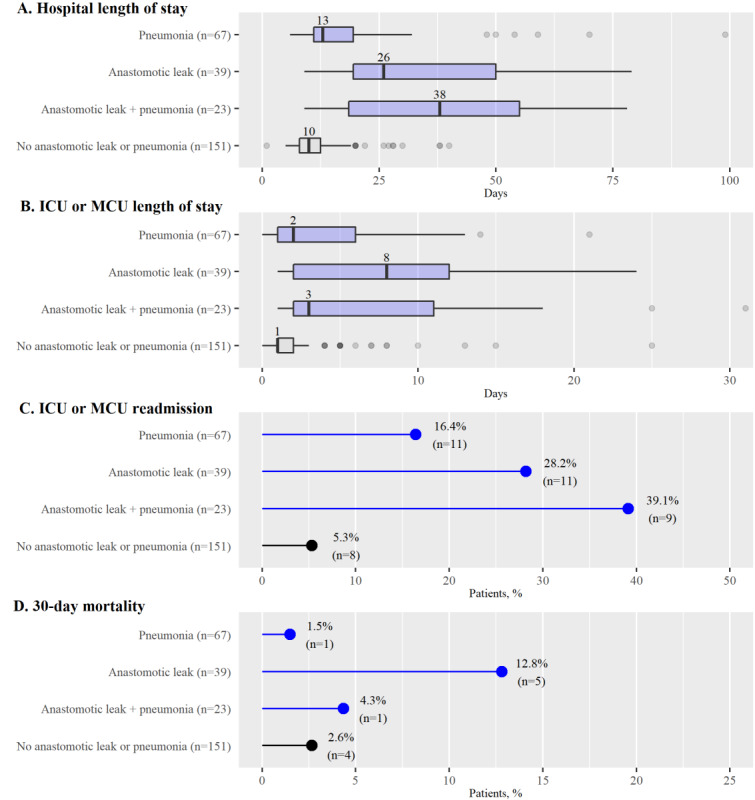
Semistructured interviews were conducted at 3 esophageal cancer centers in the Netherlands. In each center, 2 nurses and 2 surgeons were interviewed regarding their expectations of continuous vital signs monitoring for early recognition of complications after esophagectomy. Historical data of patient characteristics and clinical outcomes were collected in each center and presented to the local participants to support estimations on clinical outcome.
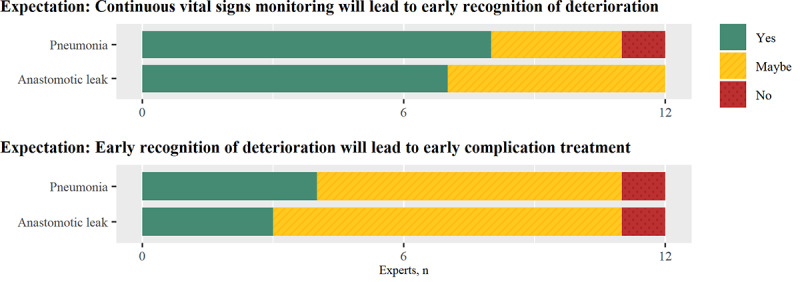
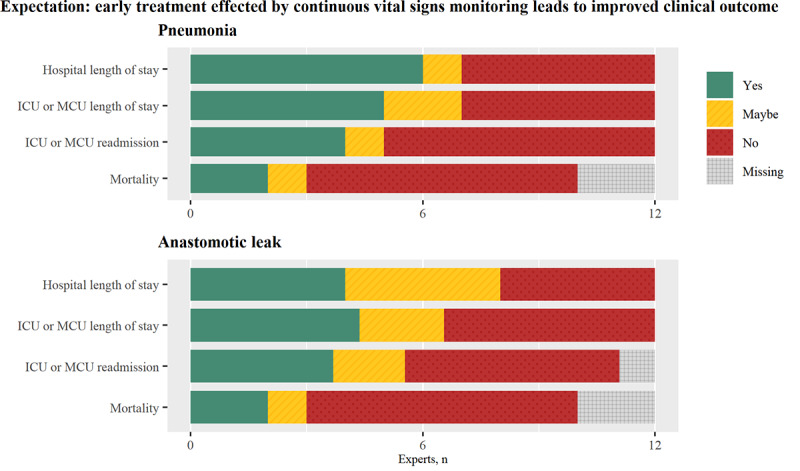
The majority of nurses and surgeons expected that continuous vital signs monitoring could contribute to the earlier recognition of deterioration and result in earlier treatment for postoperative complications, although the effective time gain would depend on patient and situational factors. Their expectations regarding the impact of potential earlier diagnosis on clinical outcomes varied. Nevertheless, most caregivers would consider implementing continuous monitoring in the surgical ward to support patient monitoring after esophagectomy.
Caregivers expected that wireless vital signs monitoring would provide opportunities for early detection of postoperative complications in patients undergoing esophagectomy admitted to the ward and prevent sequelae under certain circumstances. As the technology matures, clinical outcome studies will be necessary to objectify these expectations and further investigate overall effects on patient outcome.
接受食管切除术的患者术后发生并发症的风险很高。为了支持对临床病情恶化的早期识别,能够在病房环境中持续监测生命体征的无线传感器技术正在兴起。
本研究探讨了护士和外科医生对食管切除术后入住病房的患者进行持续无线生命体征监测的潜在有效性和影响的期望。
在荷兰的3个食管癌中心进行了半结构化访谈。在每个中心,就他们对食管切除术后持续生命体征监测以早期识别并发症的期望,对2名护士和2名外科医生进行了访谈。在每个中心收集患者特征和临床结果的历史数据,并将其提供给当地参与者,以支持对临床结果的评估。
大多数护士和外科医生预计,持续生命体征监测有助于更早地识别病情恶化,并能更早地治疗术后并发症,尽管实际获得的有效时间将取决于患者和具体情况。他们对潜在的早期诊断对临床结果的影响的期望各不相同。然而,大多数护理人员会考虑在外科病房实施持续监测,以支持食管切除术后的患者监测。
护理人员预计,无线生命体征监测将为早期发现入住病房的食管切除术后患者的术后并发症提供机会,并在某些情况下预防后遗症。随着技术的成熟,有必要进行临床结果研究,以使这些期望客观化,并进一步研究对患者结果的总体影响。