The Sports Medicine of The First Hospital of Kunming, Kunming, 650000, Yunnan, China.
The Orthopedics Department of Kunming Municipal Hospital of Traditional Chinese Medicine, Kunming, 650000, Yunnan, China.
J Orthop Surg Res. 2021 Feb 12;16(1):132. doi: 10.1186/s13018-021-02262-3.
Osteoarthritis (OA) is a kind of systemic musculoskeletal disorder and a most important factor for causing disability and physical painfulness. Nevertheless, due to the fact that OA can be triggered by multiple etiological factors, this disease is hard to be cured. Therefore, it is of great necessity for us to find novel targets or drugs for OA treatment.
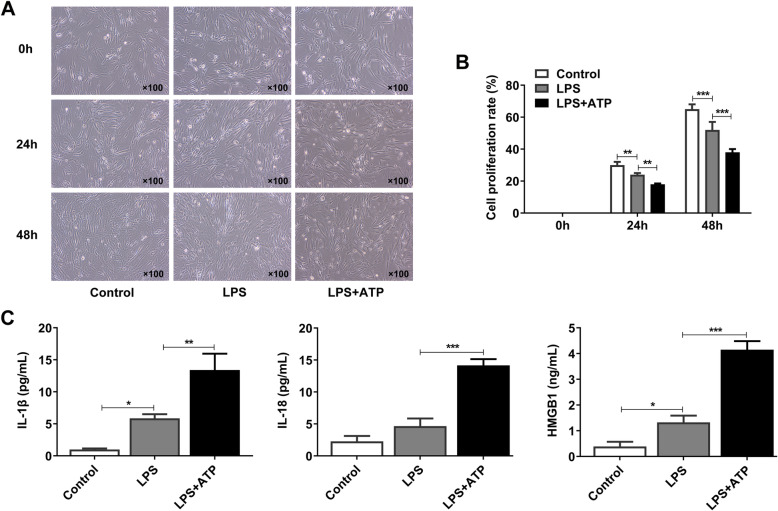
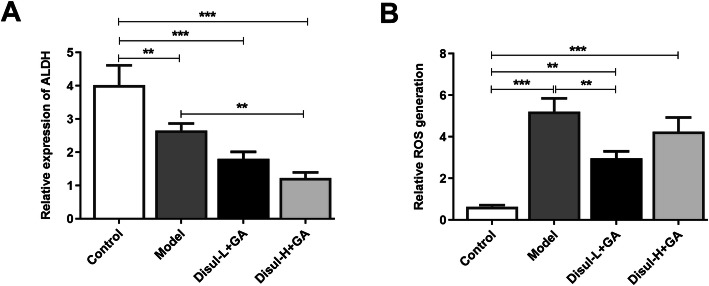
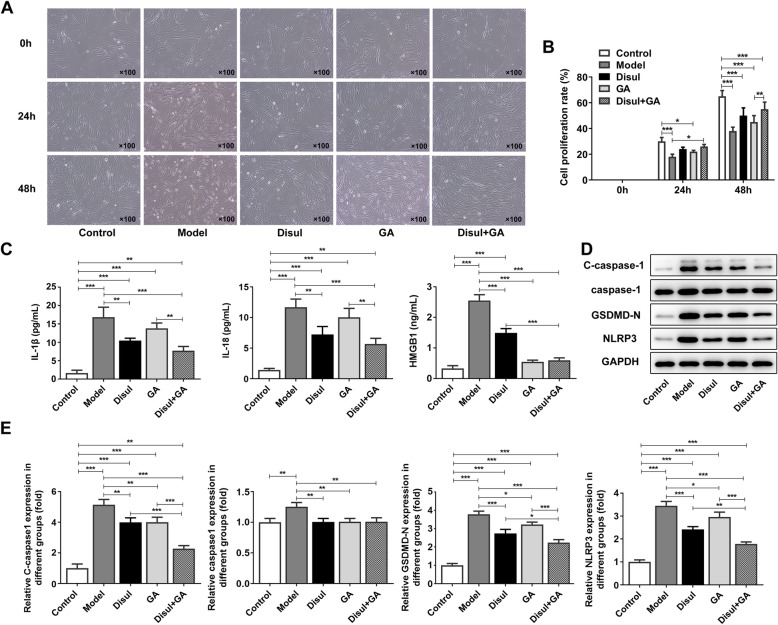
The chondrocytes were treated with lipopolysaccharide (LPS) and adenosine triphosphate (ATP) to induce pyroptosis in OA. The cell proliferation was detected by Cell Counting Kit-8 assay (CCK-8 assay). Enzyme-linked immunosorbent assay (ELISA) was used for the detection of pyroptosis-related inflammatory factors. Then, the antagonists for gasdermin D (GSDMD) (disulfiram) and high mobility group box 1 (HMGB1) (glycyrrhizic acid) were used to treat the cell model to observe the effects of disulfiram and glycyrrhizic acid on the proliferation of chondrocytes in OA. The protein levels of pyroptosis-related inflammatory factors were measured by western blot, and the levels of aldehyde dehydrogenase (ALDH) and reactive oxygen species (ROS) were measured by corresponding commercial kits.
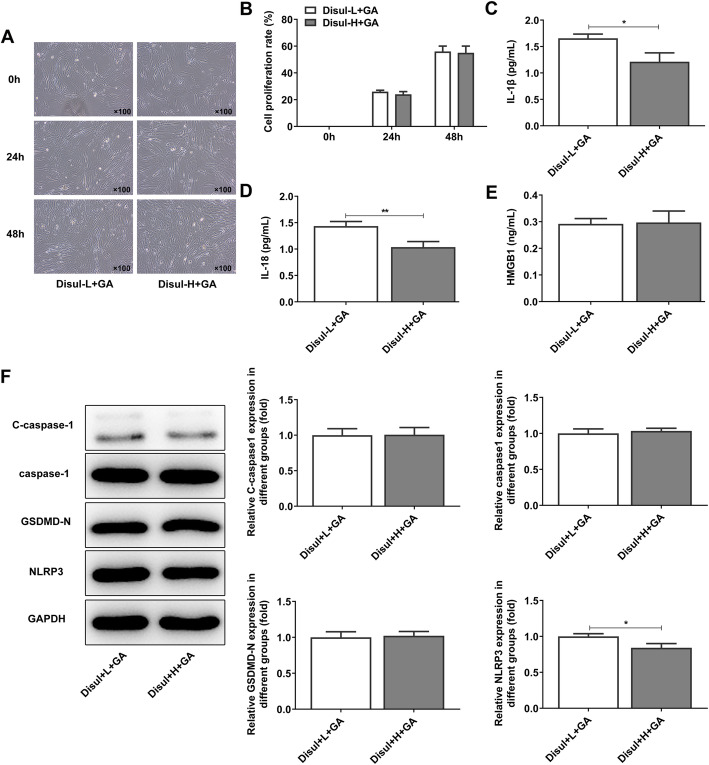
After chondrocytes were induced by LPS and ATP, the cell proliferation was decreased and the expressions of pyroptosis-related inflammatory factors were increased. Disulfiram and glycyrrhizic acid treatment led to enhanced cell proliferation and increased expressions of pyroptosis-related inflammatory factors, while disulfiram showed better alleviative effects on the inflammation in chondrocytes in OA. However, co-treatment with disulfiram at a high concentration and glycyrrhizic acid did not result in higher proliferation of chondrocytes and alleviated inflammation, but led to oxidative stress.
In conclusion, co-treatment with disulfiram and glycyrrhizic acid at a standard concentration suppresses the inflammatory response of chondrocytes, which may provide guidance for the use of the drugs in the treatment of OA.
骨关节炎(OA)是一种全身性的肌肉骨骼疾病,也是导致残疾和身体疼痛的最重要因素。然而,由于 OA 可能由多种病因引起,这种疾病很难治愈。因此,我们有必要寻找治疗 OA 的新靶点或药物。
用脂多糖(LPS)和三磷酸腺苷(ATP)处理软骨细胞,诱导 OA 细胞发生细胞焦亡。用细胞计数试剂盒(CCK-8 法)检测细胞增殖。酶联免疫吸附试验(ELISA)检测细胞焦亡相关炎症因子。然后,用 GSDMD(二硫化物)和 HMGB1(甘草酸)拮抗剂处理细胞模型,观察二硫化物和甘草酸对 OA 软骨细胞增殖的影响。用 Western blot 检测细胞焦亡相关炎症因子的蛋白水平,用相应的商业试剂盒检测醛脱氢酶(ALDH)和活性氧(ROS)的水平。
用 LPS 和 ATP 诱导软骨细胞后,细胞增殖减少,细胞焦亡相关炎症因子的表达增加。二硫化物和甘草酸处理后,细胞增殖增强,细胞焦亡相关炎症因子的表达增加,而二硫化物对 OA 软骨细胞炎症的缓解作用更好。然而,高浓度二硫化物和甘草酸的联合处理并没有导致软骨细胞更高的增殖和炎症缓解,反而导致了氧化应激。
综上所述,标准浓度的二硫化物和甘草酸联合治疗抑制了软骨细胞的炎症反应,这可能为这些药物在 OA 治疗中的应用提供指导。