Kang Jun-Yun, Ha Heon-Young, Kim Sung-Dae, Park Jun Young, Jang Min-Ho, Lee Tae-Ho
Korea Institute of Materials Science, 797 Changwon-daero, Changwon, Gyeongnam, 51508, Republic of Korea.
Present Address: Hyundai Steel, 1480, Bukbusaneop-ro, Dangjin-Si, Chungnam, 31719, Republic of Korea.
Appl Microsc. 2019 Nov 14;49(1):13. doi: 10.1186/s42649-019-0014-4.
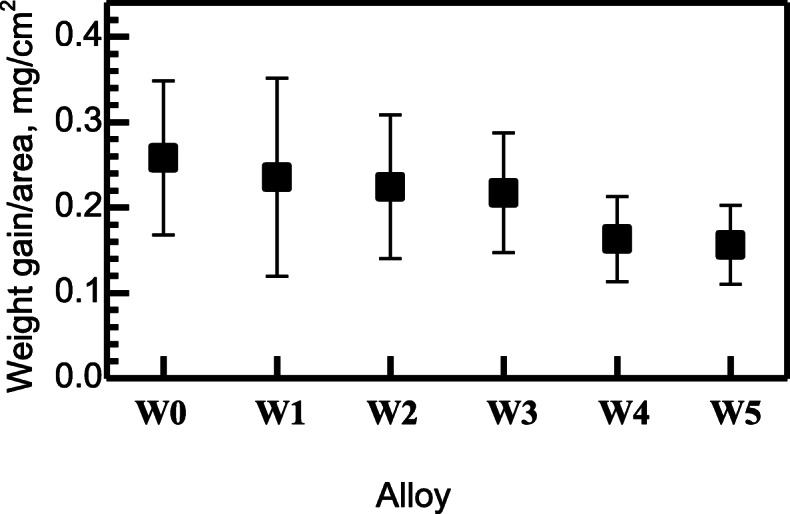
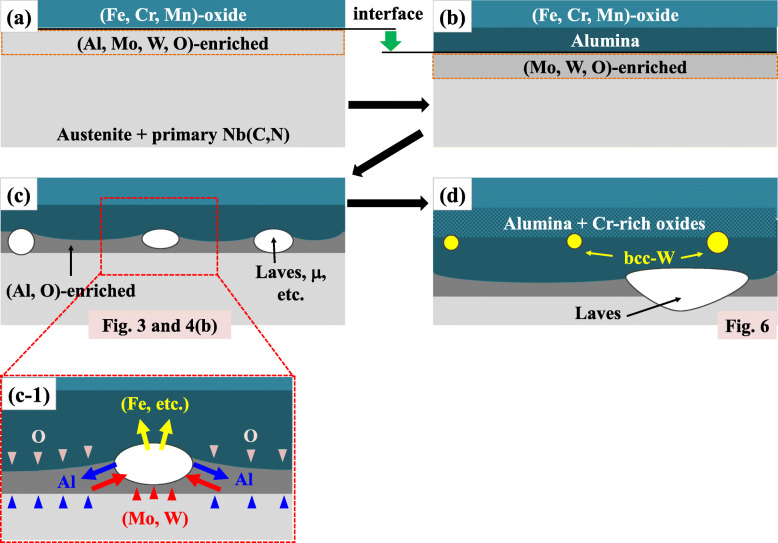
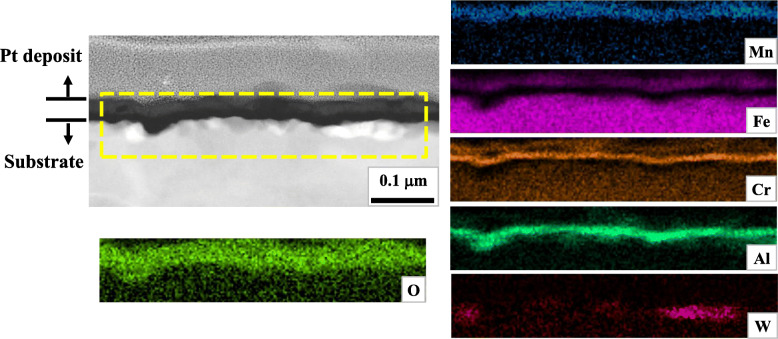
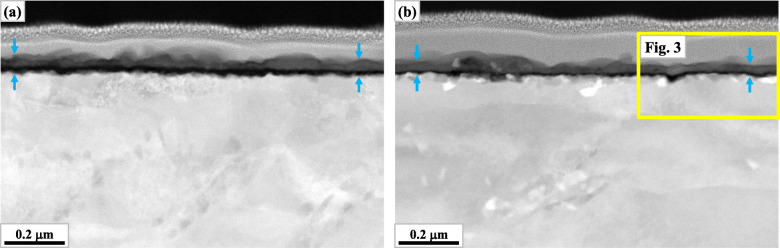
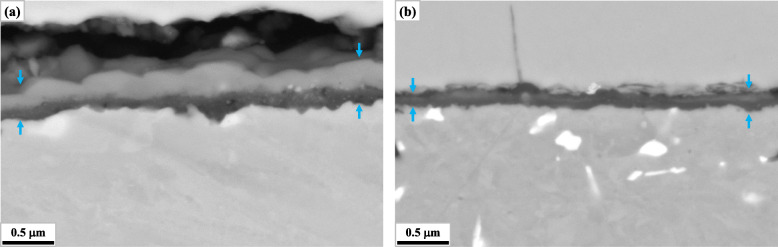
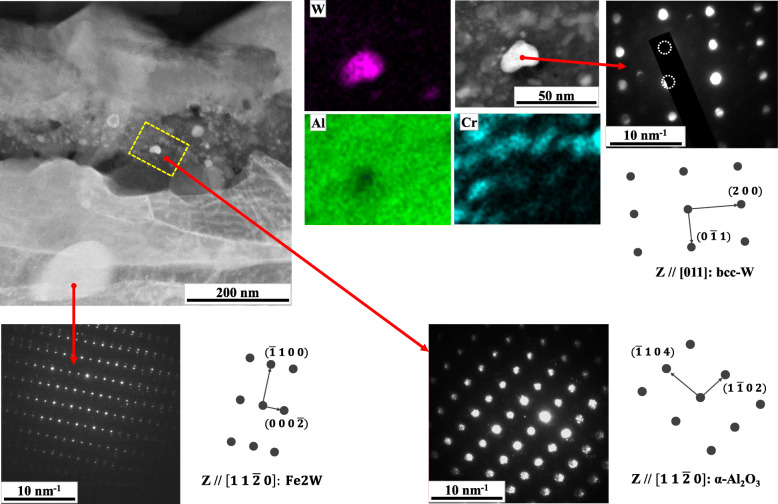
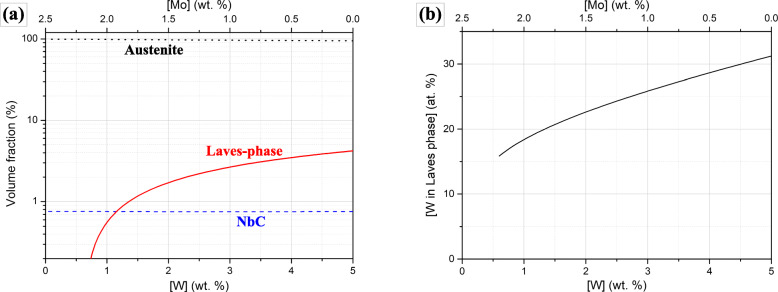
As more W replaced Mo in alumina-forming austenitic stainless steels, weight gain by oxidation decreased after 336 h at 1053 K. Electron microscopy revealed slower growth of scale in the presence of more numerous second phases by W addition. The retardation of oxidation was attributed to the necessary partitioning of W in front of the metal-oxide interface. The W-rich second phases interacted with growing oxides and finally transformed to fine particles of metallic W alloy within the scale.
在形成氧化铝的奥氏体不锈钢中,随着更多的钨取代钼,在1053K下336小时后氧化导致的重量增加减少。电子显微镜显示,通过添加钨,在存在更多第二相的情况下,氧化皮的生长速度较慢。氧化的延迟归因于钨在金属-氧化物界面之前的必要分配。富钨的第二相与生长的氧化物相互作用,最终在氧化皮内转变为金属钨合金的细颗粒。