Bhat Mamatha, Pasini Elisa, Pastrello Chiara, Rahmati Sara, Angeli Marc, Kotlyar Max, Ghanekar Anand, Jurisica Igor
Multi Organ transplant Program, University Health Network, Toronto M5G2N2, Canada.
Osteoarthritis Research Program, Division of Orthopedic Surgery, Schroeder Arthritis Institute, University Health NetworkandKrembil Research Institute, University Health Network, Toronto M5T 0S8, Canada.
World J Hepatol. 2021 Jan 27;13(1):94-108. doi: 10.4254/wjh.v13.i1.94.
The broader use of high-throughput technologies has led to improved molecular characterization of hepatocellular carcinoma (HCC).
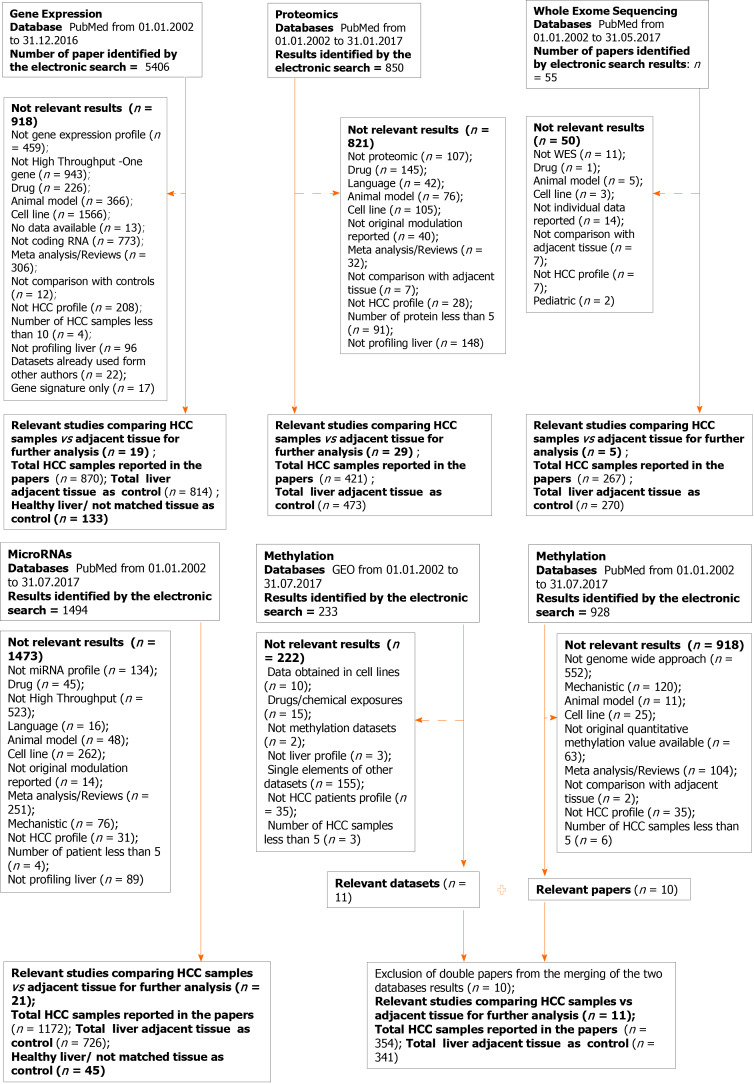
To comprehensively analyze and characterize all publicly available genomic, gene expression, methylation, miRNA and proteomic data in HCC, covering 85 studies and 3355 patient sample profiles, to identify the key dysregulated genes and pathways they affect.
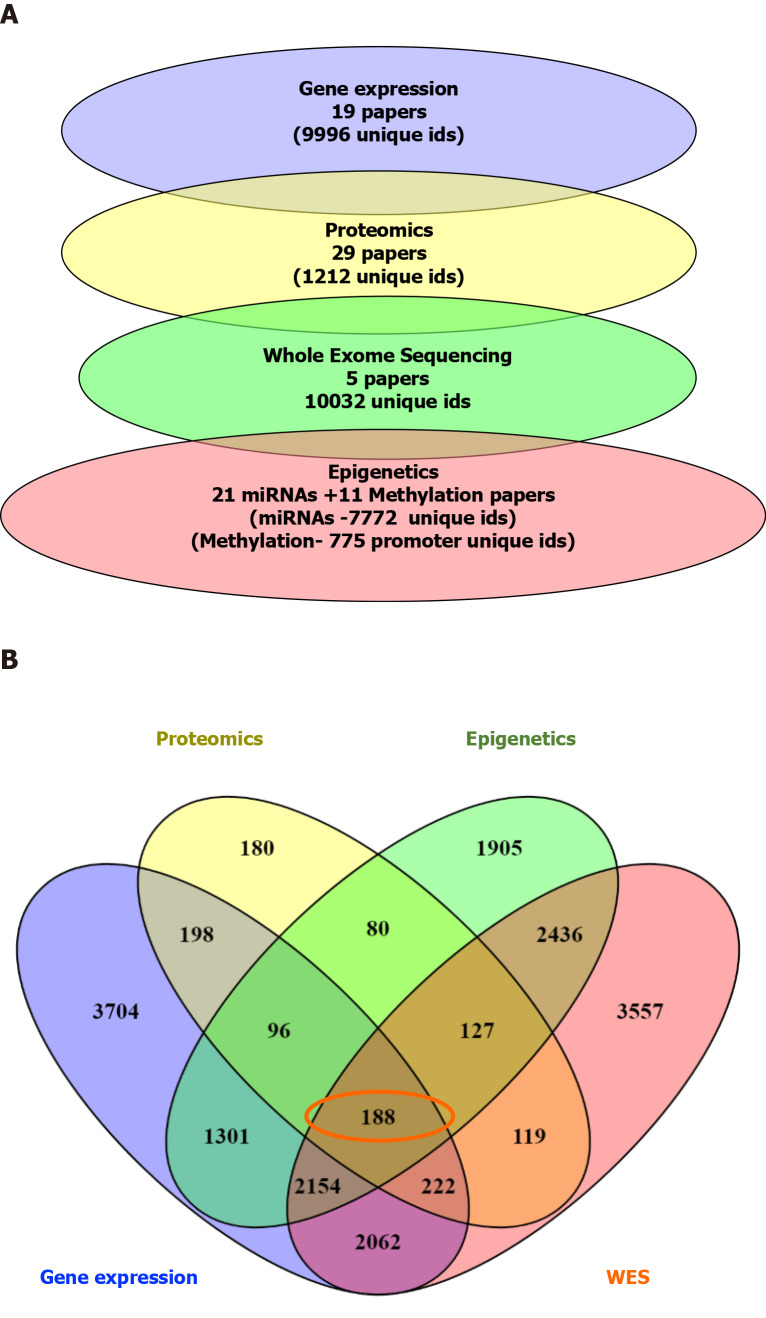
We collected and curated all well-annotated and publicly available high-throughput datasets from PubMed and Gene Expression Omnibus derived from human HCC tissue. Comprehensive pathway enrichment analysis was performed using pathDIP for each data type (genomic, gene expression, methylation, miRNA and proteomic), and the overlap of pathways was assessed to elucidate pathway dependencies in HCC.
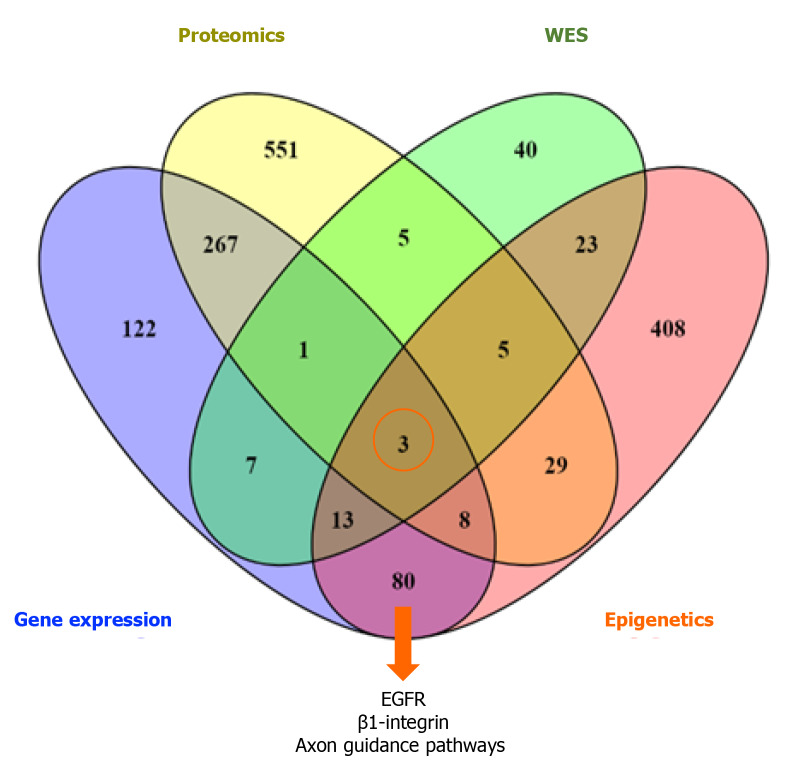
We identified a total of 8733 abstracts retrieved by the search on PubMed on HCC for the different layers of data on human HCC samples, published until December 2016. The common key dysregulated pathways in HCC tissue across different layers of data included epidermal growth factor (EGFR) and β1-integrin pathways. Genes along these pathways were significantly and consistently dysregulated across the different types of high-throughput data and had prognostic value with respect to overall survival. Using CTD database, estradiol would best modulate and revert these genes appropriately.
By analyzing and integrating all available high-throughput genomic, transcriptomic, miRNA, methylation and proteomic data from human HCC tissue, we identified EGFR, β1-integrin and axon guidance as pathway dependencies in HCC. These are master regulators of key pathways in HCC, such as the mTOR, Ras/Raf/MAPK and p53 pathways. The genes implicated in these pathways had prognostic value in HCC, with Netrin and Slit3 being novel proteins of prognostic importance to HCC. Based on this integrative analysis, EGFR, and β1-integrin are master regulators that could serve as potential therapeutic targets in HCC.
高通量技术的广泛应用使得肝细胞癌(HCC)的分子特征得到了更好的描述。
全面分析和描述肝细胞癌中所有公开可用的基因组、基因表达、甲基化、miRNA和蛋白质组数据,涵盖85项研究和3355例患者样本概况,以识别关键的失调基因及其影响的通路。
我们从PubMed和基因表达综合数据库中收集并整理了所有注释完善且公开可用的源自人类肝癌组织的高通量数据集。使用pathDIP对每种数据类型(基因组、基因表达、甲基化、miRNA和蛋白质组)进行全面的通路富集分析,并评估通路的重叠情况以阐明肝癌中的通路依赖性。
我们在PubMed上搜索到截至2016年12月发表的关于人类肝癌样本不同数据层的8733篇摘要。不同数据层的肝癌组织中常见的关键失调通路包括表皮生长因子(EGFR)和β1整合素通路。这些通路上的基因在不同类型的高通量数据中均有显著且一致的失调,并且对总生存期具有预后价值。使用CTD数据库,雌二醇最能适当地调节和逆转这些基因。
通过分析和整合来自人类肝癌组织的所有可用高通量基因组、转录组、miRNA、甲基化和蛋白质组数据,我们确定EGFR、β1整合素和轴突导向为肝癌中的通路依赖性。它们是肝癌关键通路(如mTOR、Ras/Raf/MAPK和p53通路)的主要调节因子。这些通路中的基因在肝癌中具有预后价值,Netrin和Slit3是对肝癌具有预后重要性的新蛋白质。基于这种综合分析,EGFR和β1整合素是主要调节因子,可作为肝癌潜在的治疗靶点。