
股骨头骨骺滑脱患者的全髋关节置换术:915例病例的系统分析
Total hip arthroplasty in patients with slipped capital femoral epiphysis: a systematic analysis of 915 cases.
作者信息
Kenanidis Eustathios, Kakoulidis Panagiotis, Panagiotidou Sousana, Leonidou Andreas, Lepetsos Panagiotis, Topalis Christos, Anagnostis Panagiotis, Potoupnis Michael, Tsiridis Eleftherios
机构信息
Academic Orthopedic Unit, Papageorgiou General Hospital, Aristotle University Medical School, Thessaloniki, Greece.
Center of Orthopedics and Regenerative Medicine (C.O.RE.) - Center of Interdisciplinary Research and Innovation (C.I.R.I.) - Aristotle University, Thessaloniki, Greece.
出版信息
Orthop Rev (Pavia). 2021 Jan 28;12(4):8549. doi: 10.4081/or.2020.8549. eCollection 2020 Dec 31.
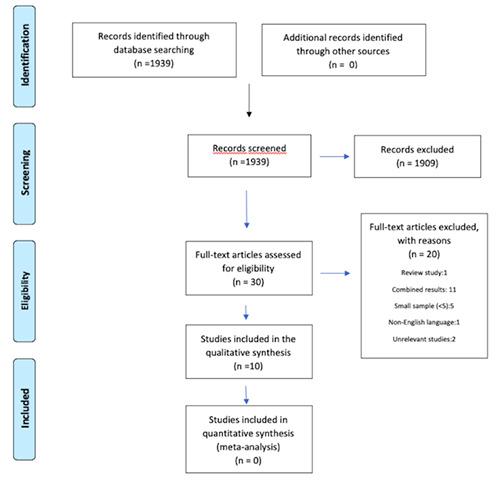
There is limited evidence on the outcomes of Total Hip Arthroplasty (THA) in Slipped Capital Femoral Epiphysis (SCFE) patients. This systematic review aims to evaluate the current literature in terms of survival rate, functional outcomes, complications and types of implants of THA in SCFE patients. Following the established methodology of PRISMA guidelines, PubMed, Cochrane library, ScienceDirect and Ovid MEDLINE were systematically searched from inception to September 2018. The search criteria used were: ("total hip arthroplasty'' OR ''total hip replacement'' OR "hip arthroplasty'' OR ''hip replacement'') AND (''slipped capital femoral epiphysis'' OR ''slipped upper femoral epiphysis'' OR ''femoral epiphysis''). Ten studies were finally included in the analysis and were qualitatively appraised using the Newcastle-Ottawa tool. Variables were reported differently between studies. The sample size varied from 12 to 374 THAs. A total of 877 patients undergone 915 THAs. The mean reported follow-up ranged from 4.4 to 15.2 years and the mean patients' age at the time of THA from 26 to 50 years. Four studies specified the type of implants used, with 62% being uncemented, 24% hybrid (uncemented cup/cemented stem) and 14% cemented. All but three studies reported the mean survival of implants that ranged from 64.9% to 94.8%. A limited number of complications were mentioned. There was a tendency for more favorable functional outcomes in modern studies. Modern THA-studies in SCFE patients showed improvement of survivorship, clinical outcomes and patient satisfaction. Future higher-quality studies are necessary to estimate long-term postoperative outcomes better.
关于股骨头骨骺滑脱(SCFE)患者全髋关节置换术(THA)的疗效,现有证据有限。本系统评价旨在评估目前有关SCFE患者THA的生存率、功能结局、并发症及植入物类型的文献。按照PRISMA指南既定方法,对PubMed、Cochrane图书馆、ScienceDirect和Ovid MEDLINE从创刊至2018年9月进行系统检索。使用的检索标准为:(“全髋关节置换术”或“全髋关节置换”或“髋关节置换术”或“髋关节置换”)且(“股骨头骨骺滑脱”或“股骨上端骨骺滑脱”或“股骨骨骺”)。最终纳入分析10项研究,并使用纽卡斯尔-渥太华工具进行定性评估。不同研究报告的变量有所不同。样本量从12例至374例THA不等。共有877例患者接受了915次THA。报告的平均随访时间为4.4至15.2年,THA时患者的平均年龄为26至50岁。4项研究明确了所用植入物的类型,其中62%为非骨水泥型,24%为混合型(非骨水泥杯/骨水泥柄),14%为骨水泥型。除3项研究外,所有研究均报告了植入物的平均生存率,范围为64.9%至94.8%。提及的并发症数量有限。现代研究中有功能结局更优的趋势。SCFE患者的现代THA研究显示生存率、临床结局及患者满意度有所改善。未来需要更高质量的研究以更好地评估术后长期结局。
 Zotero 插件