Pediatric Primary Care, National Pediatric Health Care System, Rome, Italy.
SICuPP (Società Italiana delle Cure Primarie Pediatriche), Milan, Italy.
Ital J Pediatr. 2021 Feb 15;47(1):34. doi: 10.1186/s13052-021-00988-8.
A national consensus document on inhaled corticosteroids (ICS) use in childhood, produced by the main Italian pediatric scientific societies, has been recently released. The aim of this study was to gather information on the current pediatricians' ICS prescription habits in Italy for the management of the most common pediatric respiratory diseases, namely allergic rhinitis (AR), asthma, preschool wheezing and laryngitis.
From the 1st October 2018 to the 31st January 2019 a link to an online questionnaire was sent monthly through a newsletter to the members of the Italian Society of Pediatrics. The questionnaire included 18 items on ICS use in the most common pediatric respiratory diseases. Data collection and reporting was based on STROBE Statement Checklist for cross-sectional studies.
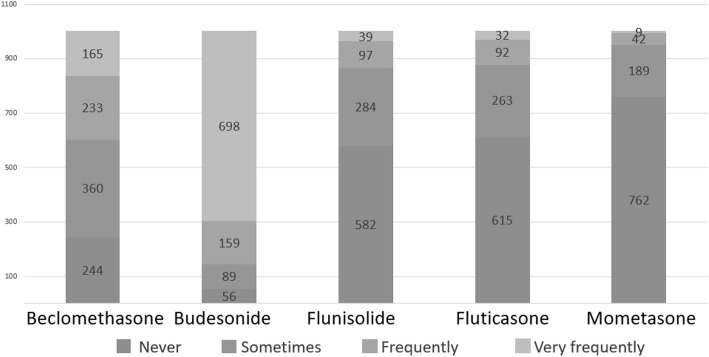
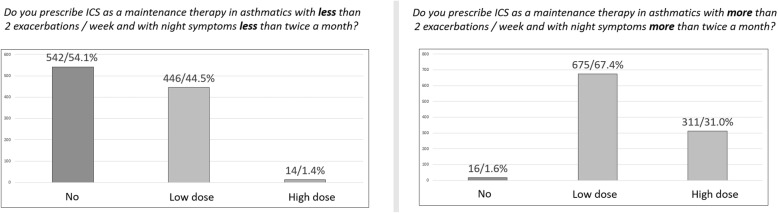
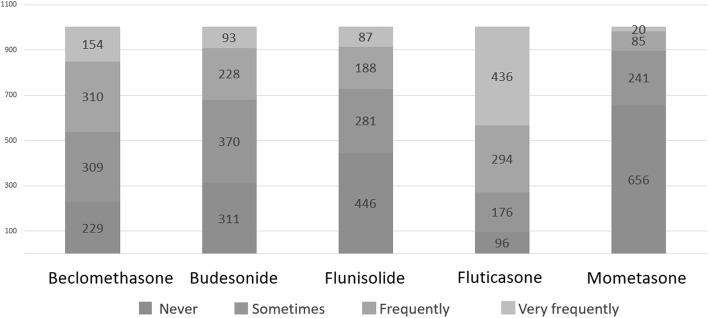
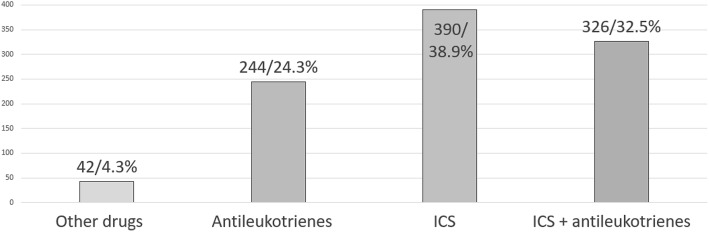
One thousand-two questionnaires were returned from primary care pediatricians (39.1%), hospital pediatricians (38.7%), private practicers (16.4%), university pediatricians (3.1%) and Pediatrics residents (2.7%). We found a good adherence to the international guidelines on AR, with prevalent use of oral antihistamine (60.6%) in the secretive phenotype and nasal ICS in the obstructive phenotype (64.8%). In asthma exacerbations ICS are not used in 53.4% of cases, but they are used at high dose in 27.9% and at low dose in 18.7% of cases. In intermittent asthma, ICS are not chosen as a daily controller therapy in 54.1% of cases, while they are chosen as a low dose daily therapy in 44.5% of cases (high dose in 1.4%). In children with persistent asthma, ICS are chosen as a daily low dose therapy in 67.4% of cases and as a daily high dose therapy in 31%. In the management of preschool wheezing, when a long-term treatment is needed, ICS are chosen both alone and in association with antileukotrienes in 71.4% of cases. Children affected by recurrent asthma exacerbations and wheezing are closely followed up, in particular by their primary care pediatricians. The preference for certain molecules in the treatment of different respiratory diseases also emerged.
Pediatricians' ICS prescription habits in Italy should be improved, especially in the management of asthma. Future surveys on a more numerous sample will be useful to analyze differences in prescription habits on the basis of pediatricians' work settings and geographical distribution.
意大利主要儿科科学学会最近发布了一份关于儿童吸入性皮质类固醇(ICS)使用的国家共识文件。本研究旨在了解意大利儿科医生目前在管理常见儿科呼吸道疾病(即过敏性鼻炎[AR]、哮喘、学龄前喘息和喉炎)时使用 ICS 的处方习惯。
从 2018 年 10 月 1 日至 2019 年 1 月 31 日,每月通过时事通讯向意大利儿科学会成员发送一个在线问卷链接。问卷包括 18 个关于常见儿科呼吸道疾病中 ICS 使用的项目。数据收集和报告基于横断面研究的 STROBE 声明清单。
从初级保健儿科医生(39.1%)、医院儿科医生(38.7%)、私人医生(16.4%)、大学儿科医生(3.1%)和儿科住院医师(2.7%)中收回了 1200 份问卷。我们发现,在 AR 方面,国际指南的应用情况良好,在渗出型中普遍使用口服抗组胺药(60.6%),在阻塞型中使用鼻用 ICS(64.8%)。在哮喘加重的情况下,53.4%的病例未使用 ICS,但 27.9%的病例高剂量使用,18.7%的病例低剂量使用。在间歇性哮喘中,54.1%的病例未选择 ICS 作为日常控制治疗,44.5%的病例选择低剂量作为日常治疗(高剂量 1.4%)。在持续性哮喘患儿中,67.4%的病例选择低剂量作为每日治疗,31%的病例选择高剂量作为每日治疗。在学龄前喘息的管理中,当需要长期治疗时,71.4%的病例选择 ICS 单独使用或与白三烯拮抗剂联合使用。反复哮喘发作和喘息的患儿得到密切随访,特别是由初级保健儿科医生进行随访。在治疗不同呼吸道疾病时,对某些药物的偏好也显现出来。
意大利儿科医生的 ICS 处方习惯有待改善,尤其是在哮喘的管理方面。未来针对更大样本的调查将有助于根据儿科医生的工作环境和地域分布分析处方习惯的差异。