Castelletti Laura, Yeo Dannel, van Zandwijk Nico, Rasko John E J
Li Ka Shing Cell & Gene Therapy Program, The University of Sydney, Camperdown, Australia.
Faculty of Medicine and Health, The University of Sydney, Camperdown, Australia.
Biomark Res. 2021 Feb 15;9(1):11. doi: 10.1186/s40364-021-00264-1.
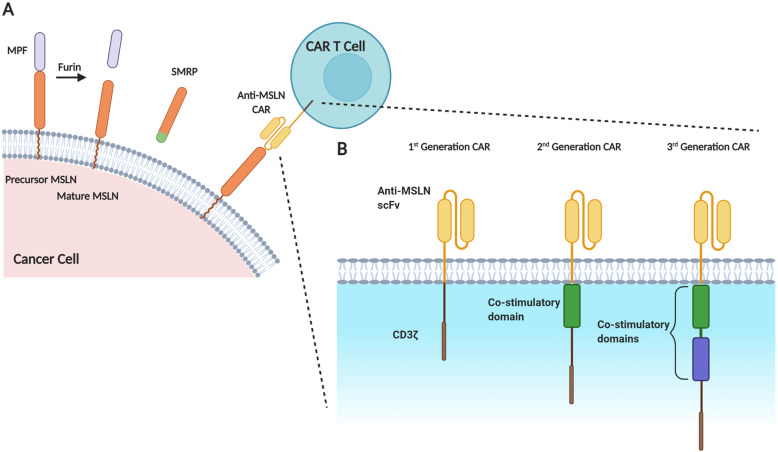
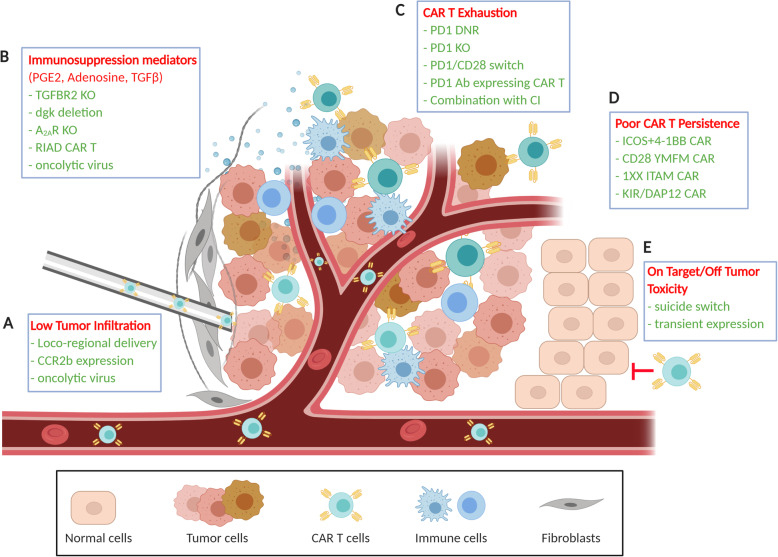
Malignant mesothelioma (MM) is a treatment-resistant tumor originating in the mesothelial lining of the pleura or the abdominal cavity with very limited treatment options. More effective therapeutic approaches are urgently needed to improve the poor prognosis of MM patients. Chimeric Antigen Receptor (CAR) T cell therapy has emerged as a novel potential treatment for this incurable solid tumor. The tumor-associated antigen mesothelin (MSLN) is an attractive target for cell therapy in MM, as this antigen is expressed at high levels in the diseased pleura or peritoneum in the majority of MM patients and not (or very modestly) present in healthy tissues. Clinical trials using anti-MSLN CAR T cells in MM have shown that this potential therapeutic is relatively safe. However, efficacy remains modest, likely due to the MM tumor microenvironment (TME), which creates strong immunosuppressive conditions and thus reduces anti-MSLN CAR T cell tumor infiltration, efficacy and persistence. Various approaches to overcome these challenges are reviewed here. They include local (intratumoral) delivery of anti-MSLN CAR T cells, improved CAR design and co-stimulation, and measures to avoid T cell exhaustion. Combination therapies with checkpoint inhibitors as well as oncolytic viruses are also discussed. Preclinical studies have confirmed that increased efficacy of anti-MSLN CAR T cells is within reach and offer hope that this form of cellular immunotherapy may soon improve the prognosis of MM patients.
恶性间皮瘤(MM)是一种起源于胸膜或腹腔间皮内衬的难治性肿瘤,治疗选择非常有限。迫切需要更有效的治疗方法来改善MM患者的不良预后。嵌合抗原受体(CAR)T细胞疗法已成为治疗这种无法治愈的实体瘤的一种新型潜在疗法。肿瘤相关抗原间皮素(MSLN)是MM细胞治疗的一个有吸引力的靶点,因为该抗原在大多数MM患者的患病胸膜或腹膜中高表达,而在健康组织中不存在(或表达水平很低)。在MM中使用抗MSLN CAR T细胞的临床试验表明,这种潜在疗法相对安全。然而,疗效仍然一般,这可能是由于MM肿瘤微环境(TME)造成的,它会产生强烈的免疫抑制条件,从而减少抗MSLN CAR T细胞对肿瘤的浸润、疗效和持久性。本文综述了克服这些挑战的各种方法。这些方法包括抗MSLN CAR T细胞的局部(瘤内)递送、改进的CAR设计和共刺激,以及避免T细胞耗竭的措施。还讨论了与检查点抑制剂以及溶瘤病毒的联合疗法。临床前研究已证实,提高抗MSLN CAR T细胞的疗效是可以实现的,这为这种细胞免疫疗法可能很快改善MM患者的预后带来了希望。