
优化心脏再生的免疫调节:比较分析的见解
Immunomodulation for optimal cardiac regeneration: insights from comparative analyses.
作者信息
Farache Trajano Luiza, Smart Nicola
机构信息
British Heart Foundation Centre of Regenerative Medicine, Burdon Sanderson Cardiac Science centre, Department of Physiology, Anatomy and Genetics, University of Oxford, Oxford, UK.
出版信息
NPJ Regen Med. 2021 Feb 15;6(1):8. doi: 10.1038/s41536-021-00118-2.
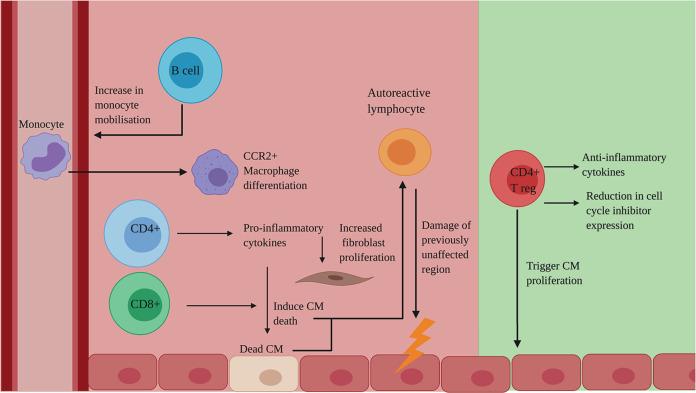
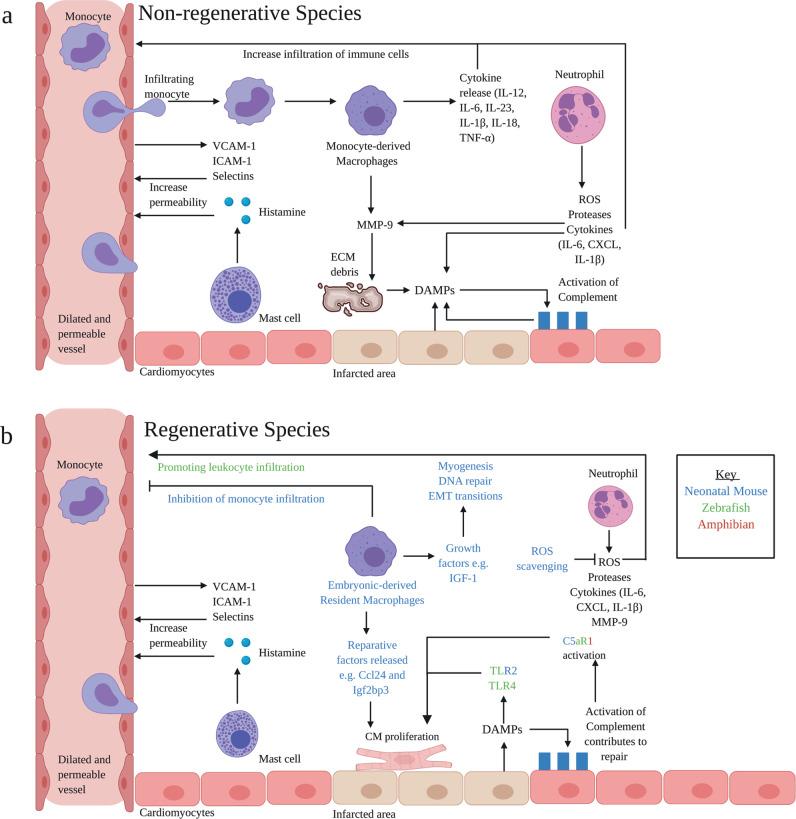
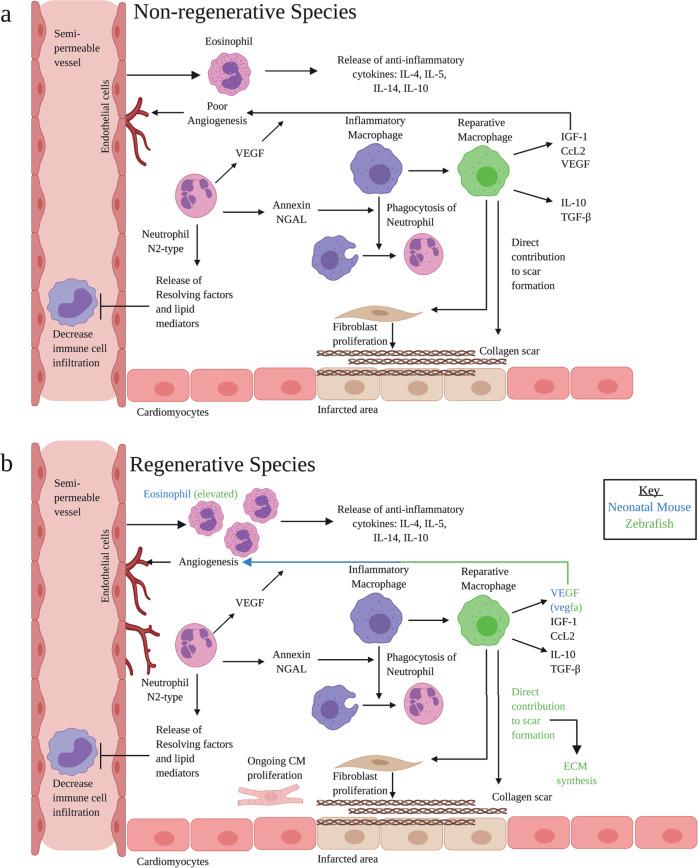
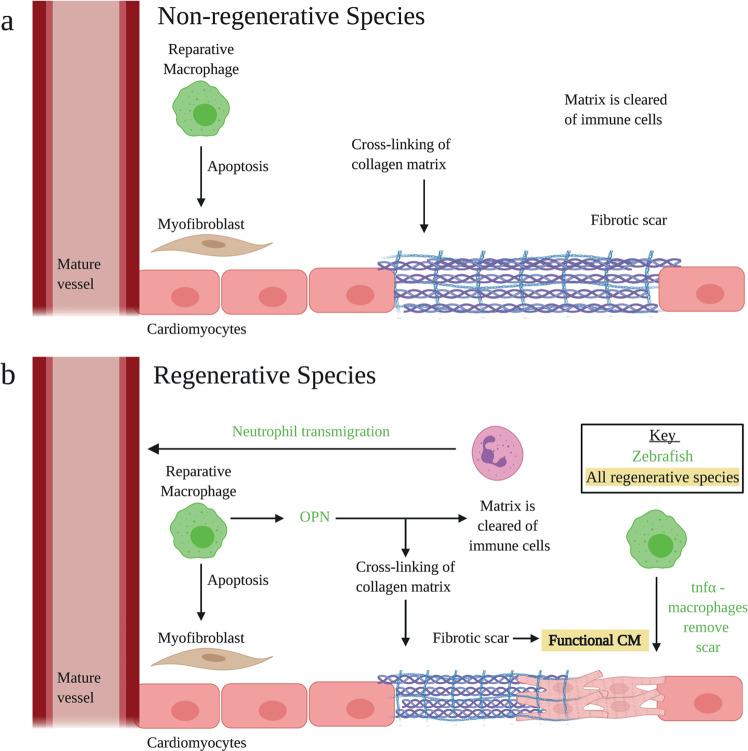
Despite decades of research, regeneration of the infarcted human heart remains an unmet ambition. A significant obstacle facing experimental regenerative therapies is the hostile immune response which arises following a myocardial infarction (MI). Upon cardiac damage, sterile inflammation commences via the release of pro-inflammatory meditators, leading to the migration of neutrophils, eosinophils and monocytes, as well as the activation of local vascular cells and fibroblasts. This response is amplified by components of the adaptive immune system. Moreover, the physical trauma of the infarction and immune-mediated tissue injury provides a supply of autoantigens, perpetuating a cycle of autoreactivity, which further contributes to adverse remodelling. A gradual shift towards an immune-resolving environment follows, culminating in the formation of a collagenous scar, which compromises cardiac function, ultimately driving the development of heart failure. Comparing the human heart with those of animal models that are capable of cardiac regeneration reveals key differences in the innate and adaptive immune responses to MI. By modulating key immune components to better resemble those of regenerative species, a cardiac environment may be established which would, either independently or via the synergistic application of emerging regenerative therapies, improve functional recovery post-MI.
尽管经过了数十年的研究,但梗死的人类心脏再生仍然是一个未实现的目标。实验性再生疗法面临的一个重大障碍是心肌梗死(MI)后出现的有害免疫反应。心脏受损后,无菌性炎症通过促炎介质的释放开始,导致中性粒细胞、嗜酸性粒细胞和单核细胞的迁移,以及局部血管细胞和成纤维细胞的激活。这种反应会被适应性免疫系统的成分放大。此外,梗死的物理创伤和免疫介导的组织损伤提供了自身抗原的来源,使自身反应性循环持续存在,这进一步导致不良重塑。随后会逐渐向免疫消退环境转变,最终形成胶原瘢痕,这会损害心脏功能,最终推动心力衰竭的发展。将人类心脏与能够进行心脏再生的动物模型的心脏进行比较,揭示了对MI的先天性和适应性免疫反应的关键差异。通过调节关键免疫成分,使其更类似于再生物种的免疫成分,可以建立一种心脏环境,这种环境要么独立地,要么通过新兴再生疗法的协同应用,改善MI后的功能恢复。
 Zotero 插件