Immunology Research, Lilly Research Laboratories, Eli Lilly and Company, Indianapolis, IN, United States of America.
MacroGenics, Rockville, MD, United States of America.
PLoS One. 2021 Feb 17;16(2):e0245917. doi: 10.1371/journal.pone.0245917. eCollection 2021.
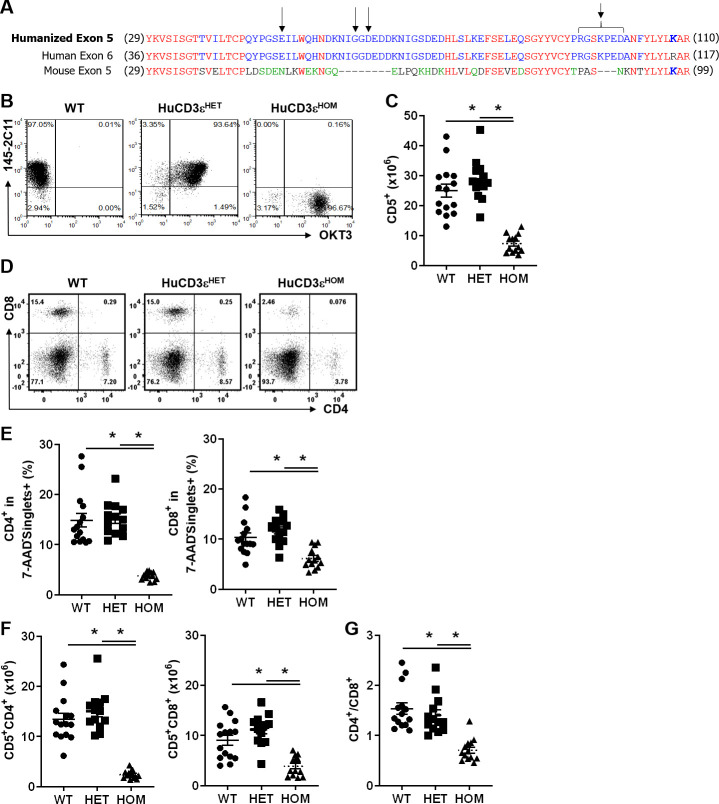
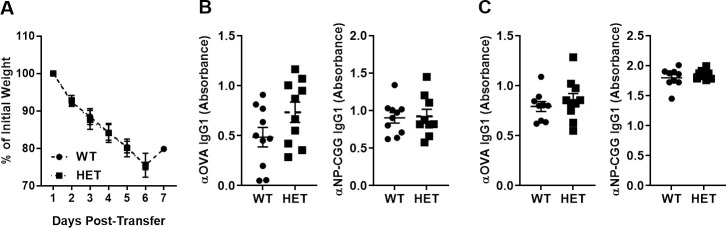
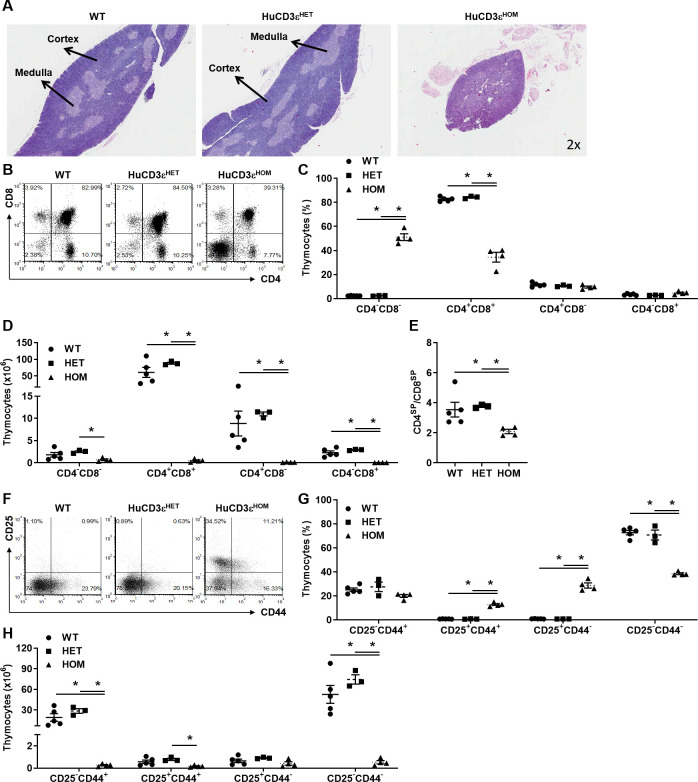
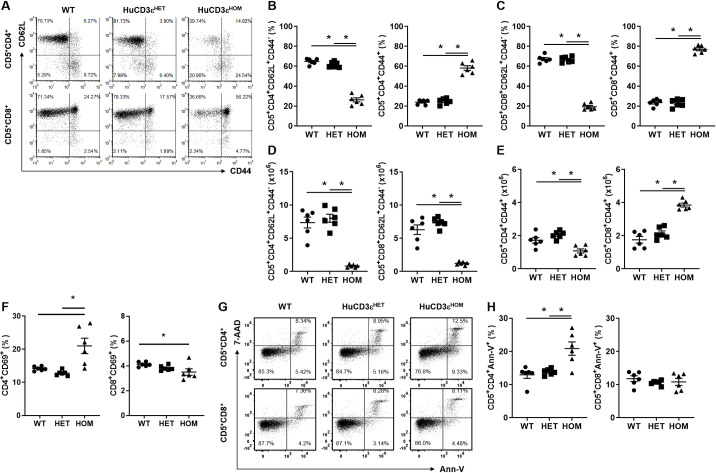
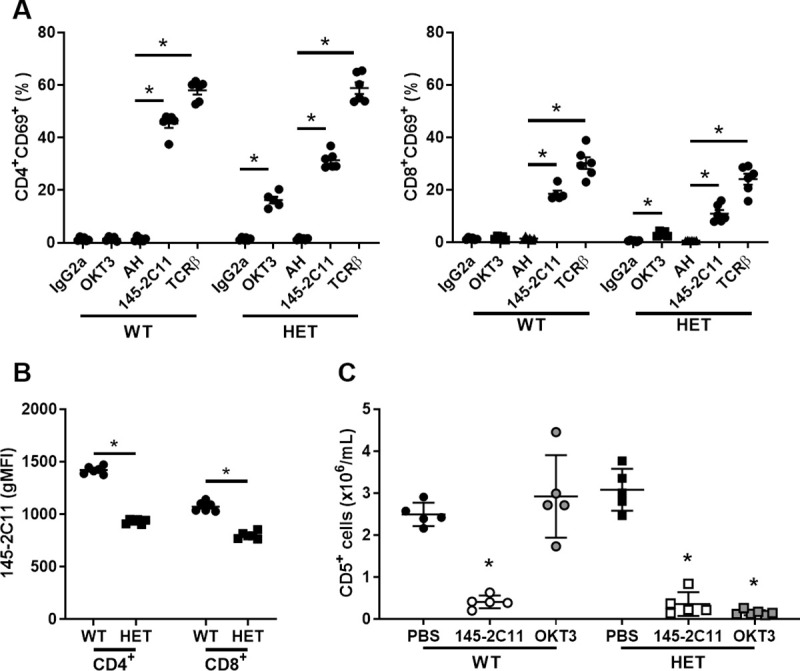
Pre-clinical murine models are critical for translating drug candidates from the bench to the bedside. There is interest in better understanding how anti-human CD3 therapy works based on recent longitudinal studies of short-term administration. Although several models have been created in this pursuit, each have their own advantages and disadvantages in Type-1 diabetes. In this study, we report a murine genetic knock-in model which expresses both a murine and a humanized-CD3ε-exon, rendering it sensitive to manipulation with anti-human CD3. These huCD3εHET mice are viable and display no gross abnormalities. Specifically, thymocyte development and T cell peripheral homeostasis is unaffected. We tested immune functionality of these mice by immunizing them with T cell-dependent antigens and no differences in antibody titers compared to wild type mice were recorded. Finally, we performed a graft-vs-host disease model that is driven by effector T cell responses and observed a wasting disease upon transfer of huCD3εHET T cells. Our results show a viable humanized CD3 murine model that develops normally, is functionally engaged by anti-human CD3 and can instruct on pre-clinical tests of anti-human CD3 antibodies.
临床前小鼠模型对于将药物候选物从实验室转化到临床至关重要。最近对短期给药的纵向研究使人们有兴趣更好地了解抗人 CD3 疗法的作用机制。尽管在这方面已经创建了几种模型,但每种模型在 1 型糖尿病中都有其自身的优点和缺点。在这项研究中,我们报告了一种小鼠基因敲入模型,该模型表达了鼠和人源化-CD3ε-外显子,使其对抗人 CD3 的操作敏感。这些 huCD3εHET 小鼠是可行的,并且没有明显的异常。具体来说,胸腺细胞发育和 T 细胞外周稳态不受影响。我们通过用 T 细胞依赖性抗原免疫这些小鼠来测试它们的免疫功能,并且与野生型小鼠相比,没有记录到抗体滴度的差异。最后,我们进行了移植物抗宿主病模型,该模型由效应 T 细胞反应驱动,并观察到 huCD3εHET T 细胞转移后的消耗性疾病。我们的结果表明,该模型是一种可行的人源化 CD3 小鼠模型,其正常发育,可被抗人 CD3 激活,并可用于抗人 CD3 抗体的临床前测试。