Division of Gastroenterology, Department of Medicine, Kurume University School of Medicine, Kurume, Japan.
Inflammatory Bowel Disease Center, Kurume University Hospital, Kurume, Japan.
J Crohns Colitis. 2021 Sep 25;15(9):1517-1527. doi: 10.1093/ecco-jcc/jjab033.
The Self-assembling Peptide Hydrogel [SAPH, PuraMatrix], a fully synthetic peptide solution designed to replace collagen, has recently been used to promote mucosal regeneration in iatrogenic ulcers following endoscopic submucosal dissection. Herein, we evaluated its utility in ulcer repair using a rat model of topical trinitrobenzene sulphonic acid [TNBS]-induced colonic injuries.
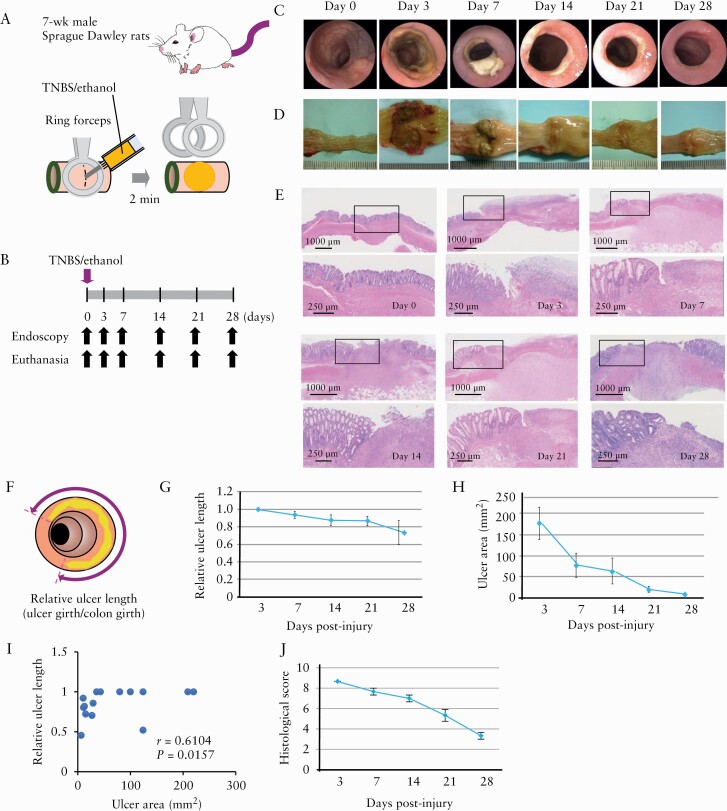
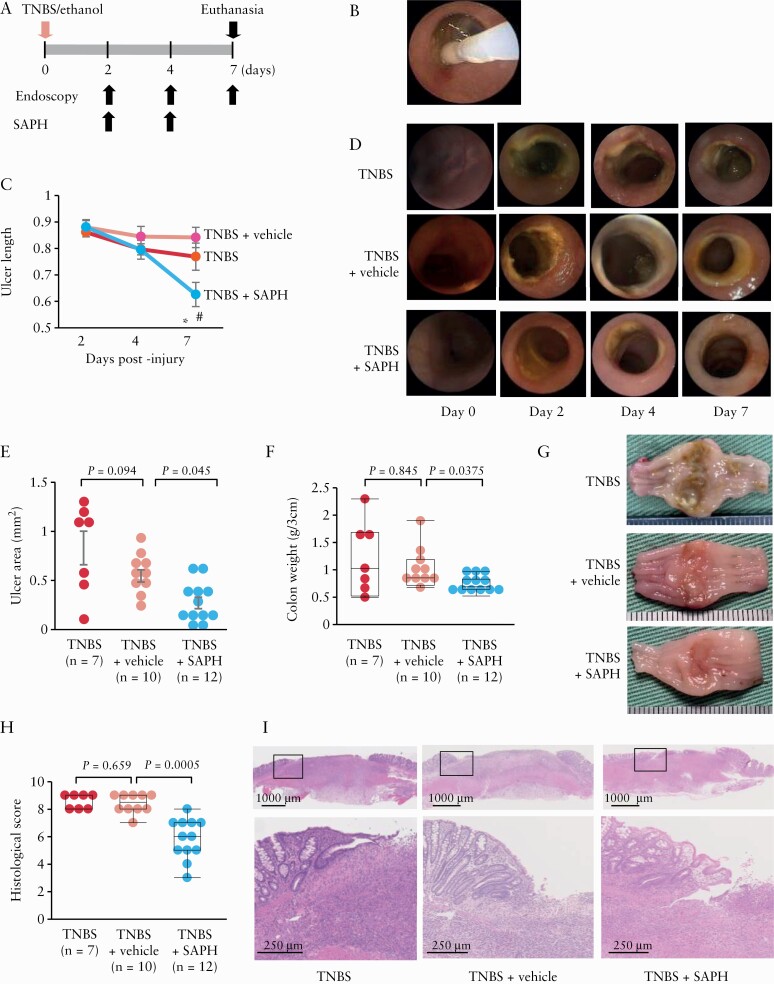
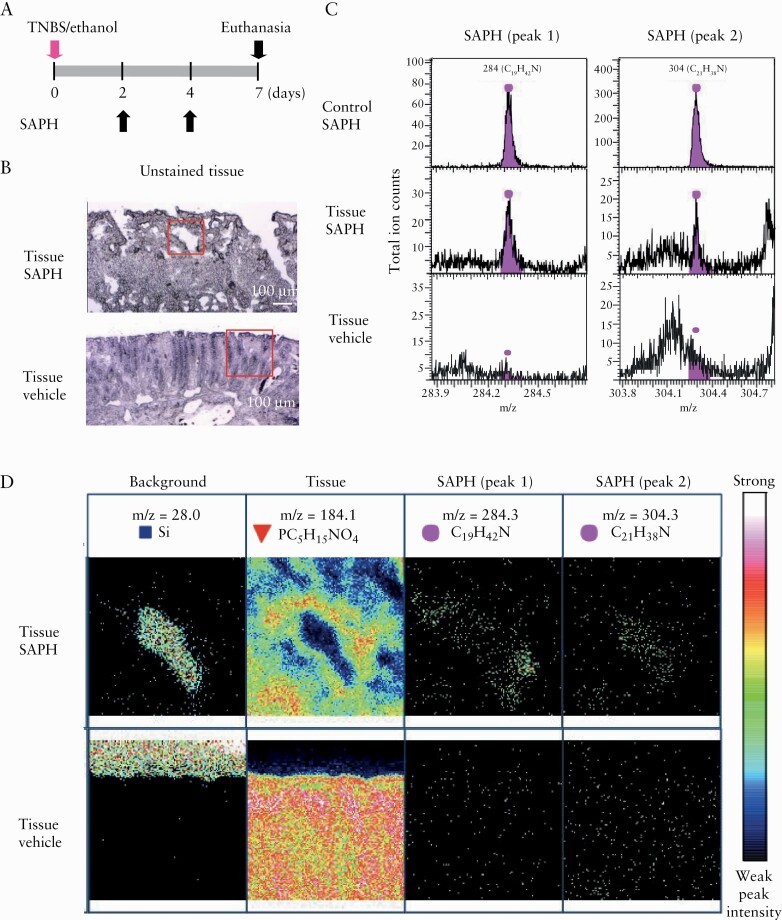
Colonic injuries were generated in 7-week-old rats by injecting an ethanol solution [35%, 0.2 mL] containing 0.15 M TNBS into the colonic lumen. At 2 and 4 days post-injury, the rats were subjected to endoscopy, and SAPH [or vehicle] was topically applied to the ulcerative lesion. Time-of-flight secondary ion mass spectrometry [TOF-SIMS] was used to detect SAPH. Colonic expression of cytokines and wound healing-related factors were assessed using real-time polymerase chain reaction or immunohistochemistry.
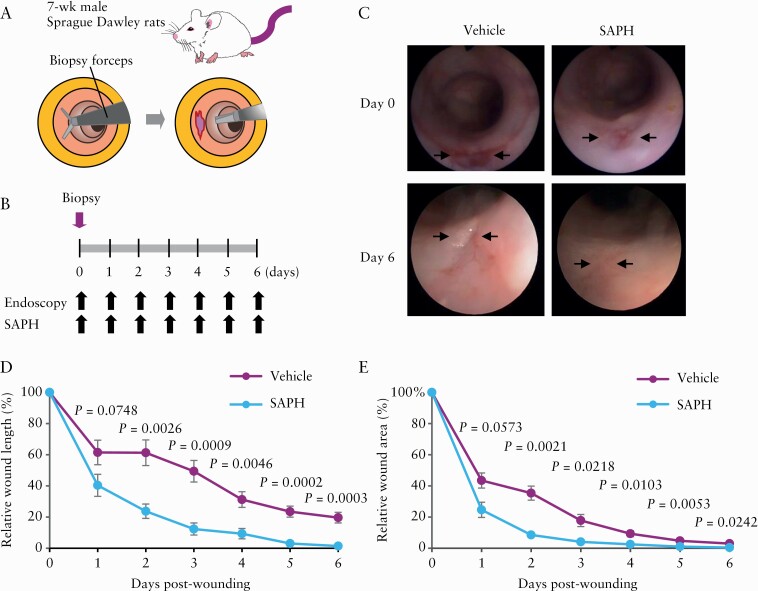
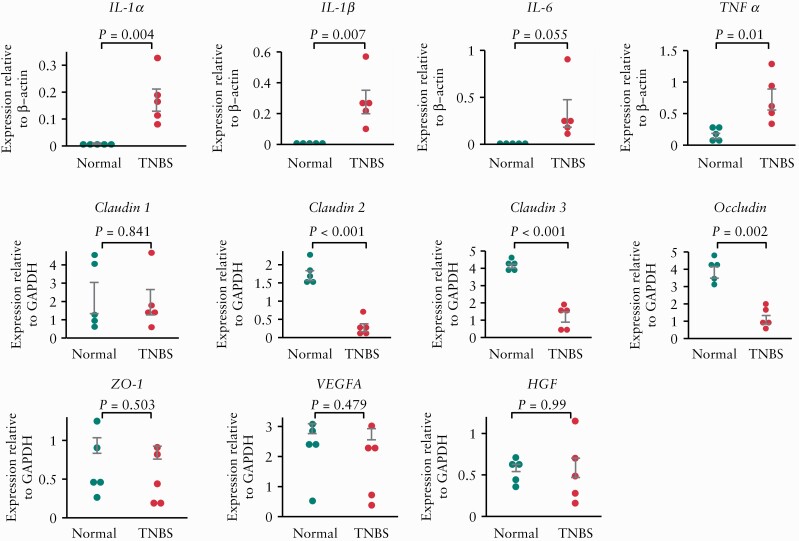
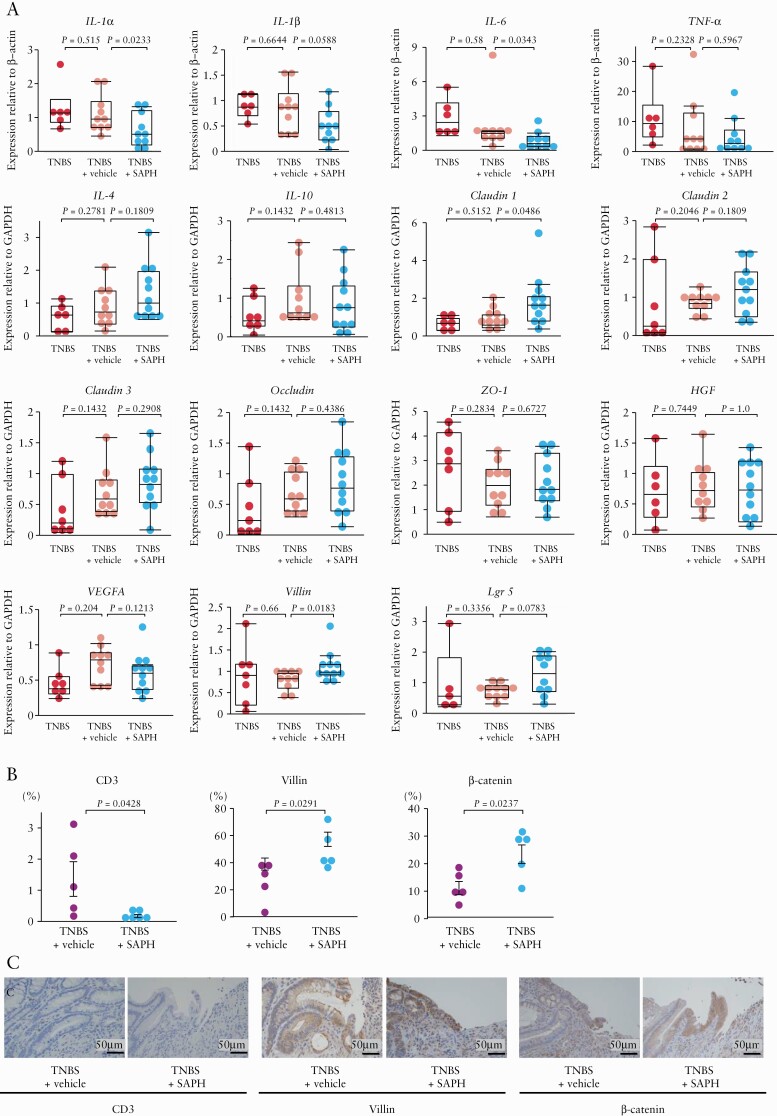
SAPH treatment significantly reduced ulcer length [p = 0.0014] and area [p = 0.045], while decreasing colonic weight [p = 0.0375] and histological score [p = 0.0005] 7 days after injury. SAPH treatment also decreased colonic expression of interleukin [IL]-1α [p = 0.0233] and IL-6[p = 0.0343] and increased that of claudin-1 [p = 0.0486] and villin [p = 0.0183], and β-catenin staining [p = 0.0237]. TOF-SIMS revealed lesional retention of SAPH on day 7 post-injury. Furthermore, SAPH significantly promoted healing in in vivo mechanical intestinal wound models.
SAPH application effectively suppressed colonic injury, downregulated inflammatory cytokine expression, and upregulated wound healing-related factor expression in the rat model; thus, it may represent a promising therapeutic strategy for IBD-related colonic ulcers.
自组装多肽水凝胶(SAPH,PuraMatrix)是一种完全合成的多肽溶液,旨在替代胶原蛋白,最近已被用于促进内镜黏膜下剥离术后医源性溃疡的黏膜再生。在此,我们使用三硝基苯磺酸(TNBS)诱导的大鼠结肠损伤模型评估了 SAPH 在溃疡修复中的效用。
通过向结肠腔内注射含有 0.15 M TNBS 的 35%乙醇溶液[0.2 mL],在 7 周龄大鼠中产生结肠损伤。在损伤后第 2 和第 4 天,对大鼠进行内镜检查,并将 SAPH[或载体]局部应用于溃疡性病变。采用飞行时间二次离子质谱(TOF-SIMS)检测 SAPH。通过实时聚合酶链反应或免疫组织化学评估结肠中细胞因子和伤口愈合相关因子的表达。
SAPH 治疗显著降低了溃疡长度(p=0.0014)和面积(p=0.045),同时降低了结肠重量(p=0.0375)和组织学评分(p=0.0005)在受伤后 7 天。SAPH 治疗还降低了结肠中白细胞介素(IL)-1α(p=0.0233)和 IL-6(p=0.0343)的表达,增加了闭合蛋白-1(p=0.0486)和微管相关蛋白 2(p=0.0183)的表达和 β-连环蛋白染色(p=0.0237)。TOF-SIMS 显示 SAPH 在损伤后第 7 天在病变部位的保留。此外,SAPH 显著促进了体内机械性肠伤口模型的愈合。
SAPH 应用在大鼠模型中有效抑制了结肠损伤,下调了炎症细胞因子的表达,上调了与伤口愈合相关的因子表达;因此,它可能是一种有前途的治疗策略,用于治疗与炎症性肠病相关的结肠溃疡。