Rezayat Ehsan, Dehaqani Mohammad-Reza A, Clark Kelsey, Bahmani Zahra, Moore Tirin, Noudoost Behrad
School of Cognitive Sciences, Institute for Research in Fundamental Sciences (IPM), Tehran, Iran.
Cognitive Systems Laboratory, Control and Intelligent Processing Center of Excellence (CIPCE), School of Electrical and Computer Engineering, College of Engineering, University of Tehran, Tehran, Iran.
Nat Commun. 2021 Feb 17;12(1):1103. doi: 10.1038/s41467-021-21151-1.
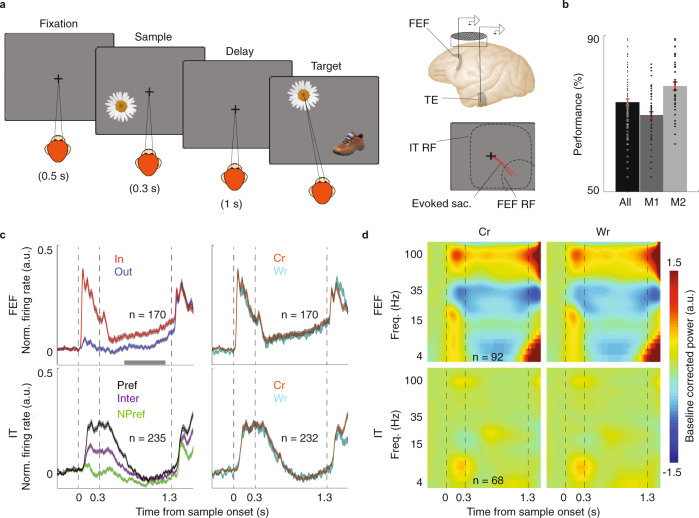
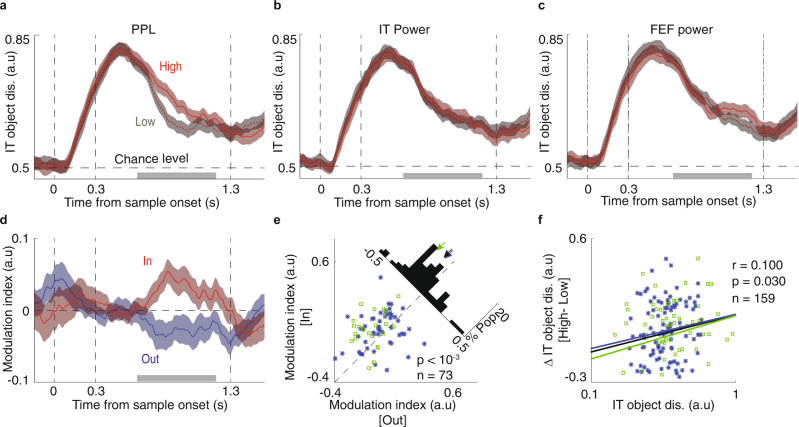
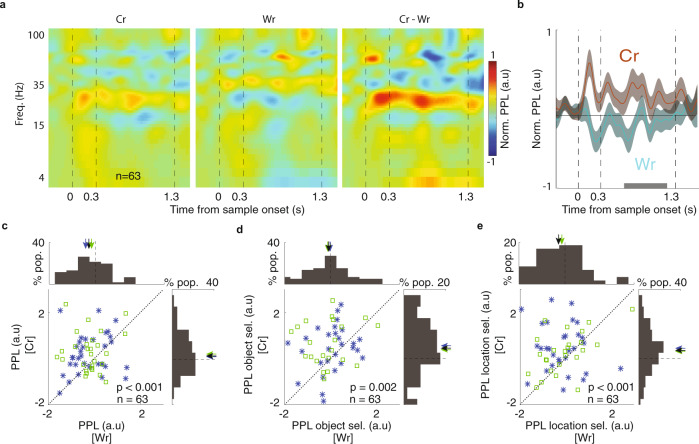
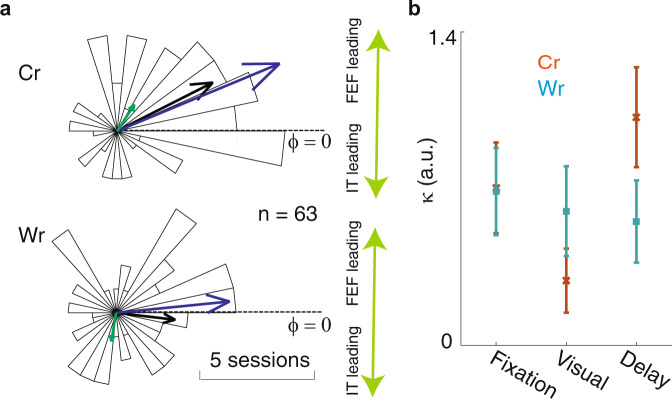
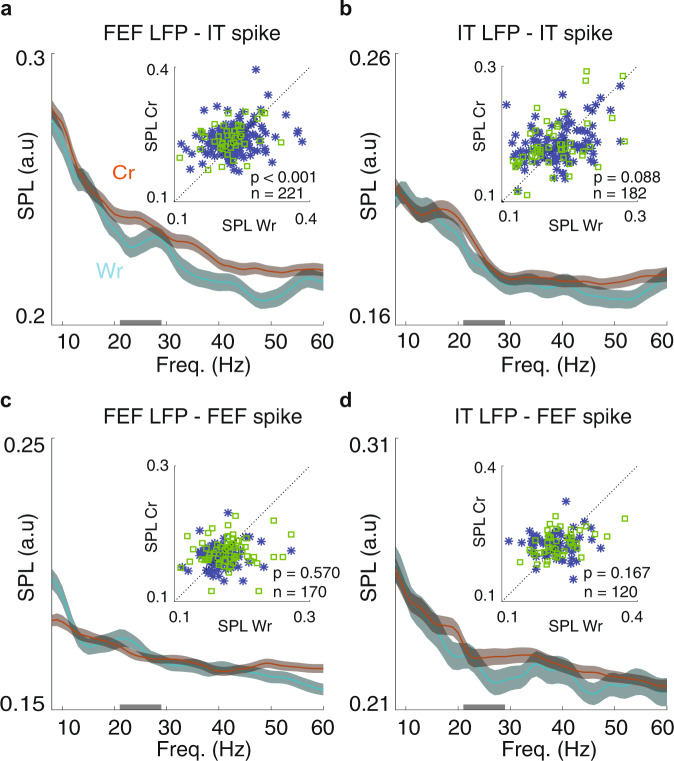
Neurons in some sensory areas reflect the content of working memory (WM) in their spiking activity. However, this spiking activity is seldom related to behavioral performance. We studied the responses of inferotemporal (IT) neurons, which exhibit object-selective activity, along with Frontal Eye Field (FEF) neurons, which exhibit spatially selective activity, during the delay period of an object WM task. Unlike the spiking activity and local field potentials (LFPs) within these areas, which were poor predictors of behavioral performance, the phase-locking of IT spikes and LFPs with the beta band of FEF LFPs robustly predicted successful WM maintenance. In addition, IT neurons exhibited greater object-selective persistent activity when their spikes were locked to the phase of FEF LFPs. These results reveal that the coordination between prefrontal and temporal cortex predicts the successful maintenance of visual information during WM.
一些感觉区域的神经元在其放电活动中反映工作记忆(WM)的内容。然而,这种放电活动很少与行为表现相关。我们研究了在物体WM任务的延迟期,表现出物体选择性活动的颞下(IT)神经元以及表现出空间选择性活动的额叶眼区(FEF)神经元的反应。与这些区域内的放电活动和局部场电位(LFP)不同,它们对行为表现的预测能力较差,IT尖峰和LFP与FEF LFP的β波段的锁相能有力地预测WM的成功维持。此外,当IT神经元的尖峰锁定到FEF LFP的相位时,它们表现出更强的物体选择性持续活动。这些结果表明,前额叶和颞叶皮质之间的协调预测了WM期间视觉信息的成功维持。