Neuroscience and Mental Health Research Institute, Division of Psychological Medicine and Clinical Neurosciences, School of Medicine, Cardiff University, Cardiff, UK.
School of Psychology, Cardiff University, Cardiff, UK.
Mol Psychiatry. 2021 Jun;26(6):1748-1760. doi: 10.1038/s41380-020-01001-0. Epub 2021 Feb 17.
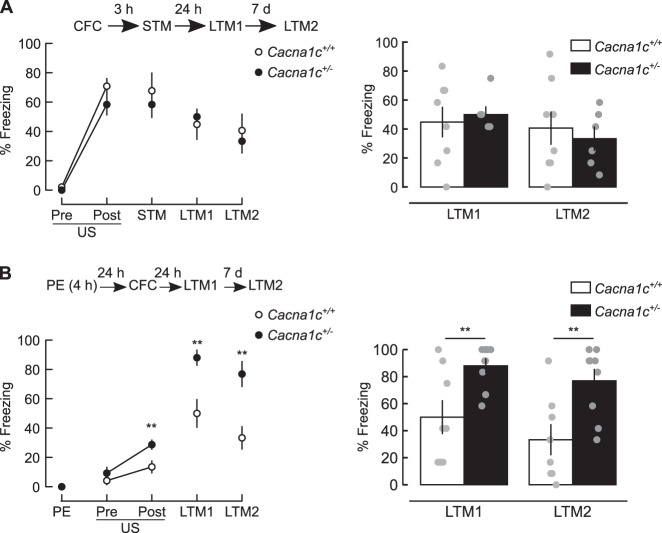
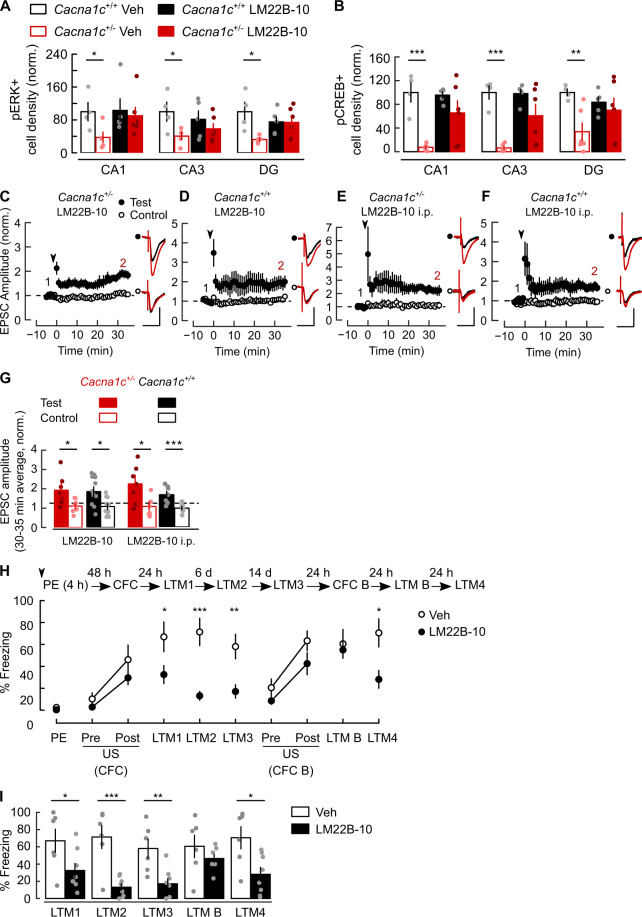
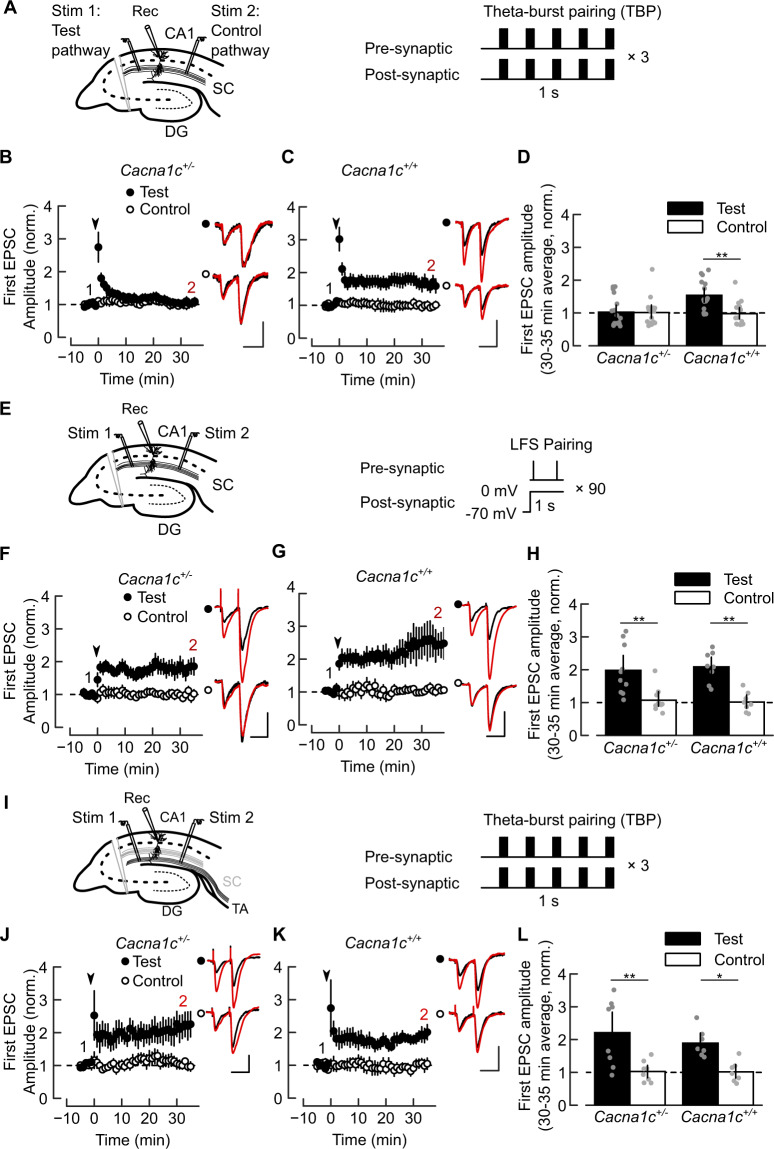
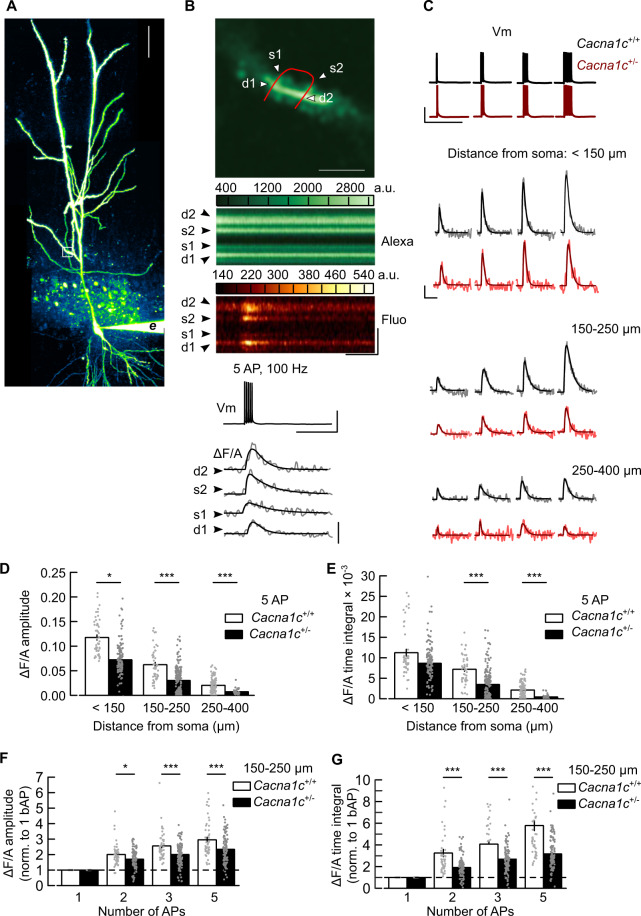
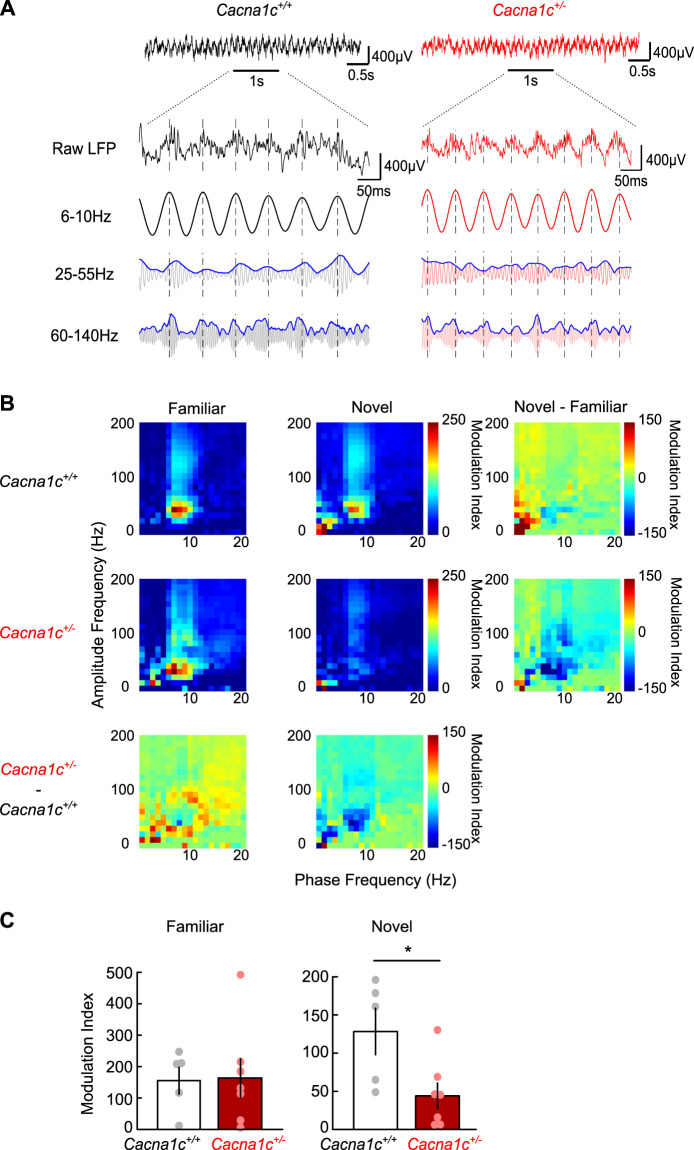
Genetic variation in CACNA1C, which encodes the alpha-1 subunit of Ca1.2 L-type voltage-gated calcium channels, is strongly linked to risk for psychiatric disorders including schizophrenia and bipolar disorder. To translate genetics to neurobiological mechanisms and rational therapeutic targets, we investigated the impact of mutations of one copy of Cacna1c on rat cognitive, synaptic and circuit phenotypes implicated by patient studies. We show that rats hemizygous for Cacna1c harbour marked impairments in learning to disregard non-salient stimuli, a behavioural change previously associated with psychosis. This behavioural deficit is accompanied by dys-coordinated network oscillations during learning, pathway-selective disruption of hippocampal synaptic plasticity, attenuated Ca signalling in dendritic spines and decreased signalling through the Extracellular-signal Regulated Kinase (ERK) pathway. Activation of the ERK pathway by a small-molecule agonist of TrkB/TrkC neurotrophin receptors rescued both behavioural and synaptic plasticity deficits in Cacna1c rats. These results map a route through which genetic variation in CACNA1C can disrupt experience-dependent synaptic signalling and circuit activity, culminating in cognitive alterations associated with psychiatric disorders. Our findings highlight targeted activation of neurotrophin signalling pathways with BDNF mimetic drugs as a genetically informed therapeutic approach for rescuing behavioural abnormalities in psychiatric disorder.
CACNA1C 基因中的遗传变异与精神疾病(包括精神分裂症和双相情感障碍)的风险密切相关,该基因编码钙通道的α-1 亚基。为了将遗传学转化为神经生物学机制和合理的治疗靶点,我们研究了一个 CACNA1C 拷贝突变对大鼠认知、突触和电路表型的影响,这些表型与患者研究中涉及的表型有关。我们发现,CACNA1C 半合子大鼠在学习忽略非显著刺激方面存在明显缺陷,这是一种以前与精神病相关的行为变化。这种行为缺陷伴随着学习期间不协调的网络振荡、海马突触可塑性的选择性破坏、树突棘中 Ca 信号的减弱以及通过细胞外信号调节激酶(ERK)途径的信号传递减少。TrkB/TrkC 神经营养因子受体的小分子激动剂激活 ERK 途径,可挽救 CACNA1C 大鼠的行为和突触可塑性缺陷。这些结果表明,CACNA1C 中的遗传变异可以通过破坏经验依赖性突触信号传递和电路活动,导致与精神疾病相关的认知改变。我们的发现强调了通过 BDNF 模拟药物靶向激活神经营养因子信号通路作为一种具有遗传信息的治疗方法,可用于挽救精神障碍中的行为异常。