MMWR Morb Mortal Wkly Rep. 2021 Feb 19;70(7):240-244. doi: 10.15585/mmwr.mm7007a3.
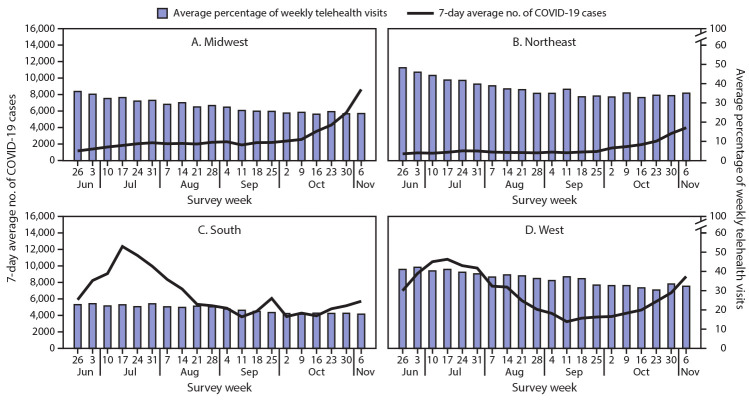
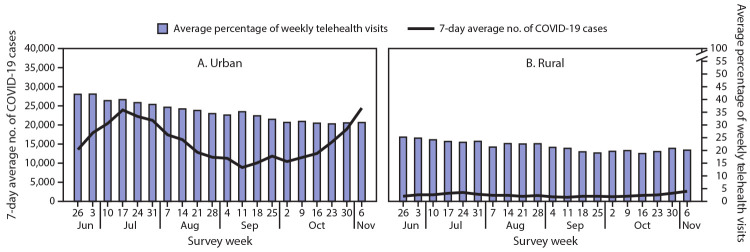
Telehealth can facilitate access to care, reduce risk for transmission of SARS-CoV-2 (the virus that causes coronavirus disease 2019 [COVID-19]), conserve scarce medical supplies, and reduce strain on health care capacity and facilities while supporting continuity of care. Health Resources and Services Administration (HRSA)-funded health centers* expanded telehealth services during the COVID-19 pandemic (1). The Centers for Medicare & Medicaid Services eliminated geographic restrictions and enhanced reimbursement so that telehealth services-enabled health centers could expand telehealth services and continue providing care during the pandemic (2,3). CDC and HRSA analyzed data from 245 health centers that completed a voluntary weekly HRSA Health Center COVID-19 Survey for 20 consecutive weeks to describe trends in telehealth use. During the weeks ending June 26-November 6, 2020, the overall percentage of weekly health care visits conducted via telehealth (telehealth visits) decreased by 25%, from 35.8% during the week ending June 26 to 26.9% for the week ending November 6, averaging 30.2% over the study period. Weekly telehealth visits declined when COVID-19 cases were decreasing and plateaued as cases were increasing. Health centers in the South and in rural areas consistently reported the lowest average percentage of weekly telehealth visits over the 20 weeks, compared with health centers in other regions and urban areas. As the COVID-19 pandemic continues, maintaining and expanding telehealth services will be critical to ensuring access to care while limiting exposure to SARS-CoV-2.
远程医疗可以方便患者获得医疗服务,降低 SARS-CoV-2(引起 2019 年冠状病毒病[COVID-19]的病毒)传播的风险,节省稀缺的医疗用品,并减少医疗保健能力和设施的压力,同时支持医疗服务的连续性。卫生资源和服务管理局(HRSA)资助的健康中心*在 COVID-19 大流行期间扩大了远程医疗服务(1)。医疗保险和医疗补助服务中心取消了地理限制,并增加了报销,以便能够提供远程医疗服务的健康中心能够在大流行期间扩大远程医疗服务并继续提供护理(2,3)。疾病预防控制中心和 HRSA 分析了 245 家完成了为期 20 周的 HRSA 健康中心 COVID-19 自愿每周调查的健康中心的数据,以描述远程医疗使用趋势。在 2020 年 6 月 26 日至 11 月 6 日结束的几周内,通过远程医疗(远程医疗访问)进行的每周医疗保健访问的总体百分比下降了 25%,从 6 月 26 日结束当周的 35.8%降至 11 月 6 日结束当周的 26.9%,研究期间平均为 30.2%。随着 COVID-19 病例的减少,远程医疗访问量下降,并在病例增加时趋于平稳。在 20 周的时间里,南部和农村地区的健康中心报告的每周远程医疗访问量的平均百分比始终最低,而其他地区和城市地区的健康中心则报告的百分比较高。随着 COVID-19 大流行的继续,维持和扩大远程医疗服务对于确保获得医疗服务同时限制 SARS-CoV-2 的暴露将至关重要。