Institute for Research in Biomedicine (IRB), Università della Svizzera italiana (USI), Bellinzona, Switzerland.
Graduate School for Cellular and Biomedical Sciences, University of Bern, Bern, Switzerland.
PLoS One. 2021 Feb 18;16(2):e0247232. doi: 10.1371/journal.pone.0247232. eCollection 2021.
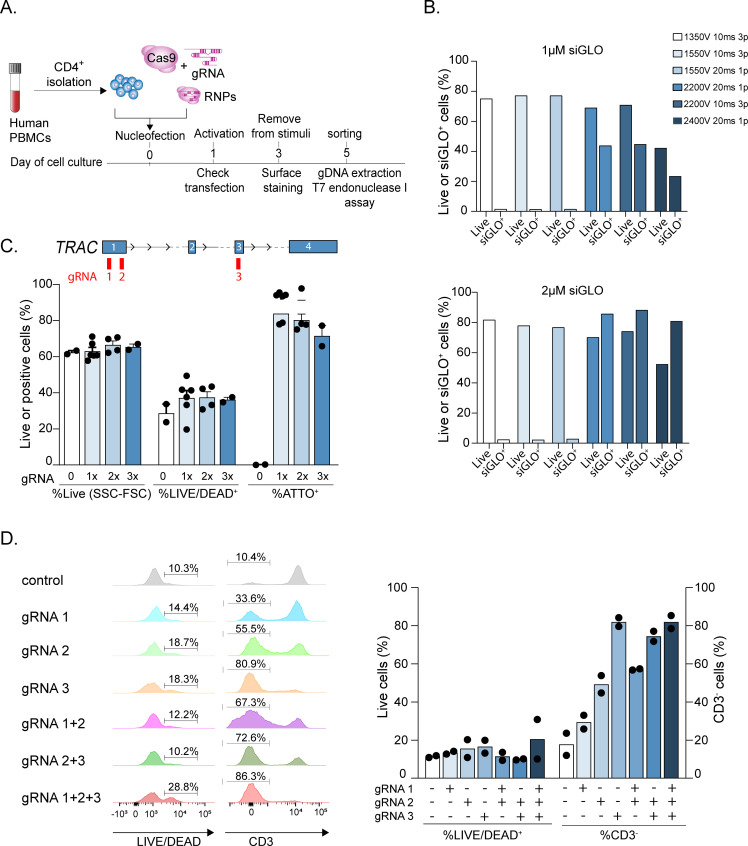
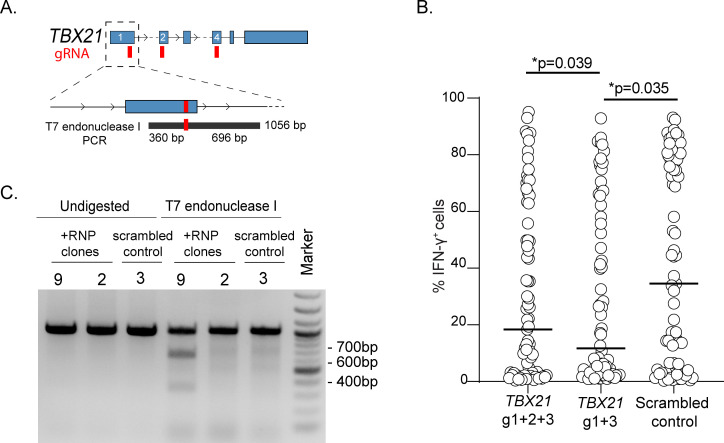
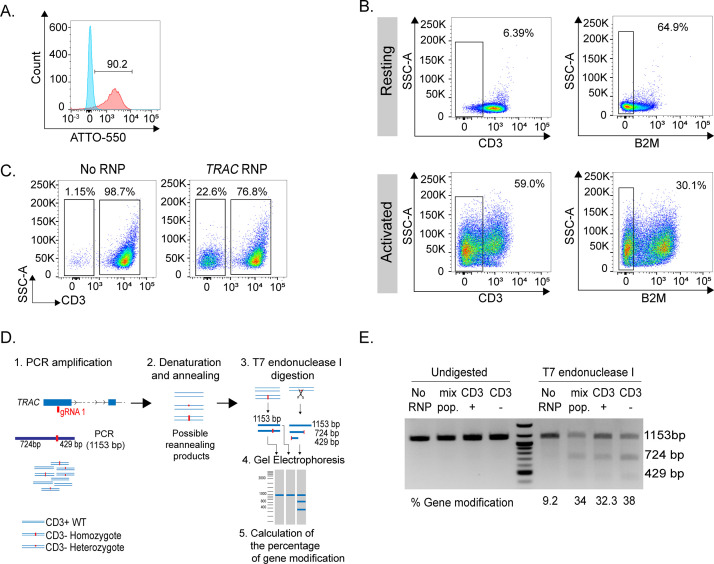
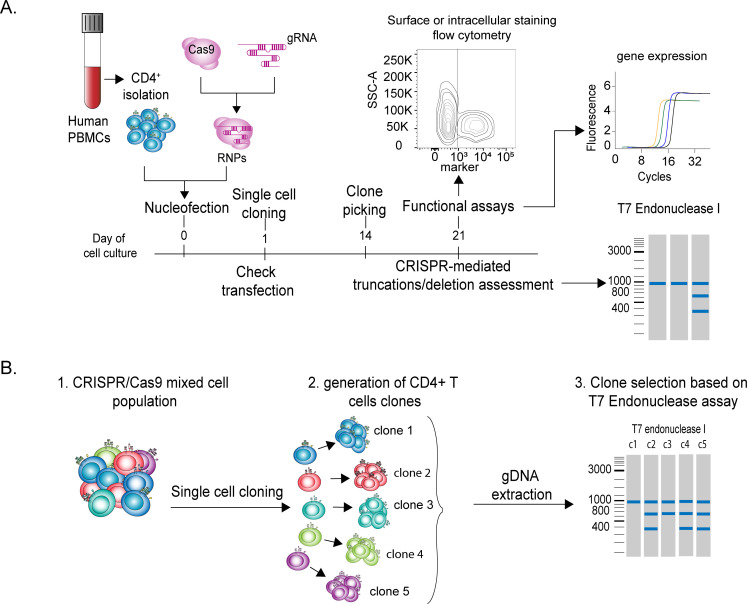
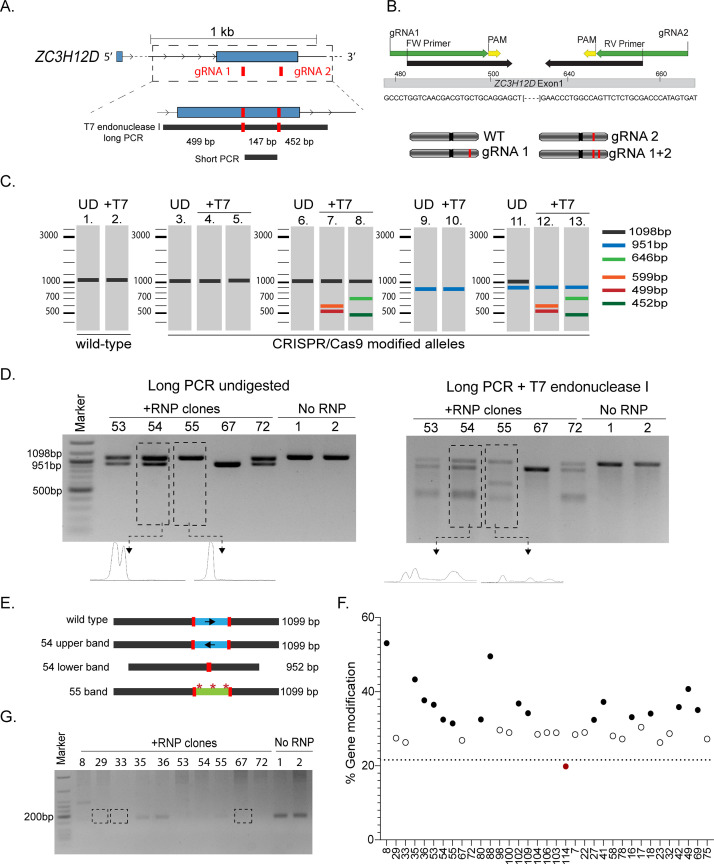
The appropriate regulation of T lymphocyte functions is key to achieve protective immune responses, while at the same time limiting the risks of tissue damage and chronic inflammation. Deciphering the mechanisms underpinning T cell responses in humans may therefore be beneficial for a range of infectious and chronic diseases. Recently, the development of methods based on CRISPR-Cas9 gene-editing has greatly expanded the available tool-box for the mechanistic studies of primary human T cell responses. While the deletion of a surface protein has become a relatively straightforward task, as long as an antibody for detection is available, the identification and selection of cells lacking an intracellular protein, a non-coding RNA or a protein for which no antibody is available, remain more problematic. Here, we discuss the options currently available to scientists interested in performing gene-editing in primary human T lymphocytes and we describe the optimization of a workflow for the screening and analysis of lymphocytes following gene-editing with CRISPR-Cas9 based on T cell cloning and T7 endonuclease I cleavage assay.
适当调节 T 淋巴细胞的功能对于实现保护性免疫反应至关重要,同时还能限制组织损伤和慢性炎症的风险。因此,解析人类 T 细胞反应的机制可能有益于一系列感染和慢性疾病的治疗。最近,基于 CRISPR-Cas9 基因编辑方法的发展极大地扩展了用于原发性人 T 细胞反应的机制研究的工具盒。只要有用于检测的抗体,删除表面蛋白已经成为相对简单的任务,但对于缺乏细胞内蛋白、非编码 RNA 或没有可用抗体的蛋白的细胞的鉴定和选择仍然是一个更具挑战性的问题。在这里,我们讨论了对在原代人 T 淋巴细胞中进行基因编辑感兴趣的科学家们可选择的方案,并描述了一种基于 T 细胞克隆和 T7 内切酶 I 切割分析的优化工作流程,用于对 CRISPR-Cas9 基因编辑后的淋巴细胞进行筛选和分析。