Tompkinson Madeline, Fine Kelly, Gruber Dean, Abraham Ivo, McBride Ali
University of Arizona College of Pharmacy, Tucson, Arizona.
Arizona Pharmacy Association, Tempe, Arizona.
J Adv Pract Oncol. 2020 May-Jun;11(4):354-365. doi: 10.6004/jadpro.2020.11.4.3. Epub 2020 May 1.
The number of newly approved cancer medications continues to grow; many of these newly approved medications are oral agents. Oral oncolytic agents have advantages including patient convenience, prolonged drug exposure, and noninvasive administration. However, these advantages come at a cost premium that many patients cannot afford, which can lead to change in therapy or abandonment. This study evaluates the perceptions of health-care workers regarding the cost and safety of oral oncolytic agents.
This is a descriptive, nonexperimental, cross-sectional study of health-care professionals in hematology/oncology patient care settings across the United States. Data were collected using a 35-item online questionnaire to measure quality improvement areas when using oral oncolytic agents.
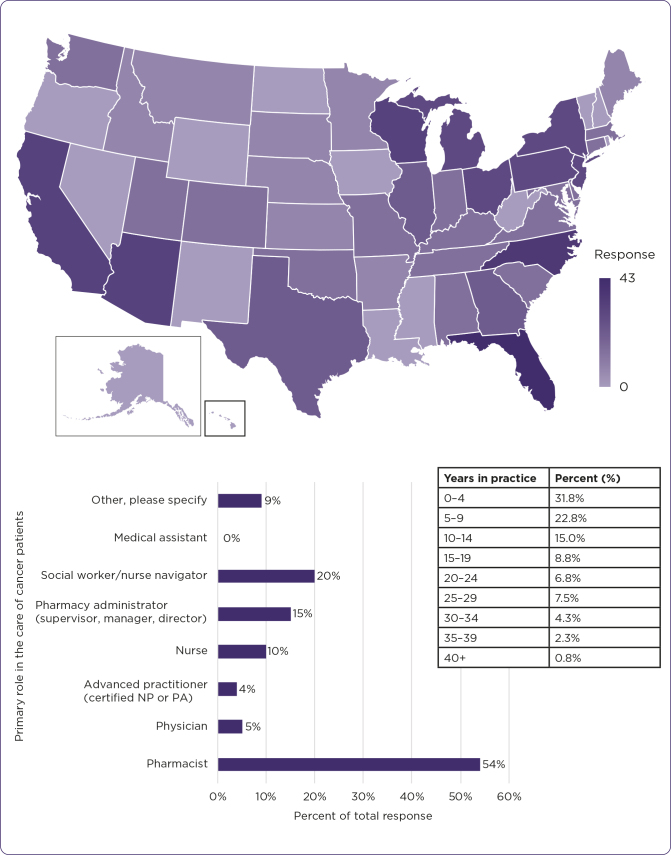
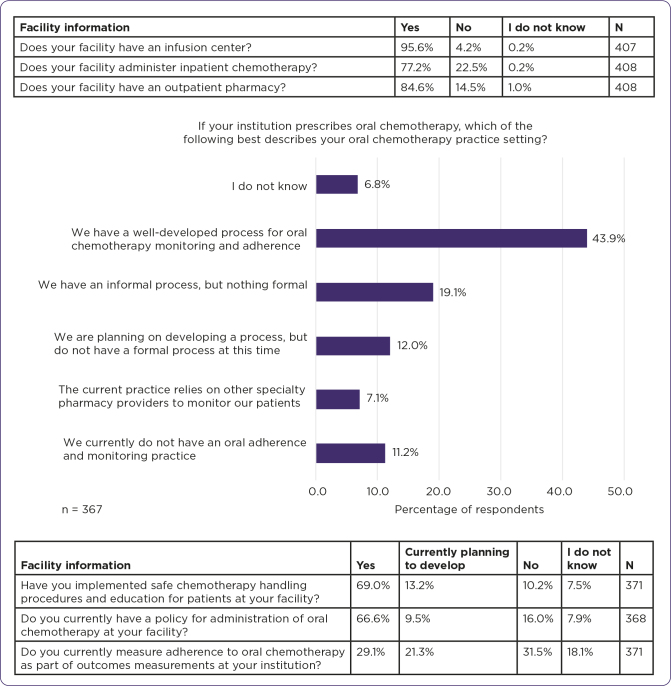
Results are based on 503 survey respondents comprising mainly pharmacists (54%), pharmacy administrators (15%), and nurses (10%). Adherence to oral oncolytics was not included in outcome measurements at 31.5% of respondents' facilities. Treatment abandonment due to cost was reported by 46.6% of respondents. The most common agents abandoned due to cost included capecitabine, abiraterone, and palbociclib. To reduce cost, some respondents (6.1%) have utilized drug interactions to increase drug half-life. Prior authorization delays were perceived to occur in 1 to 2 patients weekly, creating a 4- to 6-day wait to initiate therapy; 24.0% of respondents spend more than 30 hours weekly resolving these issues.
Health-care workers underscore their concerns about the prevalence of issues related to oral oncolytic therapy, by reporting on the incidence of abandonment of therapy, delay in therapy initiation, resources needed to assure patient access to oral oncolytic agents, and impact on patient care. Patients diagnosed with cancer require prompt access to appropriate treatments to produce favorable outcomes. In many instances, patients are unable to understand the extensive process involved in determining an appropriate course of treatment. Many factors aid in deciding on a particular course of therapy, including efficacy, safety, access to medication, adherence, and out-of-pocket cost of medication. Until recently, cancer therapy consisted primarily of IV infusion therapy, but oral oncolytic agents have been added to the therapy options over the past several years.
新批准的癌症药物数量持续增长;其中许多新批准的药物为口服制剂。口服溶瘤药物具有诸多优势,包括方便患者、延长药物暴露时间以及非侵入性给药。然而,这些优势伴随着高昂的成本,许多患者难以承受,这可能导致治疗方案改变或放弃治疗。本研究评估了医护人员对口服溶瘤药物成本和安全性的看法。
这是一项针对美国血液学/肿瘤学患者护理环境中医疗保健专业人员的描述性、非实验性横断面研究。通过一份包含35个项目的在线问卷收集数据,以衡量使用口服溶瘤药物时的质量改进领域。
结果基于503名调查受访者,主要包括药剂师(54%)、药房管理人员(15%)和护士(10%)。在31.5%的受访者所在机构中,口服溶瘤药物的依从性未纳入结果测量。46.6%的受访者报告因成本导致治疗放弃。因成本而最常被放弃的药物包括卡培他滨、阿比特龙和哌柏西利。为降低成本,一些受访者(6.1%)利用药物相互作用来延长药物半衰期。据认为,每周有1至2名患者会出现事先批准延迟的情况,导致开始治疗需等待4至6天;24.0%的受访者每周花费超过30小时来解决这些问题。
医护人员通过报告治疗放弃的发生率、治疗开始的延迟、确保患者获得口服溶瘤药物所需的资源以及对患者护理的影响,强调了他们对口服溶瘤治疗相关问题普遍性的担忧。被诊断患有癌症的患者需要及时获得适当的治疗以产生良好的治疗效果。在许多情况下,患者无法理解确定适当治疗方案所涉及的复杂过程。许多因素有助于决定特定的治疗方案,包括疗效、安全性、药物可及性、依从性和药物自付费用。直到最近,癌症治疗主要由静脉输液治疗组成,但在过去几年中,口服溶瘤药物已被添加到治疗选择中。