Cardio-Thoracic-Vascular Department, Cardio-Thoracic Radiology Unit, University Hospital S.Orsola-Malpighi, Block 23, Via Massarenti 9, 40138, Bologna, Italy.
Emergency Department, Radiology Unit, University Hospital S.Orsola-Malpighi, Via Massarenti 9, 40138, Bologna, Italy.
Emerg Radiol. 2021 Aug;28(4):735-742. doi: 10.1007/s10140-021-01911-8. Epub 2021 Feb 18.
To evaluate the feasibility of triple rule out computed tomography (TRO-CT) in an emergency radiology workflow by comparing the diagnostic performance of cardiovascular and general radiologists in the interpretation of emergency TRO-CT studies in patients with acute and atypical chest pain.
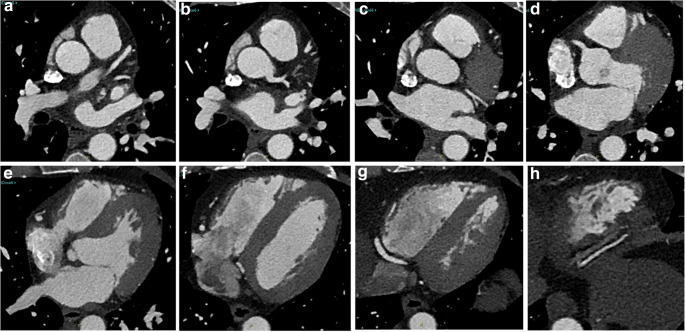
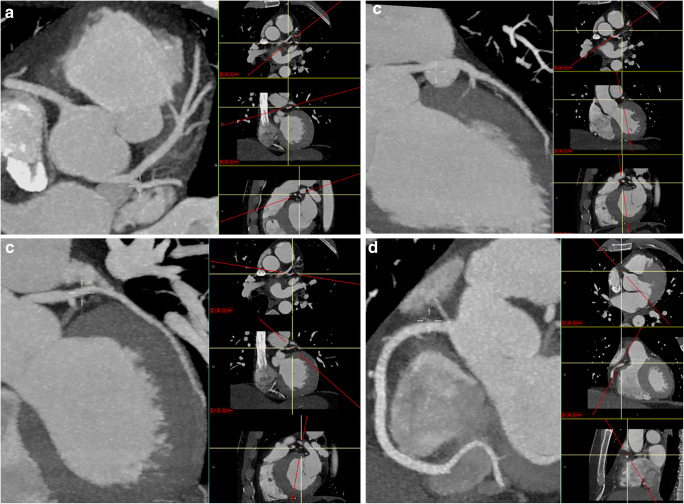
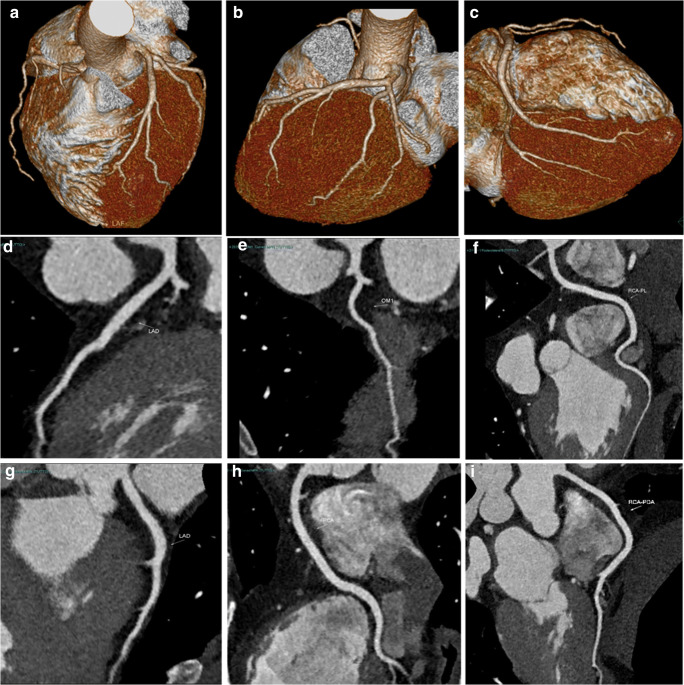
Between July 2017 and December 2019, 350 adult patients underwent TRO-CT studies for the assessment of atypical chest pain. Three radiologists with different fields and years of expertise (a cardioradiologist-CR, an emergency senior radiologist-SER, and an emergency junior radiologist-JER) retrospectively and independently reviewed all TRO-CT studies, by trans-axial and multiplanar reconstruction only. Concordance rates were then calculated using as reference blinded results from a different senior cardioradiologist, who previously evaluated studies using all available analysis software.
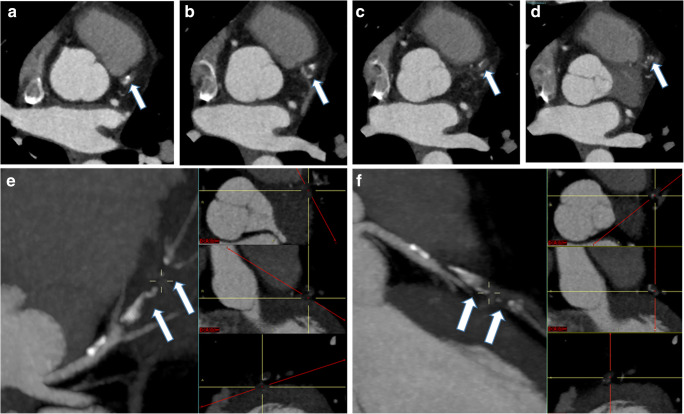
Concordance rate was 100% for acute aortic syndrome (AAS) and pulmonary embolism (PE). About coronary stenosis (CS) for non-obstructive (<50%), CS concordance rates were 97.98%, 90.91%, and 97.18%, respectively, for CR, SER, and JER; for obstructive CS (>50%), concordance rates were respectively 88%, 85.7%, and 71.43%. Moreover, it was globally observed a better performance in the evaluation of last half of examinations compared with the first one.
Our study confirm the feasibility of the TRO-CT even in an Emergency Radiology department that cannot rely on a 24/7 availability of a dedicated skilled cardiovascular radiologist. The "undedicated" radiologists could exclude with good diagnostic accuracy the presence of obstructive stenosis, those with a clinical impact on patient management, without needing time-consuming software and/or reconstructions.
通过比较心血管和普通放射科医生在解读急性和非典型胸痛患者急诊 TRO-CT 研究中的诊断性能,评估三重排除 CT(TRO-CT)在急诊放射学工作流程中的可行性。
2017 年 7 月至 2019 年 12 月,350 例成年患者因评估非典型胸痛而行 TRO-CT 检查。3 名具有不同专业领域和经验年限的放射科医生(一名心脏放射科医生-CR、一名急诊资深放射科医生-SER 和一名急诊初级放射科医生-JER)仅通过横断面和多平面重建回顾性地独立阅片所有 TRO-CT 检查。然后使用另一位之前使用所有可用分析软件评估过研究的资深心脏放射科医生的盲法结果作为参考,计算一致性率。
急性主动脉综合征(AAS)和肺栓塞(PE)的一致性率为 100%。对于非阻塞性冠状动脉狭窄(<50%),CR、SER 和 JER 的冠状动脉狭窄一致性率分别为 97.98%、90.91%和 97.18%;对于阻塞性冠状动脉狭窄(>50%),一致性率分别为 88%、85.7%和 71.43%。此外,与第一半相比,观察到对后半部分检查的评估性能更好。
我们的研究证实,即使在不能依赖 24/7 专用熟练心血管放射科医生的急诊放射科,TRO-CT 也是可行的。“非专业”放射科医生可以用良好的诊断准确性排除存在阻塞性狭窄,这些狭窄对患者管理具有临床影响,而无需耗时的软件和/或重建。