Hajjar Ludhmila Abrahão, Costa Isabela Bispo Santos da Silva, Rizk Stephanie Itala, Biselli Bruno, Gomes Brenno Rizerio, Bittar Cristina Salvadori, de Oliveira Gisele Queiroz, de Almeida Juliano Pinheiro, de Oliveira Bello Mariana Vieira, Garzillo Cibele, Leme Alcino Costa, Elena Moizo, Val Fernando, de Almeida Lopes Marcela, Lacerda Marcus Vinícius Guimarães, Ramires José Antonio Franchini, Kalil Filho Roberto, Teboul Jean-Louis, Landoni Giovanni
Instituto Do Coração, University of São Paulo Medical School, Av. Dr. Enéas de Carvalho Aguiar, 44, São Paulo, SP, Brazil.
Instituto Do Câncer, Universidade de São Paulo, São Paulo, Brazil.
Ann Intensive Care. 2021 Feb 18;11(1):36. doi: 10.1186/s13613-021-00820-w.
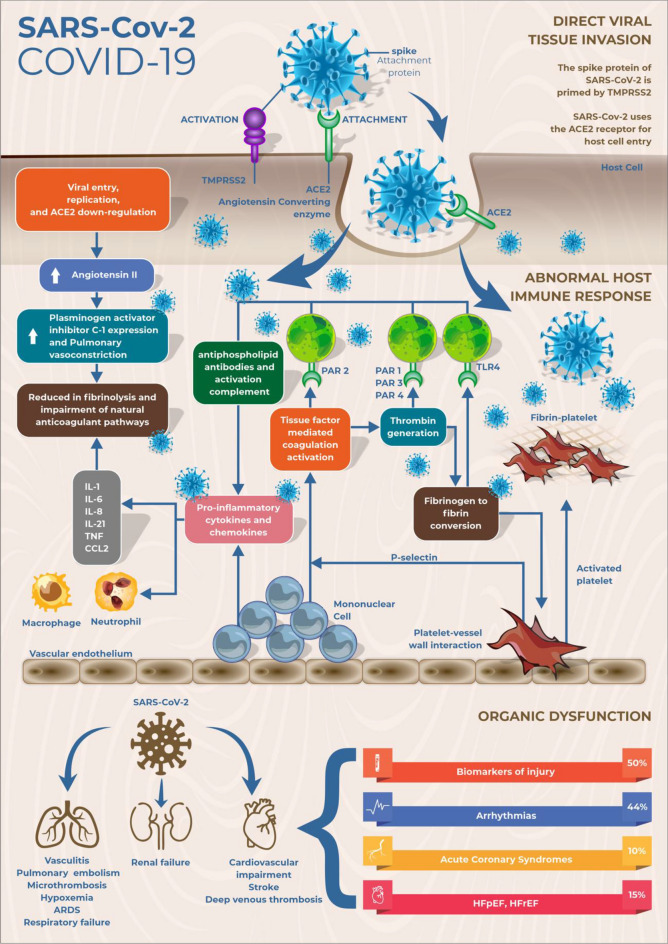
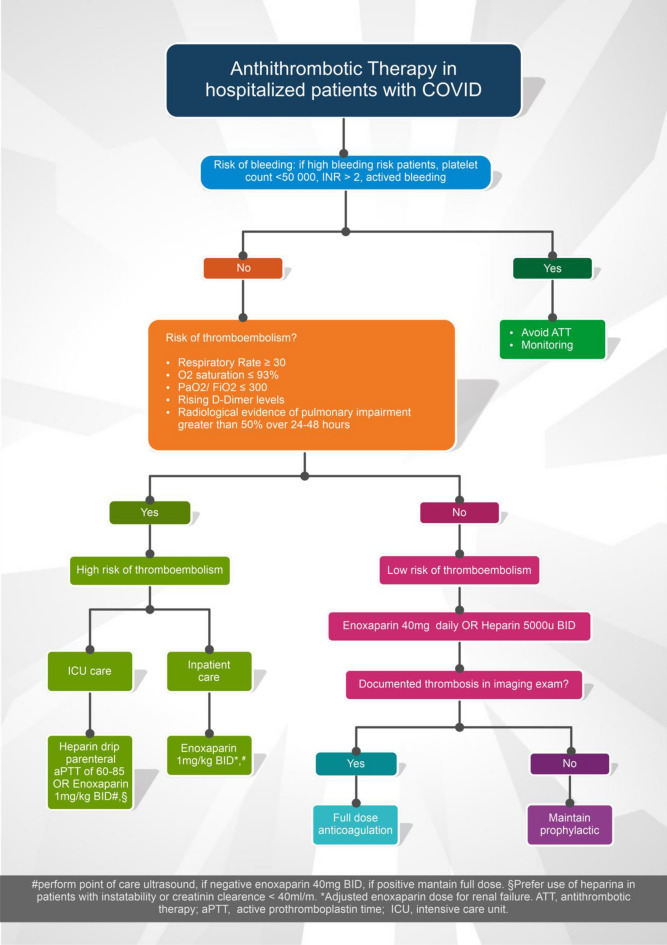
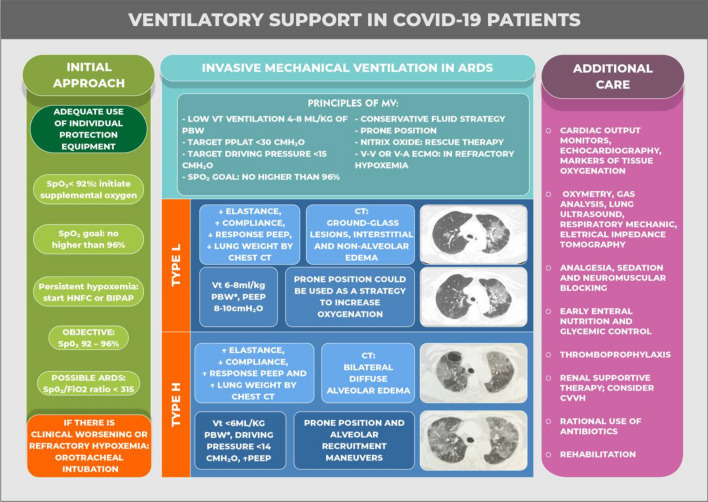
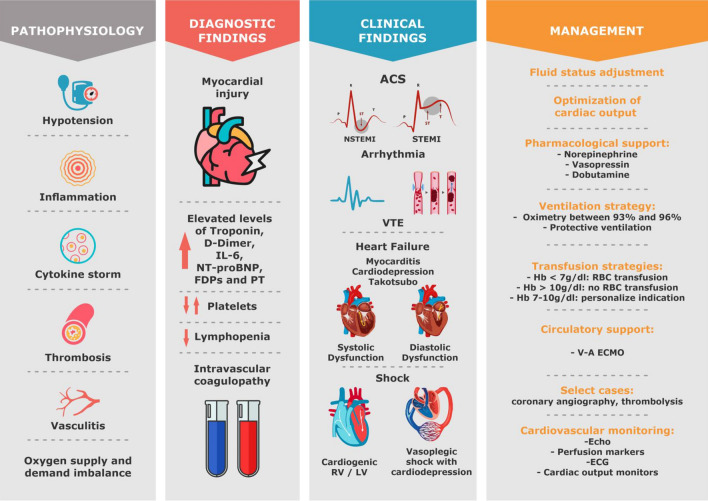
SARS-CoV-2, the causative agent of coronavirus disease 2019 (COVID-19), is responsible for the largest pandemic facing humanity since the Spanish flu pandemic in the early twentieth century. Since there is no specific antiviral treatment, optimized support is the most relevant factor in the patient's prognosis. In the hospital setting, the identification of high-risk patients for clinical deterioration is essential to ensure access to intensive treatment of severe conditions in a timely manner. The initial management of hypoxemia includes conventional oxygen therapy, high-flow nasal canula oxygen, and non-invasive ventilation. For patients requiring invasive mechanical ventilation, lung-protective ventilation with low tidal volumes and plateau pressure is recommended. Cardiovascular complications are frequent and include myocardial injury, thrombotic events, myocarditis, and cardiogenic shock. Acute renal failure is a common complication and is a marker of poor prognosis, with significant impact in costs and resources allocation. Regarding promising therapies for COVID-19, the most promising drugs until now are remdesivir and corticosteroids although further studies may be needed to confirm their effectiveness. Other therapies such as, tocilizumab, anakinra, other anti-cytokine drugs, and heparin are being tested in clinical trials. Thousands of physicians are living a scenario that none of us have ever seen: demand for hospital exceed capacity in most countries. Until now, the certainty we have is that we should try to decrease the number of infected patients and that an optimized critical care support is the best strategy to improve patient's survival.
严重急性呼吸综合征冠状病毒2型(SARS-CoV-2)是2019冠状病毒病(COVID-19)的病原体,是自20世纪初西班牙流感大流行以来人类面临的最大规模的大流行。由于没有特效抗病毒治疗方法,优化支持是影响患者预后的最关键因素。在医院环境中,识别有临床病情恶化风险的高危患者对于确保及时获得重症治疗至关重要。低氧血症的初始治疗包括传统氧疗、高流量鼻导管给氧和无创通气。对于需要有创机械通气的患者,建议采用低潮气量和平台压的肺保护性通气。心血管并发症很常见,包括心肌损伤、血栓形成事件、心肌炎和心源性休克。急性肾衰竭是一种常见并发症,是预后不良的标志,对成本和资源分配有重大影响。关于COVID-19的有前景的治疗方法,迄今为止最有前景的药物是瑞德西韦和皮质类固醇,不过可能还需要进一步研究来证实它们的有效性。其他疗法,如托珠单抗、阿那白滞素、其他抗细胞因子药物和肝素正在临床试验中接受测试。数以千计的医生正在经历一种我们谁都未曾见过的情况:在大多数国家,医院需求超过了容量。到目前为止,我们确定的是,我们应该努力减少感染患者的数量,而优化的重症监护支持是提高患者生存率的最佳策略。