Department of Psychology, University of California at Los Angeles, Los Angeles, California.
Department of Psychiatry and Biobehavioral Sciences, University of California at Los Angeles, Los Angeles, California.
Cancer. 2021 Apr 15;127(8):1334-1344. doi: 10.1002/cncr.33327. Epub 2021 Feb 19.
Fatigue is a common and expected side effect of cancer treatment. However, the majority of studies to date have focused on average levels of fatigue, which may obscure important individual differences in the severity and course of fatigue over time. The current study was designed to identify distinct trajectories of fatigue from diagnosis into survivorship in a longitudinal study of women with early-stage breast cancer.
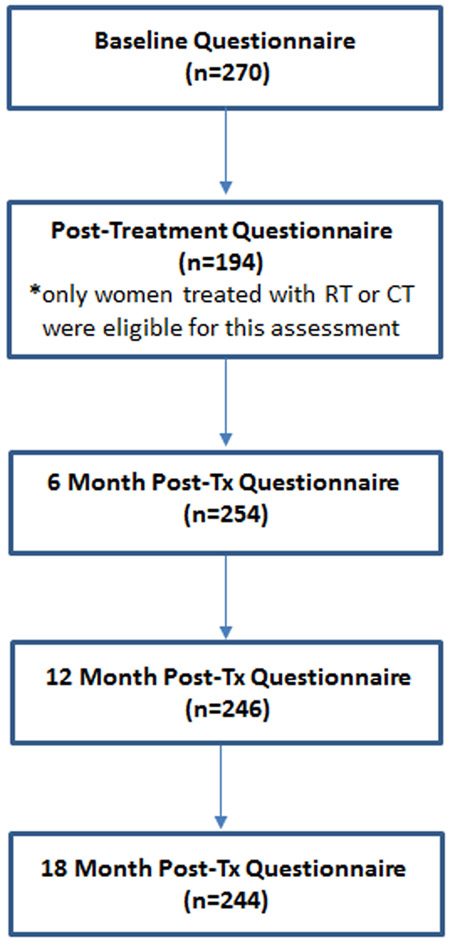
Women with stage 0 to stage IIIA breast cancer (270 women) were recruited before (neo)adjuvant therapy with radiotherapy, chemotherapy, and/or endocrine therapy and completed assessments at baseline; posttreatment; and at 6 months, 12 months, and 18 months of follow-up. Growth mixture modeling was used to identify trajectories of fatigue, and differences among the trajectory groups with regard to demographic, medical, and psychosocial variables were examined.
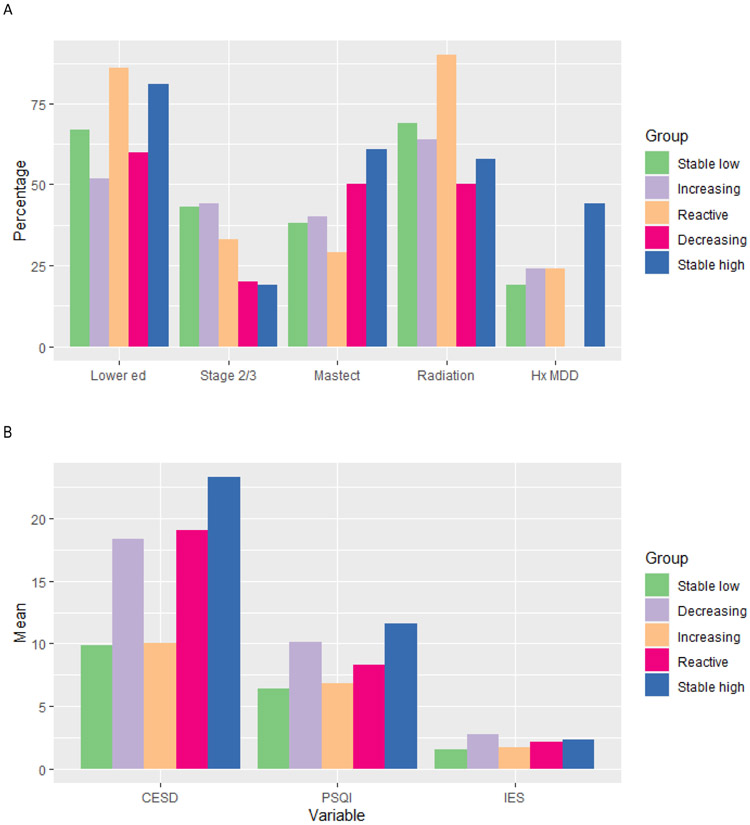
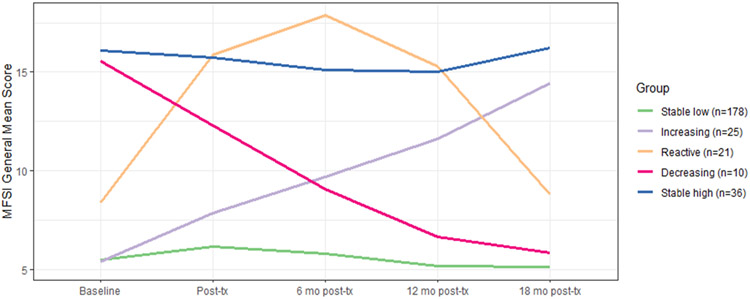
Five distinct trajectories of fatigue were identified: Stable Low (66%), with low levels of fatigue across assessments; Stable High (13%), with high fatigue across assessments; Decreasing (4%), with high fatigue at baseline that resolved over time; Increasing (9%), with low fatigue at baseline that increased over time; and Reactive (8%), with increased fatigue after treatment that resolved over time. Both psychological and treatment-related factors were found to be associated with fatigue trajectories, with psychological factors most strongly linked to high fatigue at the beginning of and over the course of treatment.
There is considerable variability in the experience of fatigue among women with early-stage breast cancer. Although the majority of women report relatively low fatigue, those with a history of depression and elevated psychological distress may be at risk of more severe and persistent fatigue.
疲劳是癌症治疗的常见且预期的副作用。然而,迄今为止的大多数研究都集中在疲劳的平均水平上,这可能掩盖了随着时间的推移疲劳严重程度和过程的重要个体差异。本研究旨在通过对早期乳腺癌女性的纵向研究,确定从诊断到生存随访期间疲劳的不同轨迹。
在接受新辅助放疗、化疗和/或内分泌治疗之前,招募了 0 期至 3A 期乳腺癌患者(270 名女性),并在基线、治疗后以及 6 个月、12 个月和 18 个月的随访时完成评估。使用增长混合物模型来确定疲劳轨迹,并检查轨迹组之间在人口统计学、医学和心理社会变量方面的差异。
确定了五种不同的疲劳轨迹:稳定低(66%),在所有评估中疲劳水平都较低;稳定高(13%),在所有评估中疲劳水平都较高;下降(4%),基线时疲劳水平较高,但随着时间的推移逐渐缓解;增加(9%),基线时疲劳水平较低,但随着时间的推移逐渐增加;和反应性(8%),治疗后疲劳增加,但随着时间的推移逐渐缓解。心理和治疗相关因素都与疲劳轨迹有关,心理因素与治疗开始时和治疗过程中高疲劳最密切相关。
早期乳腺癌女性的疲劳体验存在很大差异。尽管大多数女性报告疲劳程度相对较低,但有抑郁和心理困扰史的女性可能面临更严重和持续的疲劳风险。