Department of Clinical Sciences, College of Veterinary Medicine and Comparative Medicine Institute, North Carolina State University, Raleigh, North Carolina, United States of America.
Division of Gastroenterology and Hepatology, Department of Medicine, UNC Microbiome Core, Center for Gastrointestinal Biology and Disease, School of Medicine, University of North Carolina, Chapel Hill, North Carolina, United States of America.
PLoS One. 2021 Feb 19;16(2):e0246957. doi: 10.1371/journal.pone.0246957. eCollection 2021.
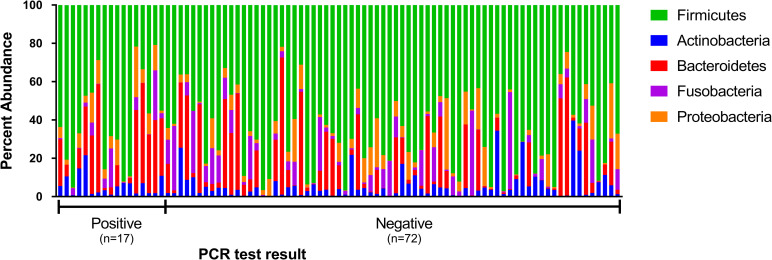
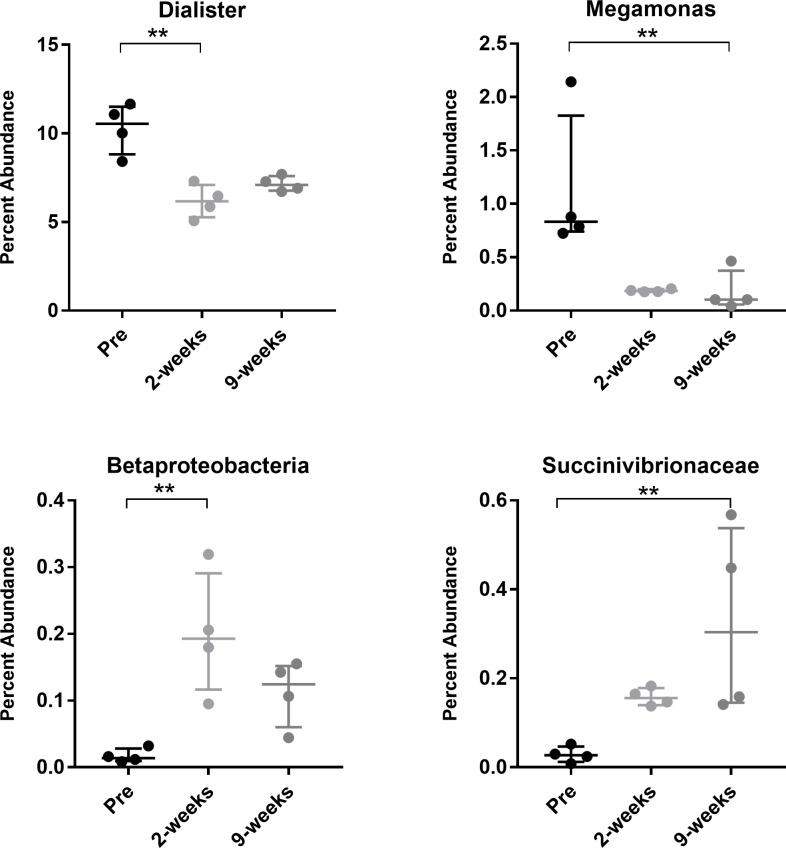
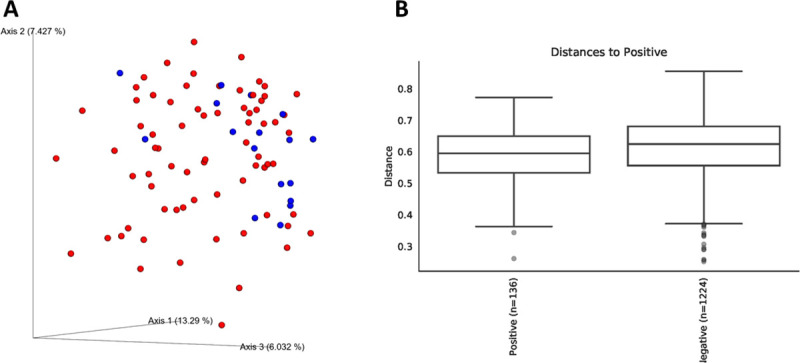
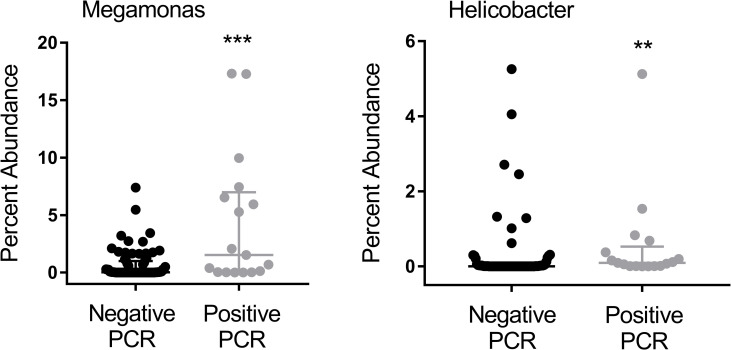
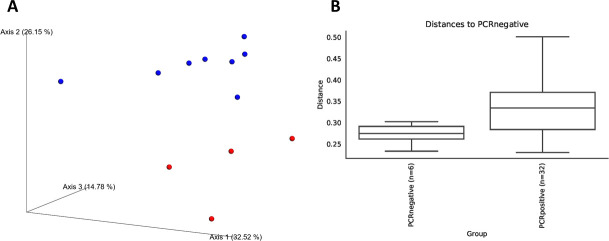
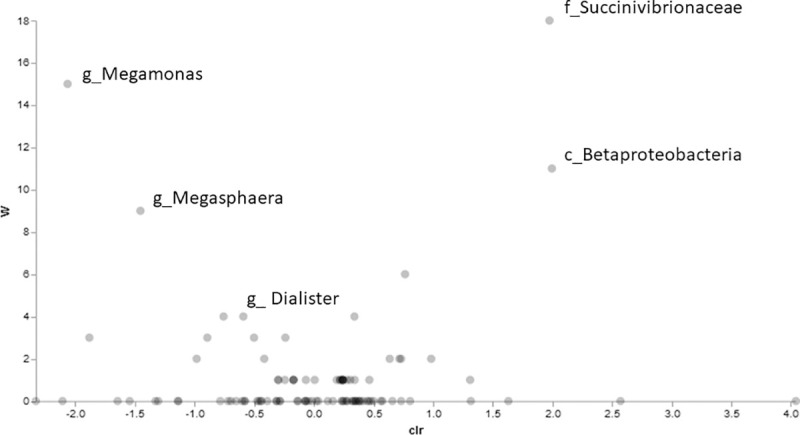
The protozoal pathogen Tritrichomonas foetus infects the colon of domestic cats and is a major cause of chronic colitis and diarrhea. Treatment failure is common, but antibiotics may improve clinical signs in a subset of cats, leading researchers to question involvement of the colonic microbiota in disease pathogenesis. Studies performed in women with venereal Trichomonas vaginalis infections have revealed that dysbiosis of host microbiota contributes to pathogenicity with similar findings also found in mice with intestinal Tritrichomonas musculis The aim of this study was to characterize differences in the fecal microbiota of cats with and without naturally occurring T. foetus infection and in a group of kittens prior to and after experimentally induced infection. Archived fecal DNA from cats undergoing testing for T. foetus infection (n = 89) and experimentally infected kittens (n = 4; at pre-, 2 weeks, and 9 weeks post-infection) were analyzed by sequencing of 16S rRNA genes. Amongst the naturally infected population, the genera Megamonas and Helicobacter were significantly increased in prevalence and abundance in cats testing positive for T. foetus infection. In the group of four experimentally infected kittens, fecal samples post-infection had significantly lower abundance of genus Dialister and Megamonas and greater abundance of the class Betaproteobacteria and family Succinivibrionaceae. We hypothesize that T. foetus promotes dysbiosis by competition for fermentable substrates used by these bacteria and that metabolic byproducts may contribute to the pathogenesis of colonic inflammation and diarrhea. Future studies are warranted for the measurement of fecal concentrations of microbial and protozoal metabolites in cats with T. foetus infection for the identification of potential therapeutic targets.
原虫病原体胎儿三毛滴虫感染家猫的结肠,是慢性结肠炎和腹泻的主要原因。治疗失败很常见,但抗生素可能会改善一部分猫的临床症状,这促使研究人员质疑结肠微生物群在疾病发病机制中的作用。对患有性传播滴虫阴道炎的女性进行的研究表明,宿主微生物群的失调导致了致病性,在患有肠道滴虫病的小鼠中也发现了类似的发现。本研究旨在描述自然发生胎儿三毛滴虫感染的猫与未感染猫以及一组实验性感染小猫的粪便微生物群之间的差异。对接受胎儿三毛滴虫感染检测的猫(n=89)和实验感染小猫(n=4;感染前、2 周和 9 周后)的粪便 DNA 进行了 16S rRNA 基因测序分析。在自然感染人群中,Megamonas 和 Helicobacter 属的丰度和流行度在 T. foetus 感染检测呈阳性的猫中显著增加。在 4 只实验感染的小猫中,感染后粪便样本中属 Dialister 和 Megamonas 的丰度显著降低,β变形菌纲和琥珀酸单胞菌科的丰度显著增加。我们假设 T. foetus 通过与这些细菌竞争可发酵底物来促进菌群失调,而代谢副产物可能有助于结肠炎症和腹泻的发病机制。未来有必要在感染 T. foetus 的猫中测量粪便中微生物和原生动物代谢物的浓度,以确定潜在的治疗靶点。