Department of Molecular, Cell & Cancer Biology, University of Massachusetts Medical School, Worcester, MA, 01605, USA.
Department of Molecular, Cell & Cancer Biology, University of Massachusetts Medical School, Worcester, MA, 01605, USA.
Mol Cell Endocrinol. 2021 May 1;527:111213. doi: 10.1016/j.mce.2021.111213. Epub 2021 Feb 17.
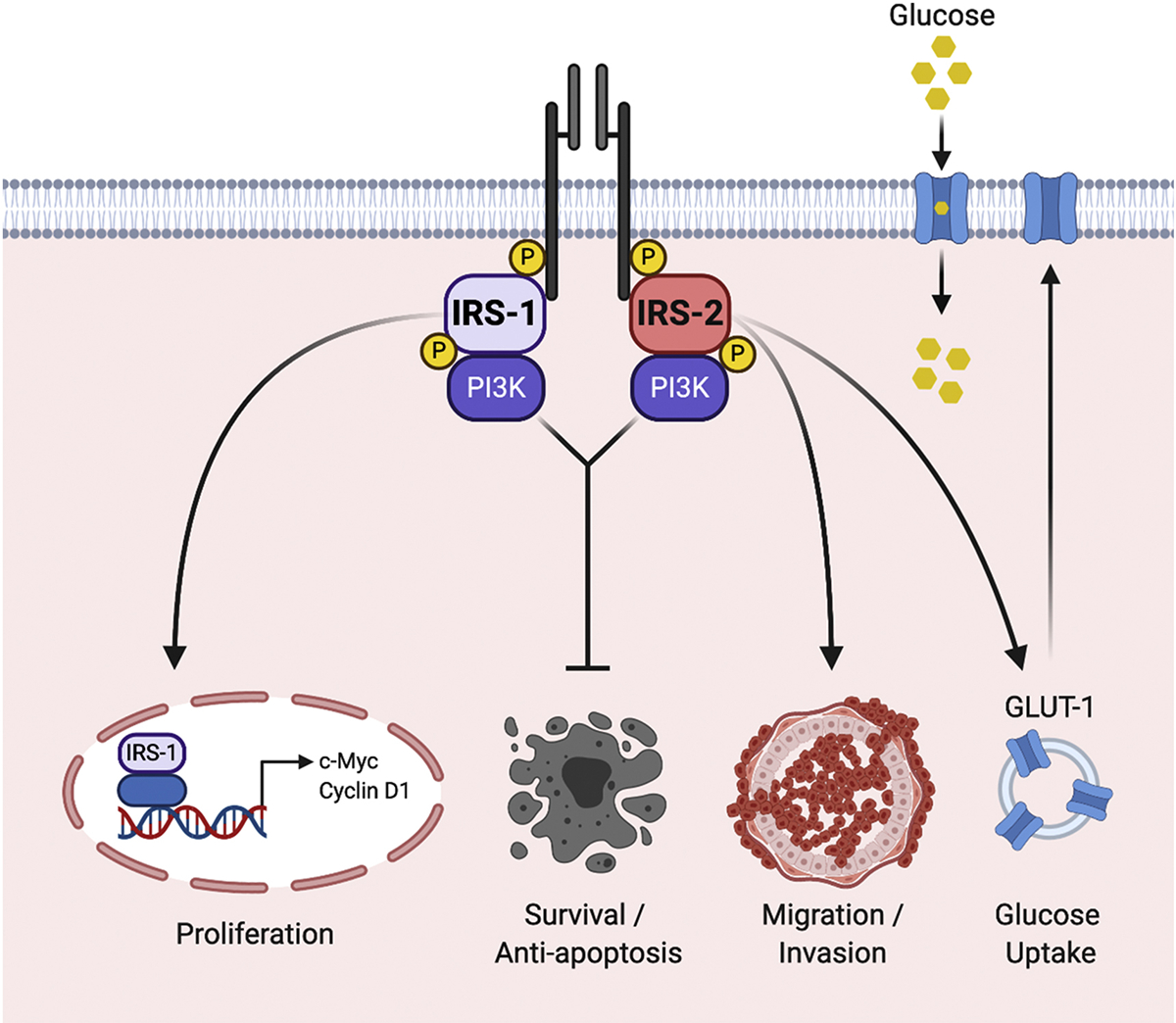
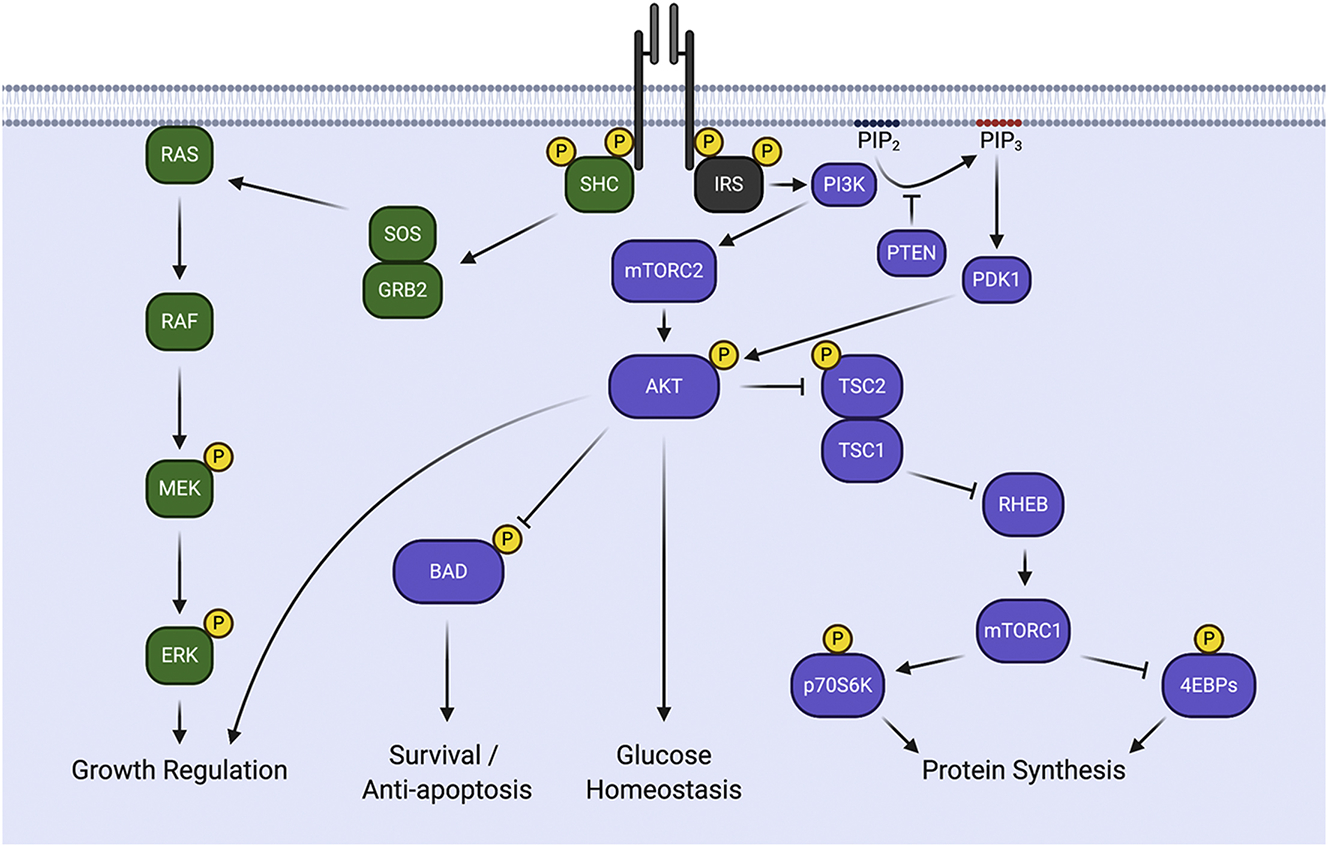
This review highlights the significance of the insulin receptor (IR) and insulin-like growth factor-1 receptor (IGF-1R) signaling pathway in cancer and assesses its potential as a therapeutic target. Our emphasis is on breast cancer, but this pathway is central to the behavior of many cancers. An understanding of how IR/IGF-1R signaling contributes to the function of the normal mammary gland provides a foundation for understanding its aberrations in breast cancer. Specifically, dysregulation of the expression and function of ligands (insulin, IGF-1 and IGF-2), receptors and their downstream signaling effectors drive breast cancer initiation and progression, often in a subtype-dependent manner. Efforts to target this pathway for the treatment of cancer have been hindered by several factors including a lack of biomarkers to select patients that could respond to targeted therapy and adverse effects on normal metabolism. To this end, we discuss ongoing efforts aimed at overcoming such obstacles.
本文重点介绍了胰岛素受体 (IR) 和胰岛素样生长因子-1 受体 (IGF-1R) 信号通路在癌症中的重要性,并评估了其作为治疗靶点的潜力。我们强调的是乳腺癌,但该通路是许多癌症行为的核心。了解 IR/IGF-1R 信号如何促进正常乳腺的功能,为理解其在乳腺癌中的异常提供了基础。具体而言,配体(胰岛素、IGF-1 和 IGF-2)、受体及其下游信号效应物的表达和功能失调,以亚类依赖的方式驱动乳腺癌的发生和进展。针对该通路治疗癌症的努力受到多种因素的阻碍,包括缺乏能够选择对靶向治疗有反应的患者的生物标志物,以及对正常代谢的不良影响。为此,我们讨论了旨在克服这些障碍的正在进行的努力。