Department of Tumor Biology, Institute for Cancer Research, Oslo University Hospital, Oslo, Norway.
Department of Medical Biology, The Arctic University of Norway, Tromsø, Norway.
Carcinogenesis. 2021 May 28;42(5):685-693. doi: 10.1093/carcin/bgab015.
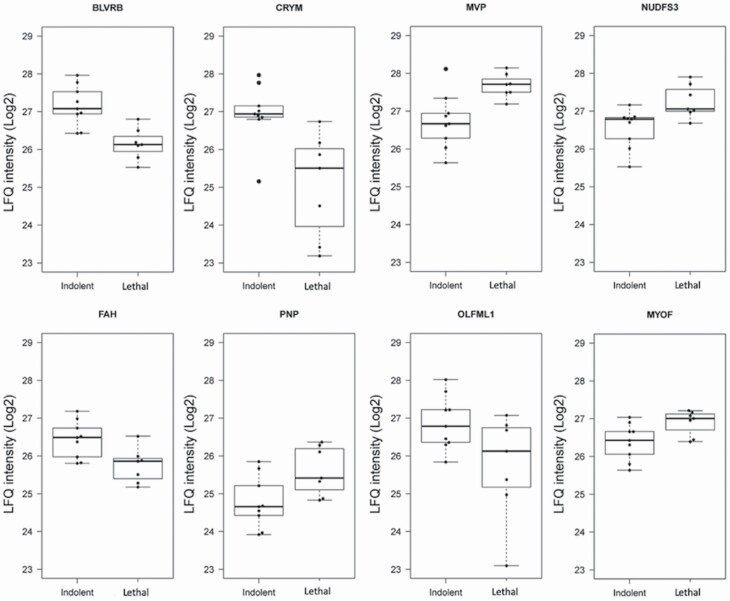
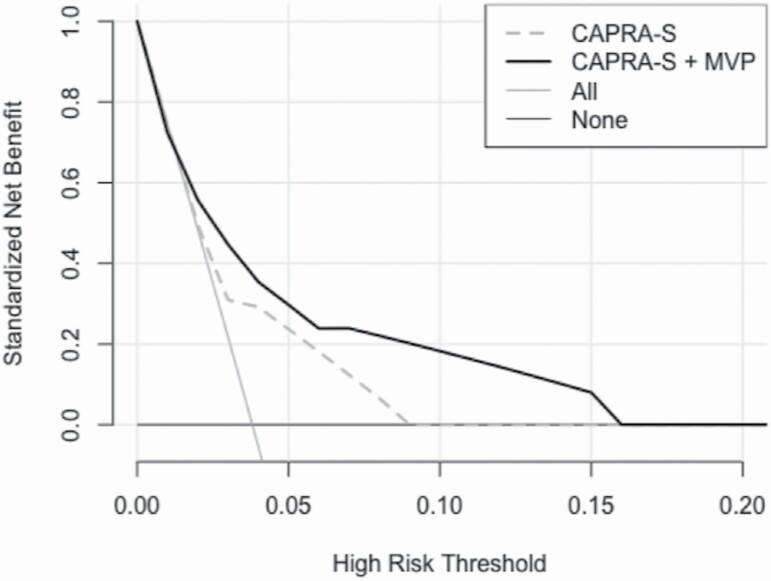
The demographic shift toward an older population will increase the number of prostate cancer cases. A challenge in the treatment of prostate cancer is to avoid undertreatment of patients at high risk of progression following curative treatment. These men can benefit from early salvage treatment. An explorative cohort consisting of tissue from 16 patients who underwent radical prostatectomy, and were either alive or had died from prostate cancer within 10 years postsurgery, was analyzed by mass spectrometry analysis. Following proteomic and bioinformatic analyses, major vault protein (MVP) was identified as a putative prognostic biomarker. A publicly available tissue proteomics dataset and a retrospective cohort of 368 prostate cancer patients were used for validation. The prognostic value of the MVP was verified by scoring immunohistochemical staining of a tissue microarray. High level of MVP was associated with more than 4-fold higher risk for death from prostate cancer (hazard ratio = 4.41, 95% confidence interval: 1.45-13.38; P = 0.009) in a Cox proportional hazard models, adjusted for Cancer of the Prostate Risk Assessments Post-surgical (CAPRA-S) score and perineural invasion. Decision curve analyses suggested an improved standardized net benefit, ranging from 0.06 to 0.18, of adding MVP onto CAPRA-S score. This observation was confirmed by receiver operator characteristics curve analyses for the CAPRA-S score versus CAPRA-S and MVP score (area under the curve: 0.58 versus 0.73). From these analyses, one can infer that MVP levels in combination with CAPRA-S score might add onto established risk parameters to identify patients with lethal prostate cancer.
人口结构向老龄化转变将增加前列腺癌的病例数。治疗前列腺癌的一个挑战是避免对接受根治性治疗后有进展高风险的患者治疗不足。这些患者可以从早期挽救性治疗中获益。对 16 名接受根治性前列腺切除术且术后 10 年内存活或死于前列腺癌的患者的组织进行了质谱分析,对其进行了分析。通过蛋白质组学和生物信息学分析,确定主要穹窿蛋白 (MVP) 为潜在的预后生物标志物。使用公开可用的组织蛋白质组数据集和 368 名前列腺癌患者的回顾性队列进行验证。通过对组织微阵列的免疫组织化学染色进行评分,验证了 MVP 的预后价值。在 Cox 比例风险模型中,MVP 水平高与前列腺癌死亡风险增加 4 倍以上相关(危险比=4.41,95%置信区间:1.45-13.38;P=0.009),调整了前列腺癌风险评估术后 (CAPRA-S) 评分和神经周围浸润。决策曲线分析表明,将 MVP 添加到 CAPRA-S 评分中可以提高标准化净收益,范围为 0.06 到 0.18。这一观察结果通过对 CAPRA-S 评分与 CAPRA-S 和 MVP 评分的接收者操作特征曲线分析得到了证实(曲线下面积:0.58 对 0.73)。从这些分析中可以推断,MVP 水平与 CAPRA-S 评分相结合可能会增加已建立的风险参数,以识别具有致命性前列腺癌的患者。