School of Neuroscience, Virginia Polytechnic Institute and State University, Blacksburg, VA, USA.
Department of Animal and Poultry Science, Virginia Polytechnic Institute and State University, Blacksburg, VA, USA.
Neurobiol Learn Mem. 2021 Apr;180:107404. doi: 10.1016/j.nlm.2021.107404. Epub 2021 Feb 18.
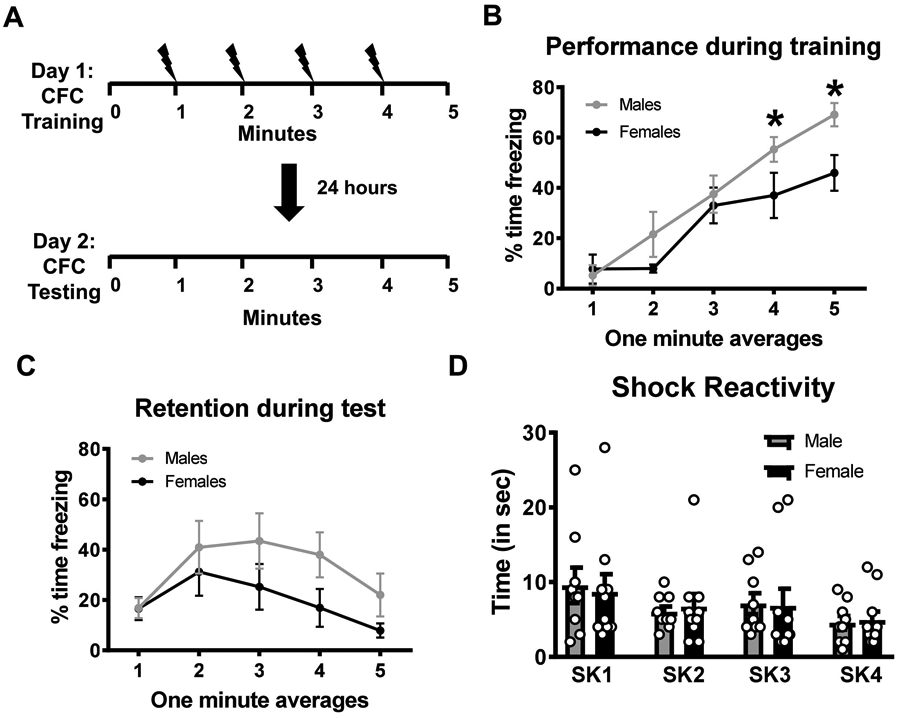
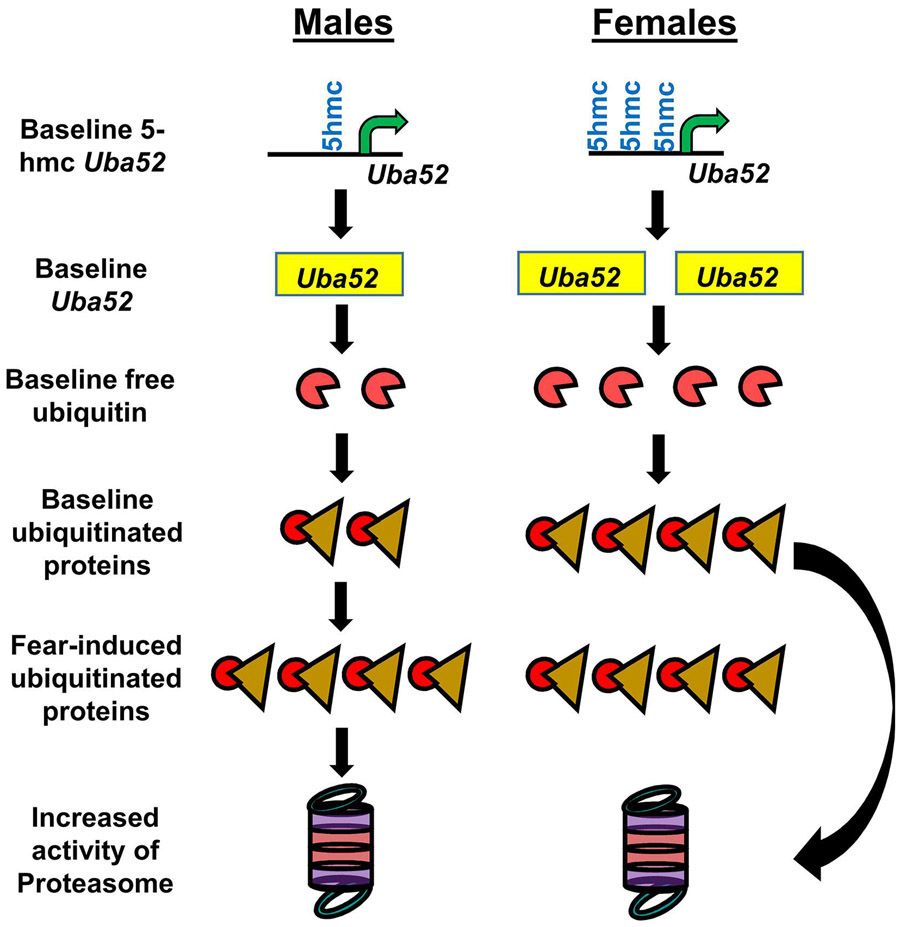
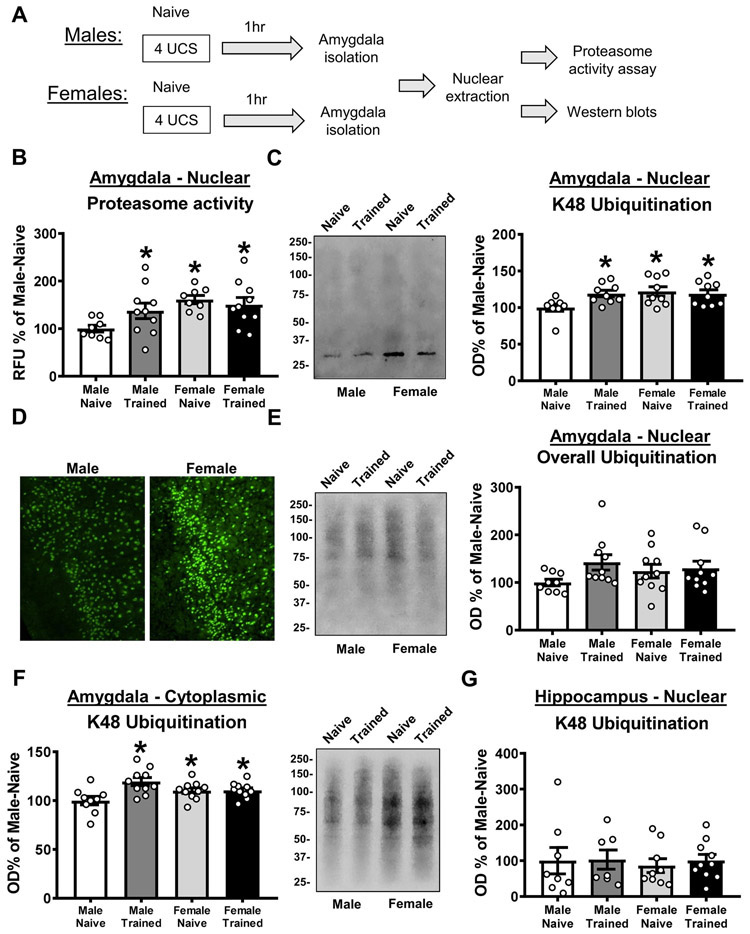
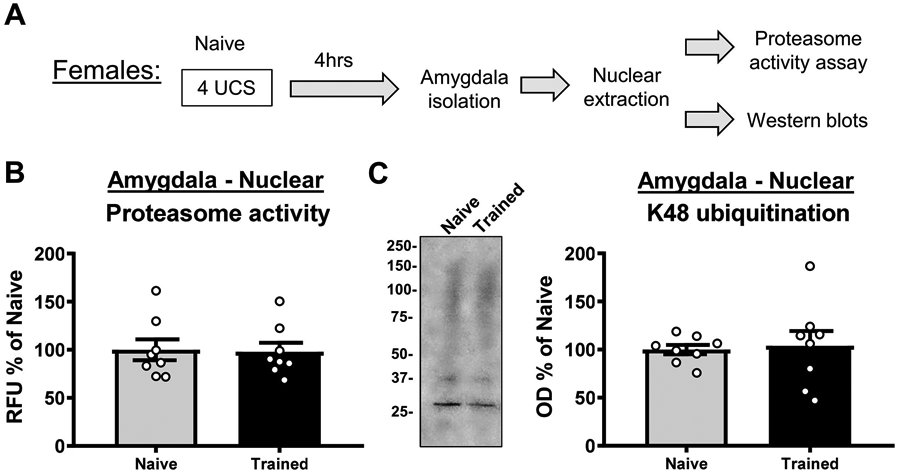
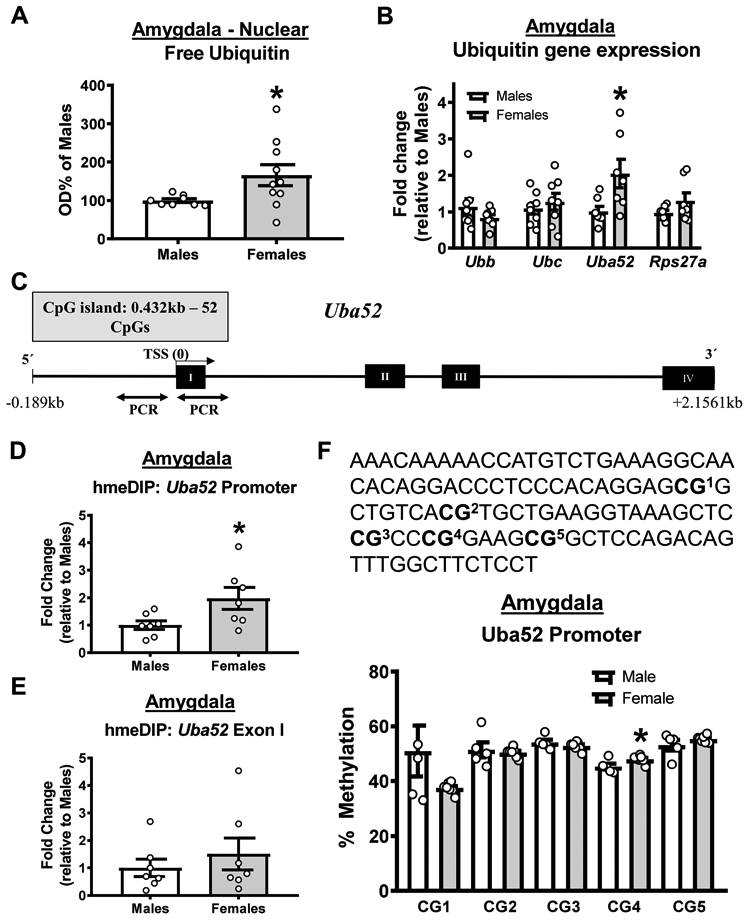
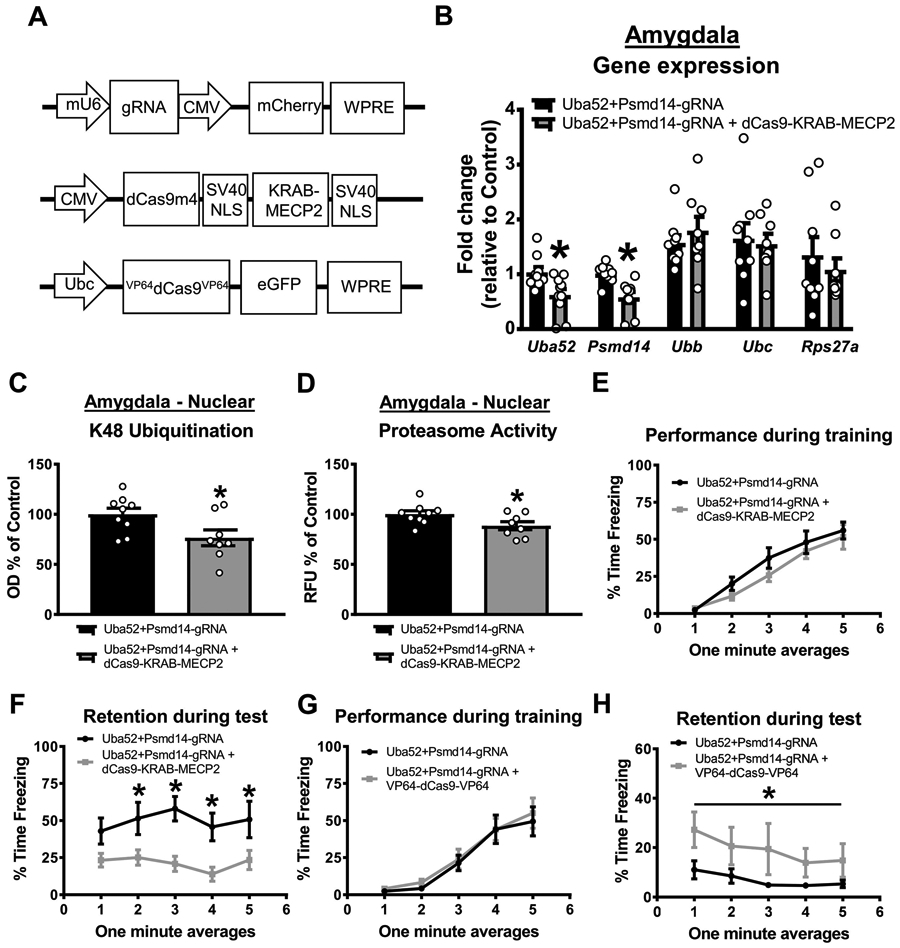
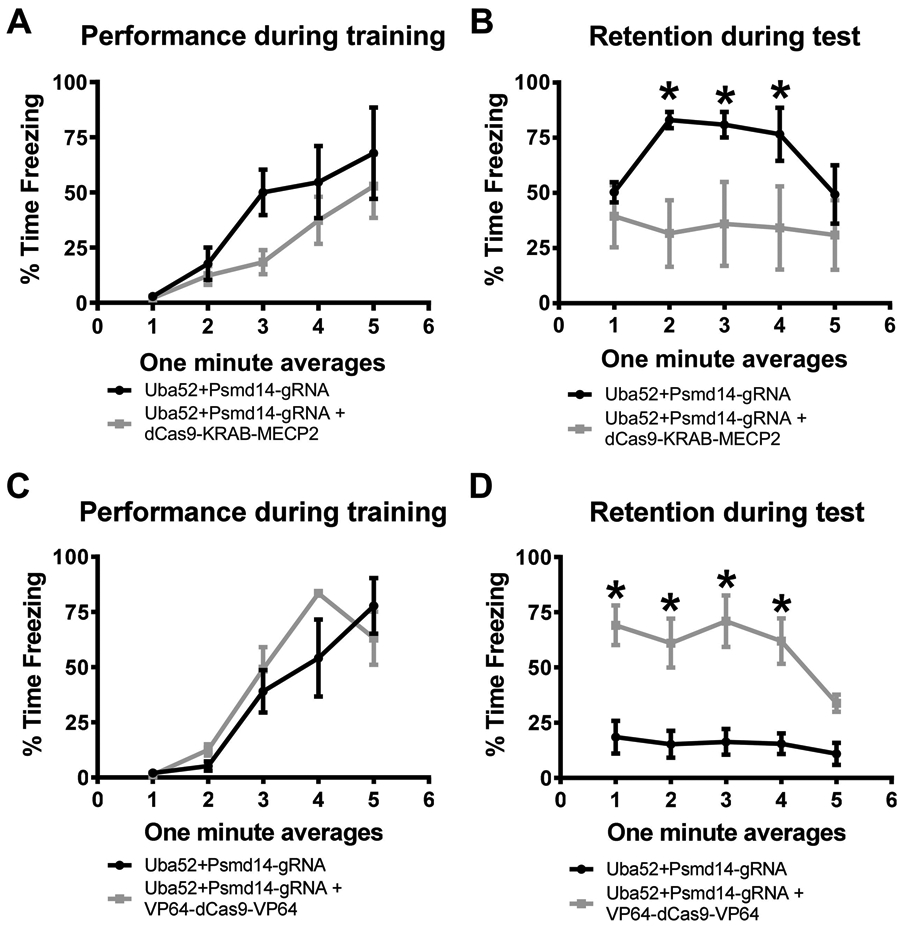
Over the last decade, strong evidence has emerged that protein degradation mediated by the ubiquitin-proteasome system is critical for fear memory formation in the amygdala. However, this work has been done primarily in males, leaving unanswered questions about whether females also require protein degradation during fear memory formation. Here, we found that male and female rats differed in their engagement and regulation of, but not need for, protein degradation in the amygdala during fear memory formation. Male, but not female, rats had increased protein degradation in the nuclei of amygdala cells after fear conditioning. Conversely, females had elevated baseline levels of overall ubiquitin-proteasome activity in amygdala nuclei. Gene expression and DNA methylation analyses identified that females had increased baseline expression of the ubiquitin coding gene Uba52, which had increased DNA 5-hydroxymethylation (5hmc) in its promoter region, indicating a euchromatin state necessary for increased levels of ubiquitin in females. Consistent with this, persistent CRISPR-dCas9 mediated silencing of Uba52 and proteasome subunit Psmd14 in the amygdala reduced baseline protein degradation levels and impaired fear memory in male and female rats, while enhancing baseline protein degradation in the amygdala of both sexes promoted fear memory formation. These results suggest that while both males and females require protein degradation in the amygdala for fear memory formation, they differ in their baseline regulation and engagement of this process following learning. These results have important implications for understanding the etiology of sex-related differences in fear memory formation.
在过去的十年中,有强有力的证据表明,泛素-蛋白酶体系统介导的蛋白质降解对于杏仁核中的恐惧记忆形成至关重要。然而,这项工作主要是在男性中进行的,对于女性在恐惧记忆形成过程中是否也需要蛋白质降解,仍存在未解决的问题。在这里,我们发现雄性和雌性大鼠在恐惧记忆形成过程中,杏仁核细胞的核内蛋白质降解的参与和调节不同,但并不需要。恐惧条件作用后,雄性大鼠而不是雌性大鼠的杏仁核细胞核内蛋白质降解增加。相反,雌性大鼠的杏仁核核内泛素-蛋白酶体活性的基线水平升高。基因表达和 DNA 甲基化分析表明,雌性大鼠的泛素编码基因 Uba52 的基线表达增加,其启动子区域的 5-羟甲基化(5hmc)增加,表明雌性大鼠中存在增加泛素水平所必需的常染色质状态。与之一致的是,持续的 CRISPR-dCas9 介导的 Uba52 和蛋白酶体亚基 Psmd14 在杏仁核中的沉默减少了雄性和雌性大鼠的基线蛋白质降解水平,并损害了它们的恐惧记忆,而增强两性杏仁核中的基线蛋白质降解则促进了恐惧记忆的形成。这些结果表明,虽然雄性和雌性大鼠都需要杏仁核中的蛋白质降解来形成恐惧记忆,但它们在学习后对该过程的基线调节和参与存在差异。这些结果对于理解恐惧记忆形成中性别差异的病因学具有重要意义。