
对于稳定的肱骨近端骨折固定需要多少枚近端螺钉?
How Many Proximal Screws Are Needed for a Stable Proximal Humerus Fracture Fixation?
作者信息
Kim Hyojune, Shin Myung Jin, Kholinne Erica, Seo Janghyeon, Ahn Duckwoo, Kim Ji Wan, Koh Kyoung Hwan
机构信息
Department of Orthopedic Surgery, Asan Medical Center, University of Ulsan, College of Medicine, Seoul, Korea.
Depart of Orthopedic Surgery, Eulji University Hospital, Daejeon, Korea.
出版信息
Geriatr Orthop Surg Rehabil. 2021 Feb 9;12:2151459321992744. doi: 10.1177/2151459321992744. eCollection 2021.
PURPOSE
This biomechanical study investigates the optimal number of proximal screws for stable fixation of a 2-part proximal humerus fracture model with a locking plate.
METHODS
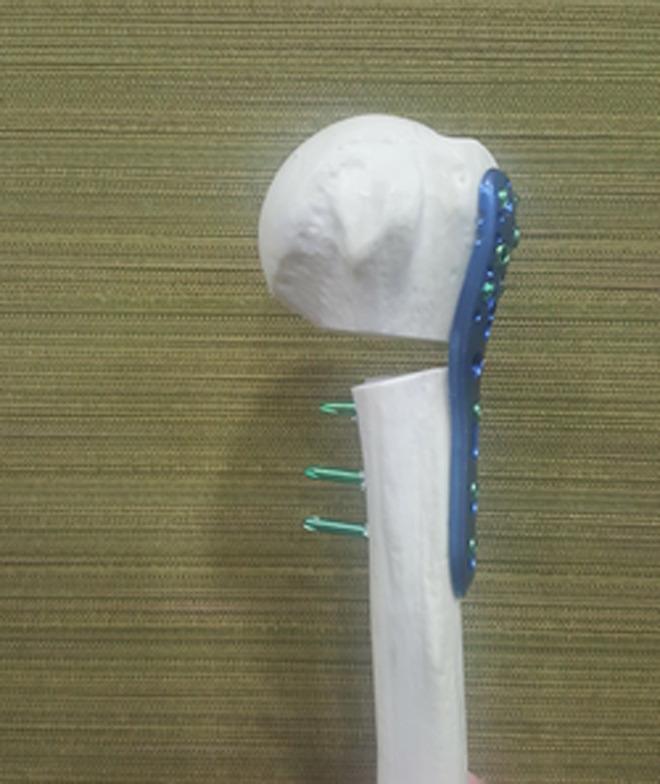
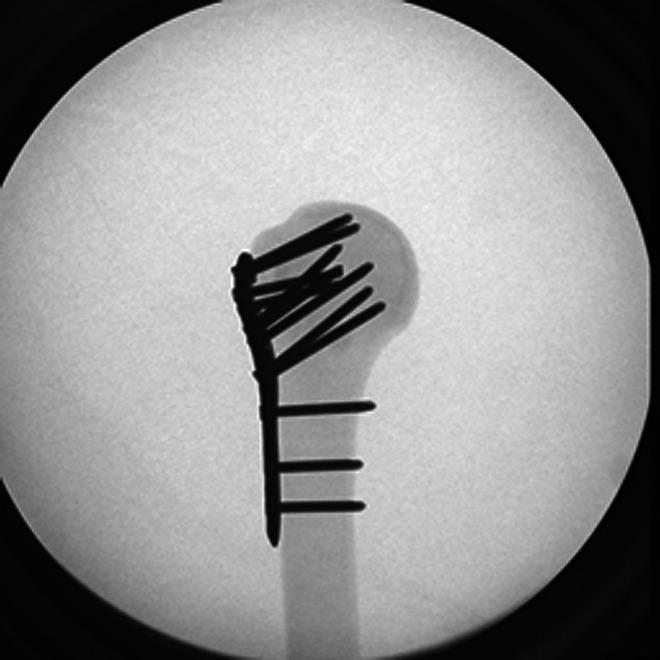
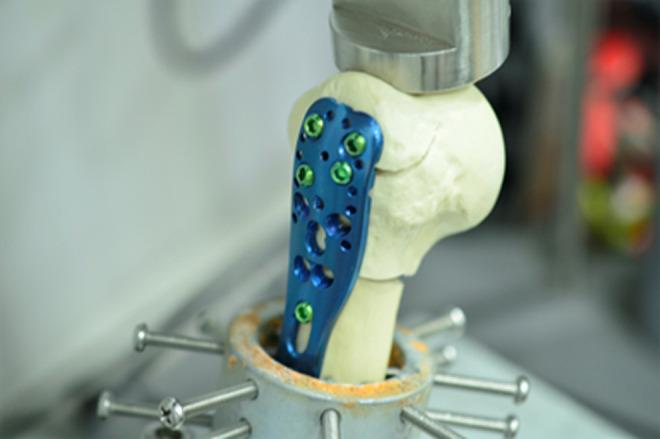
Twenty-four proximal humerus fracture models were included in the study. An unstable 2-part fracture was created and fixed by a locking plate. Cyclic loading and load-to-failure tests were used for the following 4 groups based on the number of screws used: 4-screw, 6-screw, 7-screw, and 9-screw groups. Interfragmentary gaps were measured following cyclic loading and compared. Consequently, the load to failure, maximum displacement, stiffness, and mode of failure at failure point were compared.
RESULTS
The interfragmentary gaps for the 4-screw, 6-screw, 7-screw, and 9-screw groups were significantly reduced by 0.24 ± 0.09 mm, 0.08 ± 0.06 mm, 0.05 ± 0.01 mm, and 0.03 ± 0.01 mm following 1000 cyclic loading, respectively. The loads to failure were significantly different between the groups with the 7-screw group showing the highest load to failure. The stiffness of the 7-screw group was superior compared with the 6-screw, 9-screw, and 4-screw groups. The maximum displacement before failure showed a significant difference between the comparative groups with the 4-screw group having the lowest value. The 7-screw group had the least structural failure rate (33.3%).
CONCLUSION
At least 7 screws would be optimal for proximal fragment fixation of proximal humerus fractures with medial comminution to minimize secondary varus collapse or fixation failure.
LEVEL OF EVIDENCE
Basic science study.
目的
本生物力学研究旨在探讨使用锁定钢板固定两部分型肱骨近端骨折模型时,近端螺钉的最佳数量。
方法
本研究纳入24个肱骨近端骨折模型。制造不稳定的两部分骨折并使用锁定钢板固定。根据所用螺钉数量,将以下4组用于循环加载和破坏载荷试验:4螺钉组、6螺钉组、7螺钉组和9螺钉组。循环加载后测量骨折块间间隙并进行比较。随后,比较破坏载荷、最大位移、刚度以及破坏点处的破坏模式。
结果
在1000次循环加载后,4螺钉组、6螺钉组、7螺钉组和9螺钉组的骨折块间间隙分别显著减小0.24±0.09毫米、0.08±0.06毫米、0.05±0.01毫米和0.03±0.01毫米。各小组之间的破坏载荷有显著差异,7螺钉组的破坏载荷最高。7螺钉组的刚度优于6螺钉组、9螺钉组和4螺钉组。破坏前的最大位移在各比较组之间有显著差异,4螺钉组的值最低。7螺钉组的结构破坏率最低(33.3%)。
结论
对于伴有内侧粉碎的肱骨近端骨折,近端骨折块固定至少需要7枚螺钉,以尽量减少继发性内翻塌陷或固定失败。
证据水平
基础科学研究。



 Zotero 插件