Department of Medicine, University of Texas Health, San Antonio, TX, USA.
Graduate School of Biomedical Sciences, University of Texas Health, San Antonio, TX, USA.
Cancer Med. 2021 Mar;10(6):2137-2152. doi: 10.1002/cam4.3739. Epub 2021 Feb 24.
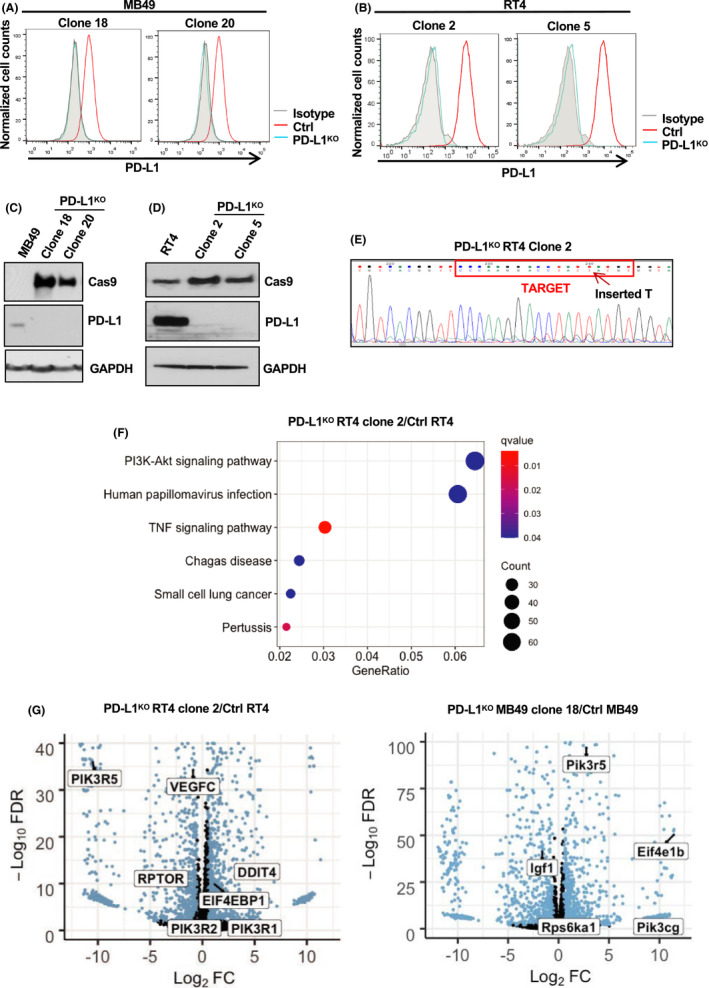
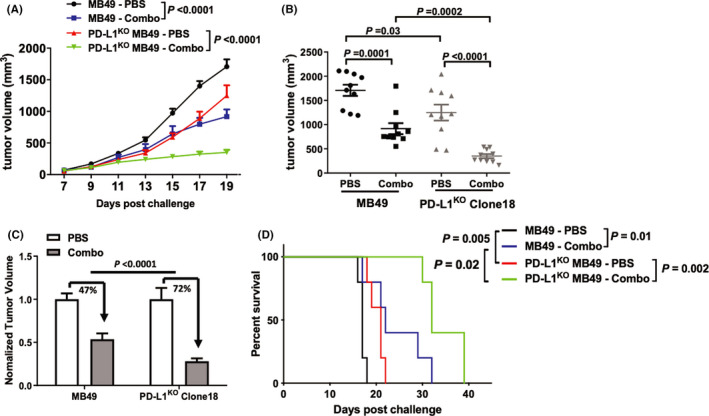
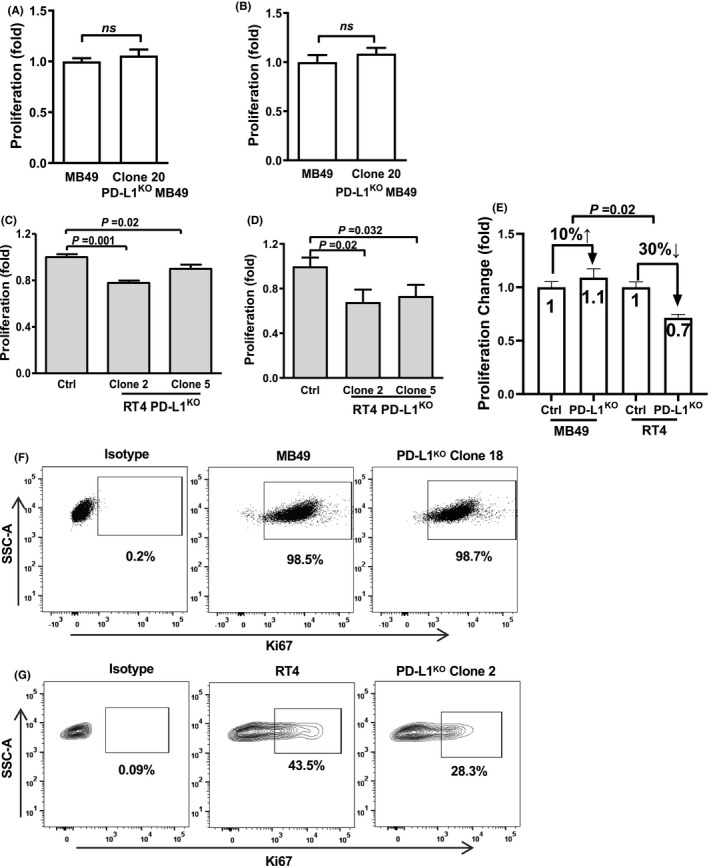
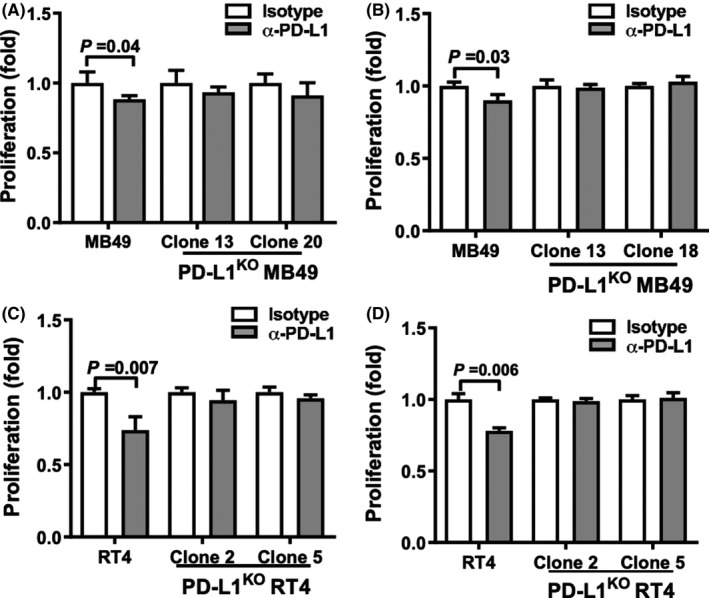
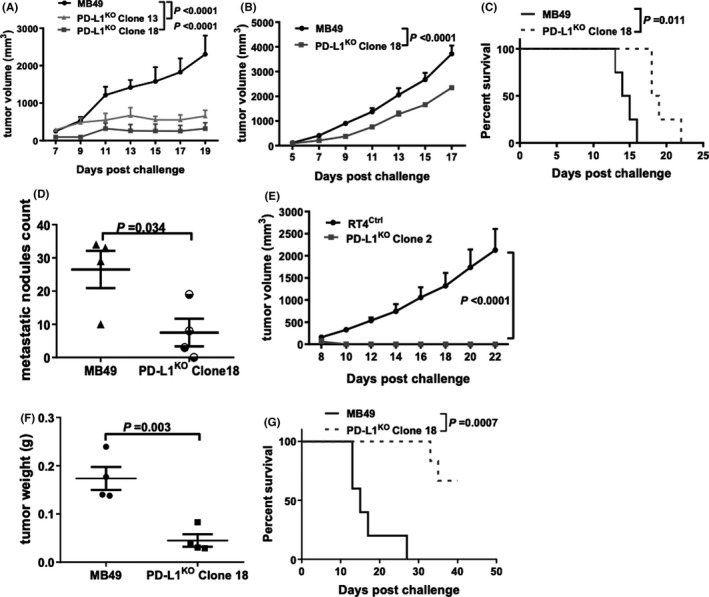
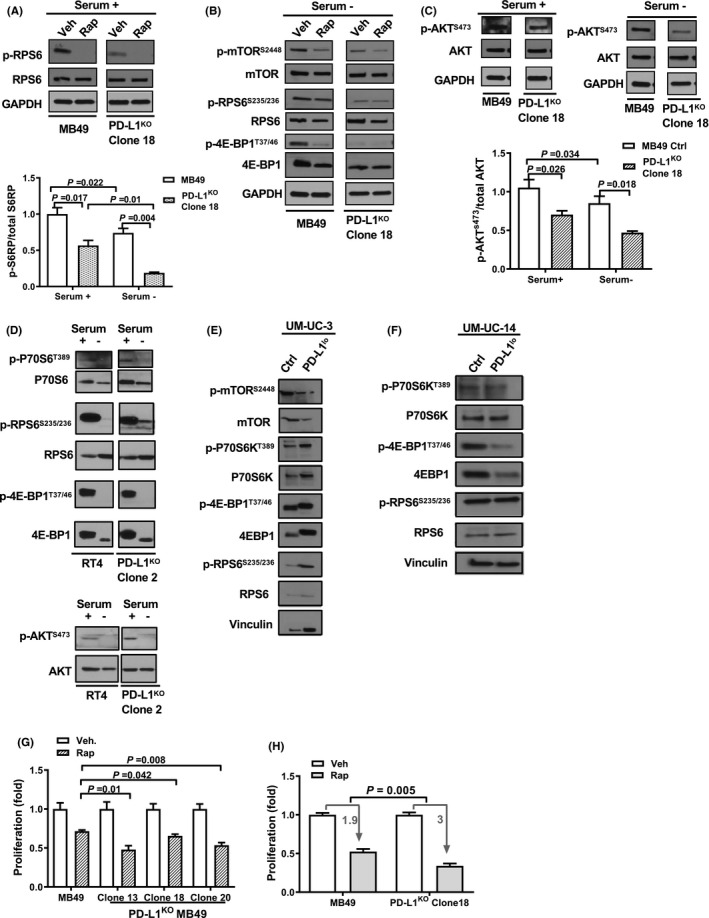
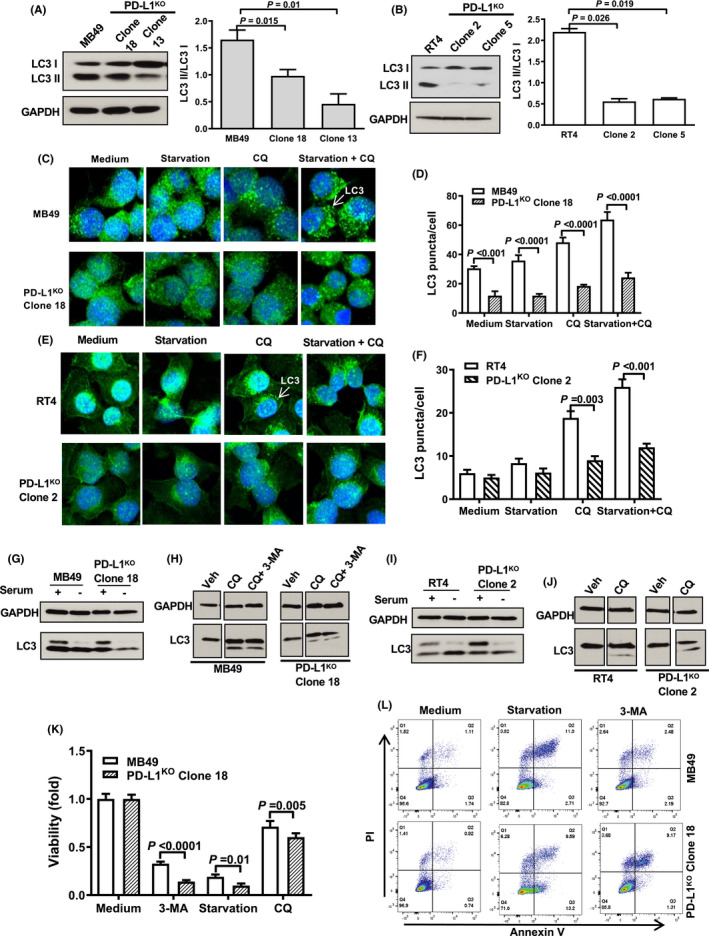
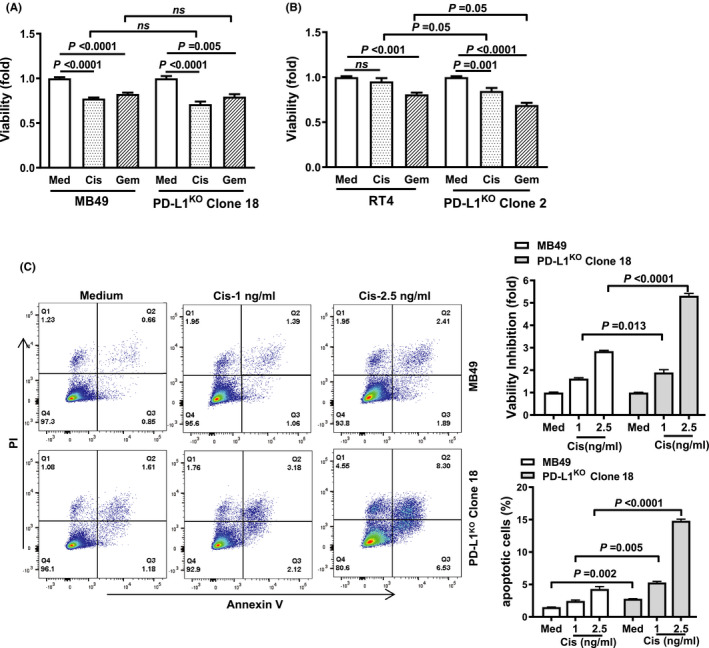
Tumor cell-intrinsic programmed death-ligand 1 (PD-L1) signals mediate immunopathologic effects in breast, colon, and ovarian cancers and in melanomas, but bladder cancer (BC) effects are unreported. We show here that BC cell-intrinsic PD-L1 signals in mouse MB49 and human RT4, UM-UC3, and UM-UC-14 BC cells regulate important pathologic pathways and processes, including effects not reported in other cancers. α-PD-L1 antibodies reduced BC cell proliferation in vitro, demonstrating direct signaling effects. BC cell-intrinsic PD-L1 promoted mammalian target of rapamycin complex 1 (mTORC1) signals in vitro and augmented in vivo immune-independent cell growth and metastatic cancer spread, similar to effects we reported in melanoma and ovarian cancer. BC cell-intrinsic PD-L1 signals also promoted basal and stress-induced autophagy, whereas these signals inhibited autophagy in melanoma and ovarian cancer cells. BC cell-intrinsic PD-L1 also mediated chemotherapy resistance to the commonly used BC chemotherapy agents cis-platinum and gemcitabine and to the mTORC1 inhibitor, rapamycin. Thus, BC cell-intrinsic PD-L1 signals regulate important virulence and treatment resistance pathways that suggest novel, actionable treatment targets meriting additional studies. As a proof-of-concept, we showed that the autophagy inhibitor chloroquine improved cis-platinum treatment efficacy in vivo, with greater efficacy in PD-L1 null versus PD-L1-replete BC.
肿瘤细胞内在程序性死亡配体 1(PD-L1)信号介导乳腺癌、结肠癌和卵巢癌以及黑色素瘤中的免疫病理效应,但膀胱癌(BC)的效应尚未报道。我们在这里表明,在小鼠 MB49 和人 RT4、UM-UC3 和 UM-UC-14 BC 细胞中,BC 细胞内在的 PD-L1 信号调节重要的病理途径和过程,包括在其他癌症中未报道的效应。α-PD-L1 抗体减少了 BC 细胞在体外的增殖,证明了直接信号作用。BC 细胞内在的 PD-L1 在体外促进了雷帕霉素哺乳动物靶标复合物 1(mTORC1)信号,并增强了体内免疫独立的细胞生长和转移性癌症扩散,类似于我们在黑色素瘤和卵巢癌中报告的效应。BC 细胞内在的 PD-L1 信号还促进了基础和应激诱导的自噬,而这些信号在黑色素瘤和卵巢癌细胞中抑制了自噬。BC 细胞内在的 PD-L1 还介导了对常用的 BC 化疗药物顺铂和吉西他滨以及 mTORC1 抑制剂雷帕霉素的化疗耐药性。因此,BC 细胞内在的 PD-L1 信号调节重要的毒力和治疗耐药途径,提示需要进一步研究新的、可操作的治疗靶点。作为概念验证,我们表明自噬抑制剂氯喹改善了体内顺铂治疗的疗效,在 PD-L1 缺失的 BC 中比在 PD-L1 丰富的 BC 中更有效。