Wang Guanghua, Xie Bing, Su Yanli, Gu Qinqin, Hao Dongfang, Liu Hongmei, Wang Changbiao, Hu Yonghua, Zhang Min
Marine Science and Engineering College, Qingdao Agricultural University, Qingdao, 266109, China.
Institute of Tropical Bioscience and Biotechnology, Hainan Academy of Tropical Agricultural Resource, CATAS, Haikou, 571101, China.
Vet Res. 2021 Feb 25;52(1):32. doi: 10.1186/s13567-021-00908-y.
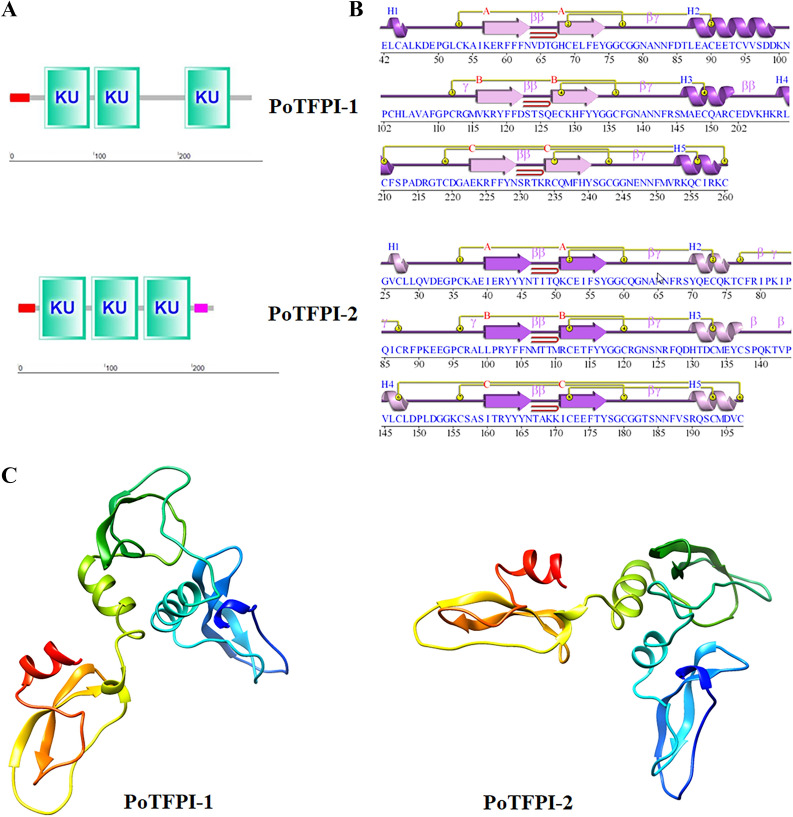
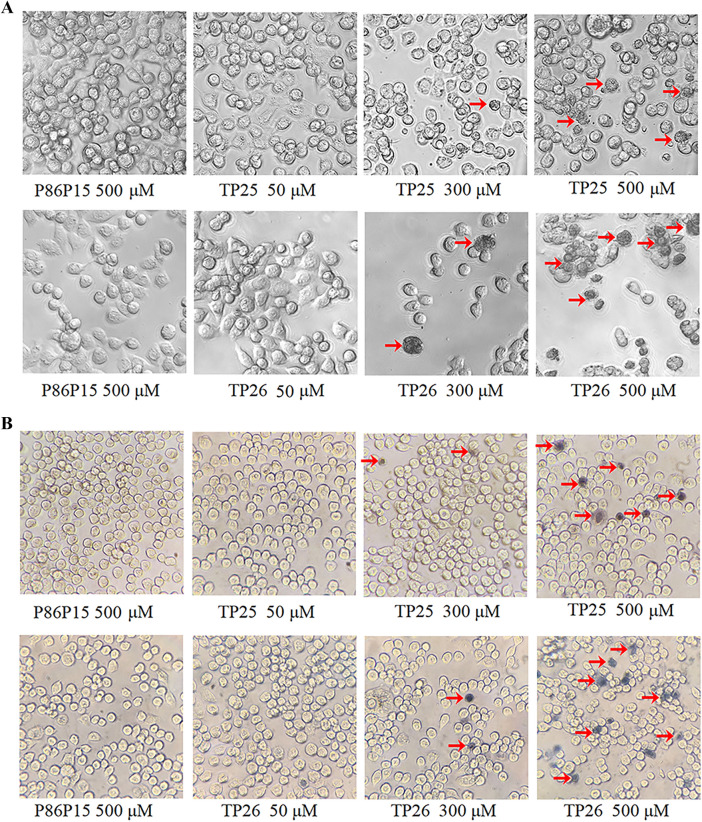
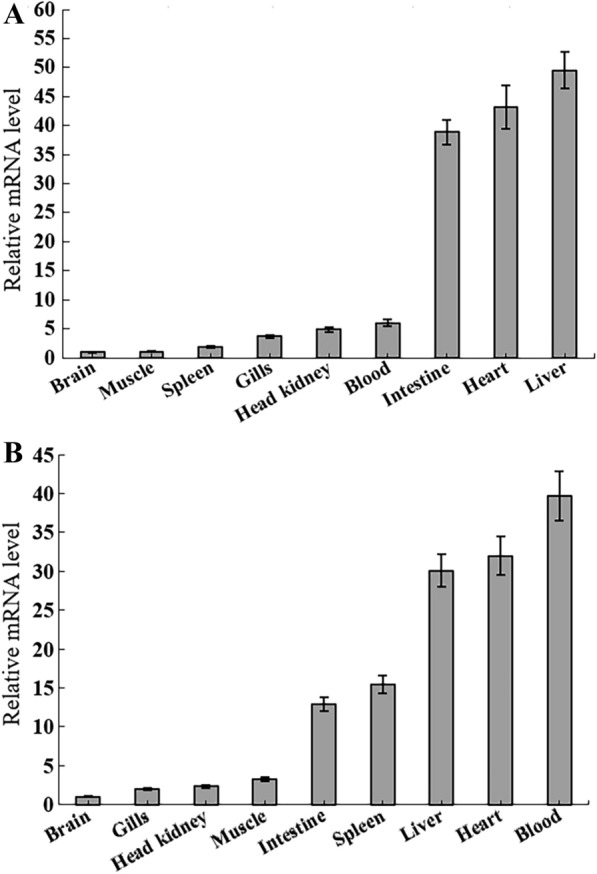
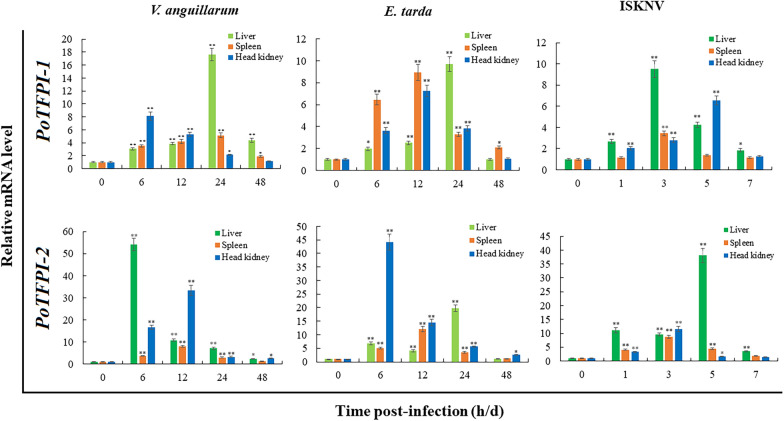
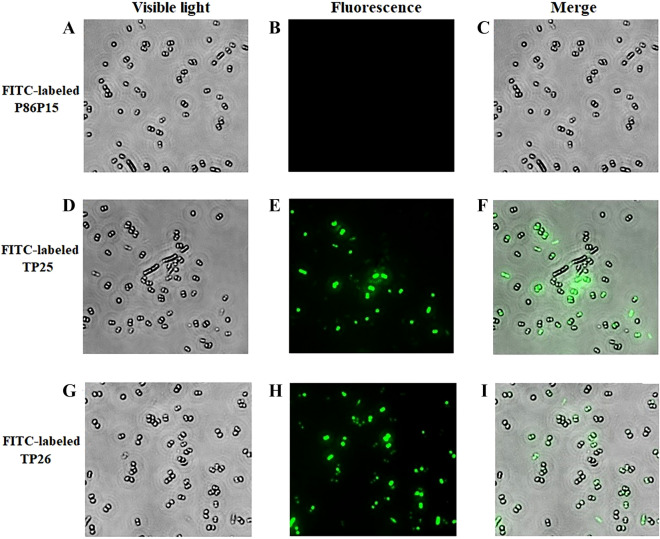
Tissue factor pathway inhibitors (TFPI), including TFPI-1 and TFPI-2, are Kunitz-type serine protease inhibitors that mainly inhibit the blood coagulation induced by tissue factors. Previous reports on teleost proved TFPI play important roles in innate immunity. In this study, two TFPI (PoTFPI-1 and PoTFPI-2) molecules from Japanese flounder (Paralichthys olivaceus) were analyzed and characterized for their expression patterns, antibacterial and anticancer activities of the C-terminal derived peptides. Quantitative real time RT-PCR analysis shows that constitutive PoTFPI-1 expression occurred, in increasing order, in the brain, muscle, spleen, gills, head kidney, blood, intestine, heart, and liver; PoTFPI-2 was expressed, in increasing order, in the brain, gills, head kidney, muscle, intestine, spleen, liver, heart, and blood. Under the stimulation of fish pathogens, both PoTFPI-1 and PoTFPI-2 expressions increased significantly in a manner that depended on the pathogens, tissue type, and infection stage. Furthermore, C-terminal peptides TP25 and TP26, derived from PoTFPI-1 and PoTFPI-2, respectively, were synthesized and proved to be active against Micrococcus luteus (for TP25 and TP26) and Staphylococcus aureus (for TP25) via retardation effects on bacterial nucleic acids. In addition, TP25 and TP26 also displayed significant inhibitory effects on human colon cancer cell line HT-29. These results reveal that both PoTFPI-1 and PoTFPI-2 play important roles in host innate immunity. The antibacterial activity and anticancer cells function of TP25 and TP26 will add new insights into the roles of teleost TFPI.
组织因子途径抑制剂(TFPI),包括TFPI-1和TFPI-2,是库尼茨型丝氨酸蛋白酶抑制剂,主要抑制由组织因子诱导的血液凝固。先前关于硬骨鱼的报道证明TFPI在先天免疫中起重要作用。在本研究中,对来自牙鲆(Paralichthys olivaceus)的两种TFPI(PoTFPI-1和PoTFPI-2)分子进行了分析,并对其表达模式、C末端衍生肽的抗菌和抗癌活性进行了表征。实时定量RT-PCR分析表明,PoTFPI-1在脑中组成性表达,依次为肌肉、脾脏、鳃、头肾、血液、肠道、心脏和肝脏;PoTFPI-2依次在脑、鳃、头肾、肌肉、肠道、脾脏、肝脏、心脏和血液中表达。在鱼类病原体的刺激下,PoTFPI-1和PoTFPI-2的表达均显著增加,其增加方式取决于病原体、组织类型和感染阶段。此外,分别从PoTFPI-1和PoTFPI-2衍生的C末端肽TP25和TP26被合成,并通过对细菌核酸的阻滞作用证明对藤黄微球菌(针对TP25和TP26)和金黄色葡萄球菌(针对TP25)具有活性。此外,TP25和TP26对人结肠癌细胞系HT-29也显示出显著的抑制作用。这些结果表明,PoTFPI-1和PoTFPI-2在宿主先天免疫中均起重要作用。TP25和TP26的抗菌活性和抗癌细胞功能将为硬骨鱼TFPI的作用提供新的见解。