Zhang Shuo, Zhou Ziyue, Wang Li, Li Mengtao, Zhang Fengchun, Zeng Xiaofeng
Department of Rheumatology and Clinical Immunology, Peking Union Medical College Hospital, Peking Union Medical College and Chinese Academy of Medical Sciences, Beijing, China.
Department of Rheumatology and Clinical Immunology, Peking Union Medical College Hospital, Peking Union Medical College and Chinese Academy of Medical Sciences, 1, Shuaifuyuan, Beijing, 100730, China.
Ther Adv Chronic Dis. 2021 Feb 12;12:2040622320976996. doi: 10.1177/2040622320976996. eCollection 2021.
We aim to characterize the incidence and relative risk of rheumatic and systemic immune-related adverse effects (irAEs) among immune checkpoint inhibitor (ICI) therapy compared with those after placebo treatment.
Randomized clinical trial studies with placebo control with the following keywords were searched from Embase, PubMed, Cochrane databases: immune checkpoint inhibitors, neoplasms, randomized controlled trials, and adverse effects.
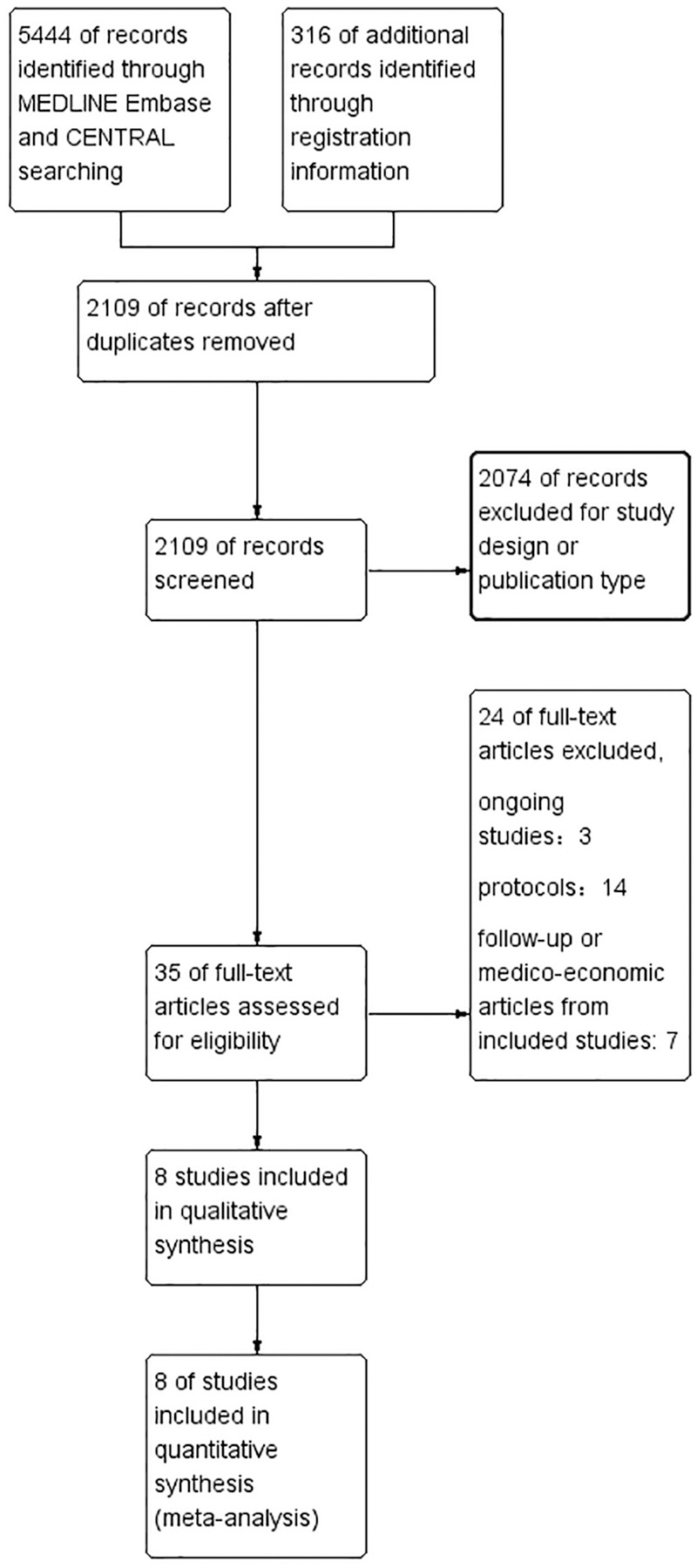
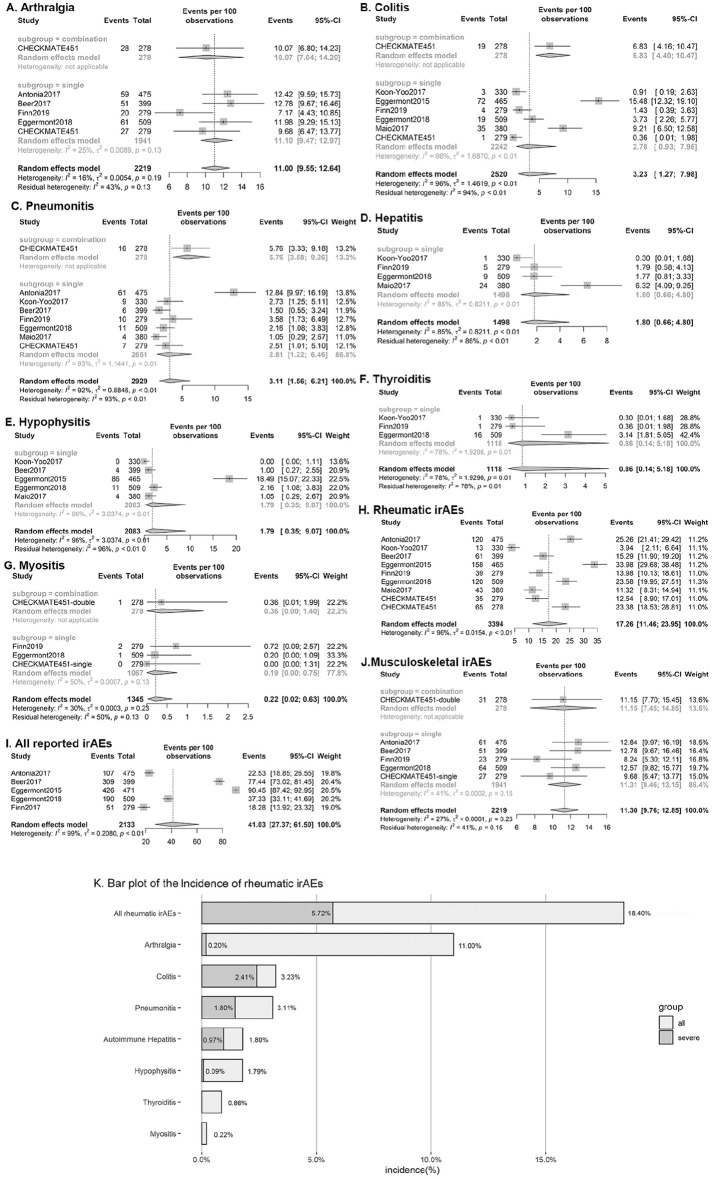
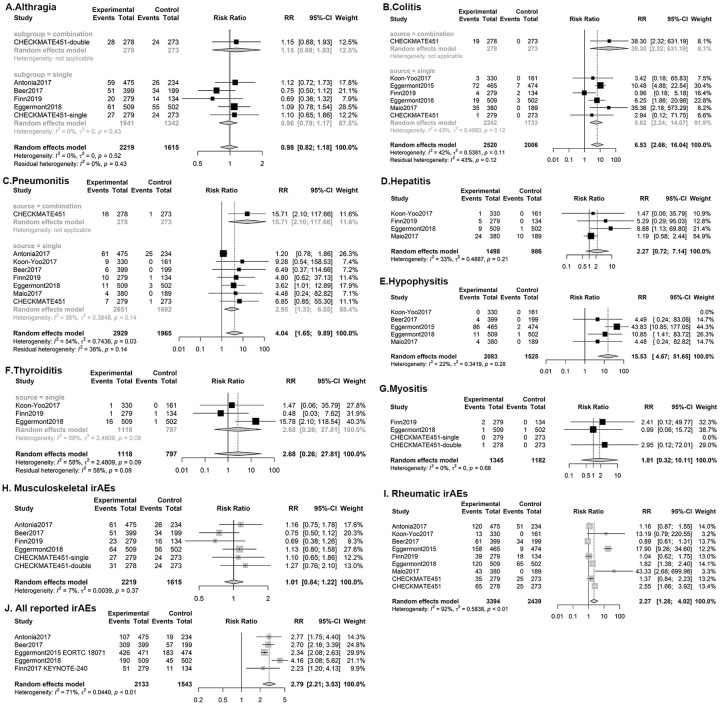
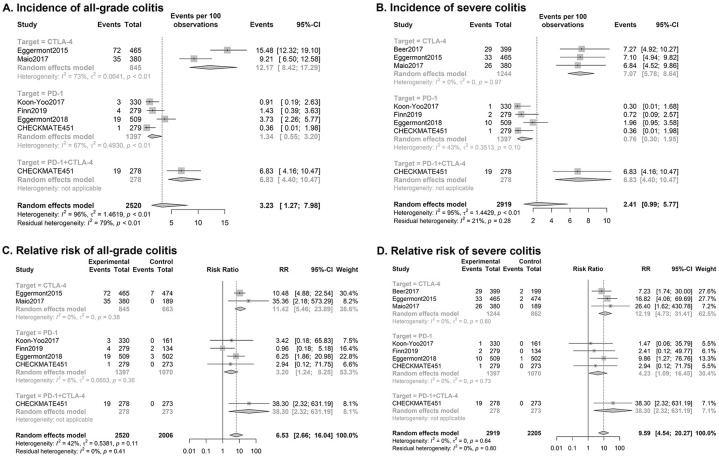
Among the 5444 published and 316 registration records, nine placebo-controlled randomized clinical trials met our selection criteria, and included data from 5560 patients. Compared with placebo use, using ICIs increases the risk of overall-rheumatic irAEs. The incidence and relative risk of all-grade rheumatic irAEs were 18.40% [95% confidence interval (CI) 12.16-25.59%, < 0.01] and 2.30 (95% CI 1.32-4.02), respectively, while musculoskeletal irAEs were 11.30% (95% CI 9.76-12.85%) and 1.01 (95% CI 0.84-1.22). The incidence and relative risk of severe rheumatic irAEs were 5.72% (95% CI 3.92-7.82%), and 8.29 (95% CI 3.75-18.35), respectively. Arthralgia was the most common rheumatic irAE (incidence 11.00%, 95% CI 9.55-12.64%; relative risk 0.99, 95% CI 0.82-1.19), although usually not severe. Colitis (incidence 3.23%, 95% CI 1.27-7.98%; relative risk 6.53, 95% CI 2.66-16.04) and pneumonitis (incidence 3.11%, 95% CI 1.56-6.21; relative risk 4.04, 95% CI 1.65-9.89) were commonly observed and tended to be severe. Hepatitis, hypophysitis, thyroiditis, and myositis were rare and less recorded, yet can be severe and life threatening. Other extremely rare severe rheumatic irAEs included sarcoidosis ( = 11), autoimmune arthritis ( = 8), autoimmune uveitis ( = 3), autoimmune pericarditis, bursitis, osteochondrosis, psoriasis, polymyalgia rheumatica, systemic inflammatory response syndrome, and Sjögren syndrome ( = 1, each).
ICI therapy increased the incidence and relative risk of all-grade and severe rheumatic irAEs. Arthralgia was the most commonly observed non-severe irAE, while colitis and pneumonitis were commonly observed severe irAEs. Rare rheumatic irAEs like hepatitis, hypophysitis, thyroiditis, and myositis warrant special attention.
我们旨在描述免疫检查点抑制剂(ICI)治疗中风湿性和全身性免疫相关不良反应(irAEs)的发生率及相对风险,并与安慰剂治疗后的情况进行比较。
从Embase、PubMed、Cochrane数据库中检索以安慰剂为对照的随机临床试验研究,检索关键词如下:免疫检查点抑制剂、肿瘤、随机对照试验、不良反应。
在5444篇已发表文献和316条注册记录中,9项安慰剂对照的随机临床试验符合我们的纳入标准,纳入了5560例患者的数据。与使用安慰剂相比,使用ICI会增加总体风湿性irAEs的风险。所有级别的风湿性irAEs的发生率和相对风险分别为18.40%[95%置信区间(CI)12.16 - 25.59%,P < 0.01]和2.30(95%CI 1.32 - 4.02);肌肉骨骼irAEs分别为11.30%(95%CI 9.76 - 12.85%)和1.01(95%CI 0.84 - 1.22)。严重风湿性irAEs的发生率和相对风险分别为5.72%(95%CI 3.92 - 7.82%)和8.29(95%CI 3.75 - 18.35)。关节痛是最常见的风湿性irAE(发生率11.00%,95%CI 9.55 - 12.64%;相对风险0.99,95%CI 0.82 - 1.19),尽管通常不严重。结肠炎(发生率3.23%,95%CI 1.27 - 7.98%;相对风险6.53,95%CI 2.66 - 16.04)和肺炎(发生率3.11%,95%CI 1.56 - 6.21;相对风险4.04,95%CI 1.65 - 9.89)较为常见且往往较为严重。肝炎、垂体炎、甲状腺炎和肌炎罕见且记录较少,但可能严重并危及生命。其他极其罕见的严重风湿性irAEs包括结节病(n = 11)、自身免疫性关节炎(n = 8)、自身免疫性葡萄膜炎(n = 3)、自身免疫性心包炎、滑囊炎、骨软骨病、银屑病、风湿性多肌痛、全身炎症反应综合征和干燥综合征(各n = 1)。
ICI治疗增加了所有级别和严重风湿性irAEs的发生率及相对风险。关节痛是最常见的非严重irAE,而结肠炎和肺炎是常见的严重irAE。肝炎、垂体炎、甲状腺炎和肌炎等罕见的风湿性irAEs值得特别关注。