Department of Medical Melanoma and Sarcoma, State Key Laboratory of Oncology in South China, Collaborative Innovation Center for Cancer Medicine, Sun Yat-sen University Cancer Center, Guangzhou, China.
Department of Pediatric Oncology, State Key Laboratory of Oncology in South China, Collaborative Innovation Center for Cancer Medicine, Sun Yat-sen University Cancer Center, Guangzhou, China.
J Immunother Cancer. 2021 Feb;9(2). doi: 10.1136/jitc-2020-001696.
The advent of immune checkpoint therapy has been a tremendous advance in cancer treatment. However, the responses are still insufficient in patients with soft tissue sarcoma (STS). We aimed to identify rational combinations to increase the response to immune checkpoint therapy and improve survival.
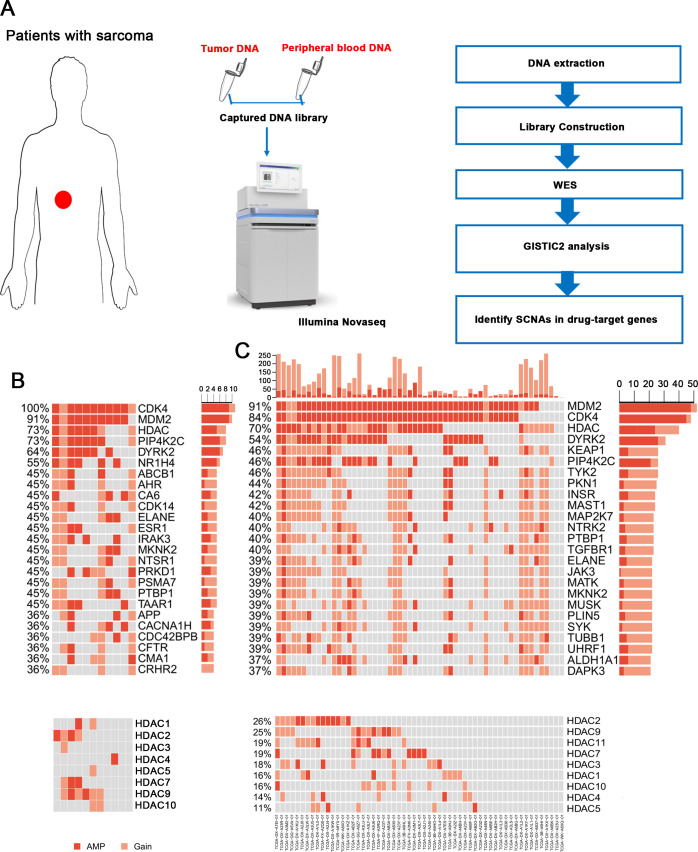
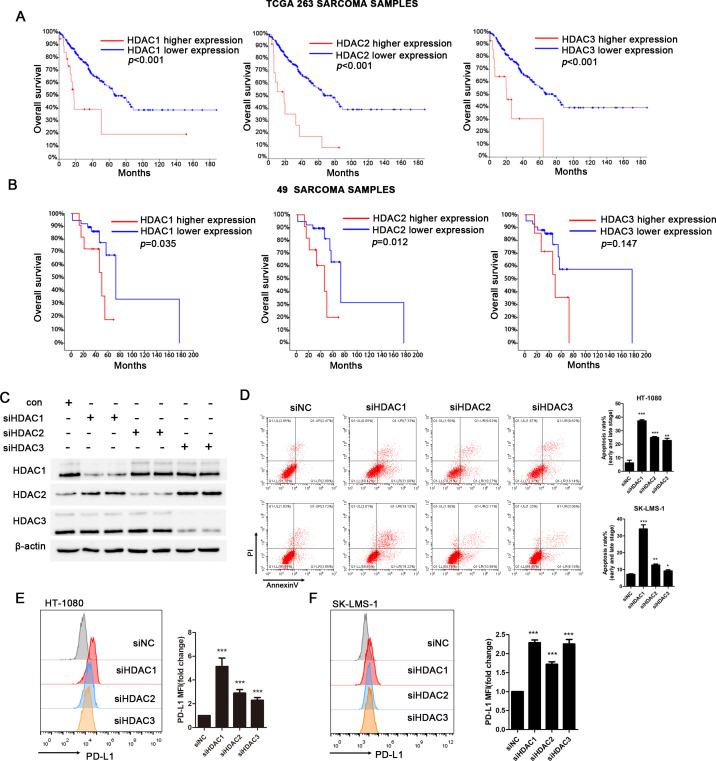
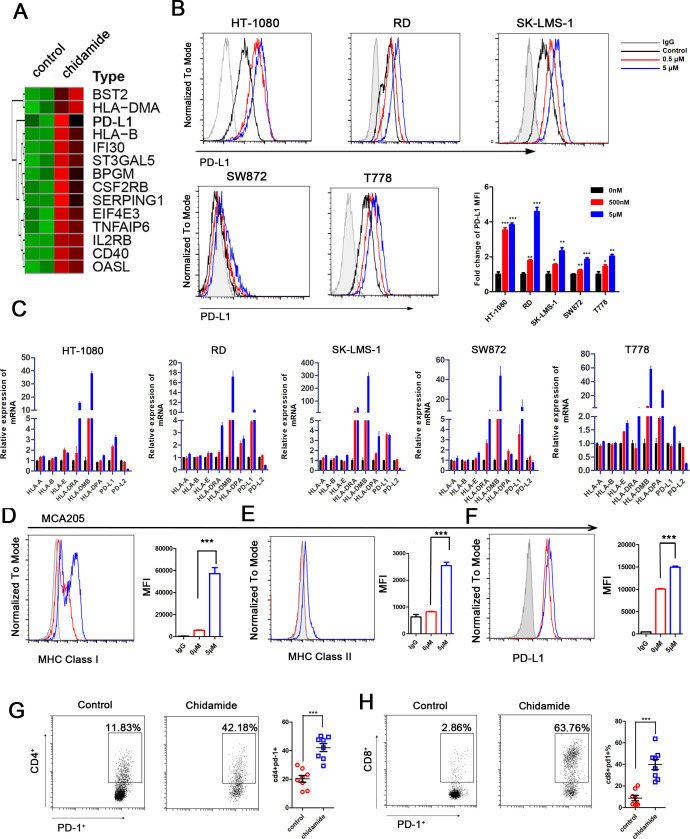
Whole-exome sequencing (WES) was performed in 11 patients with liposarcoma. Somatic copy number alterations (SCNAs) were analyzed at the gene level to identify obvious amplification patterns in drug-target genes. The expression and prognostic value of class I histone deacetylases (HDACs) was evaluated in 49 patients with sarcoma in our center and confirmed in 263 sarcoma samples from The Tumor Cancer Genome Atlas (TCGA) database. Q-PCR, flow cytometry and RNA-seq were performed to determine the correlations between class I HDACs, chidamide and PD-L1 in vitro and in vivo. The efficacy of combining chidamide with PD-1 blockade was explored in an immunocompetent murine model and a small cohort of patients with advanced sarcoma. Western blot, ChIP assay and dual luciferase assessment were applied in the mechanistic study.
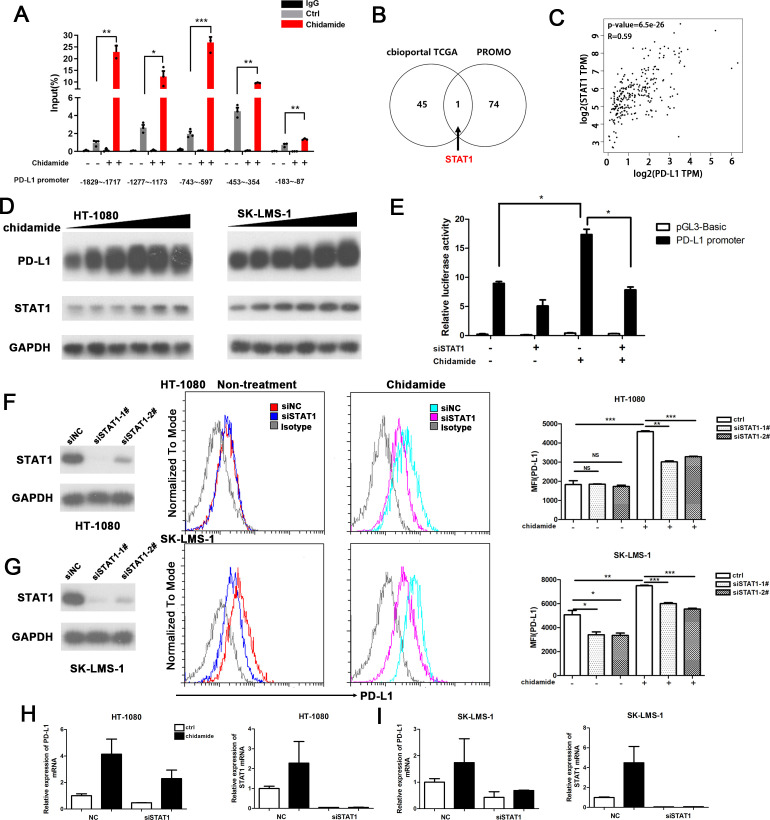
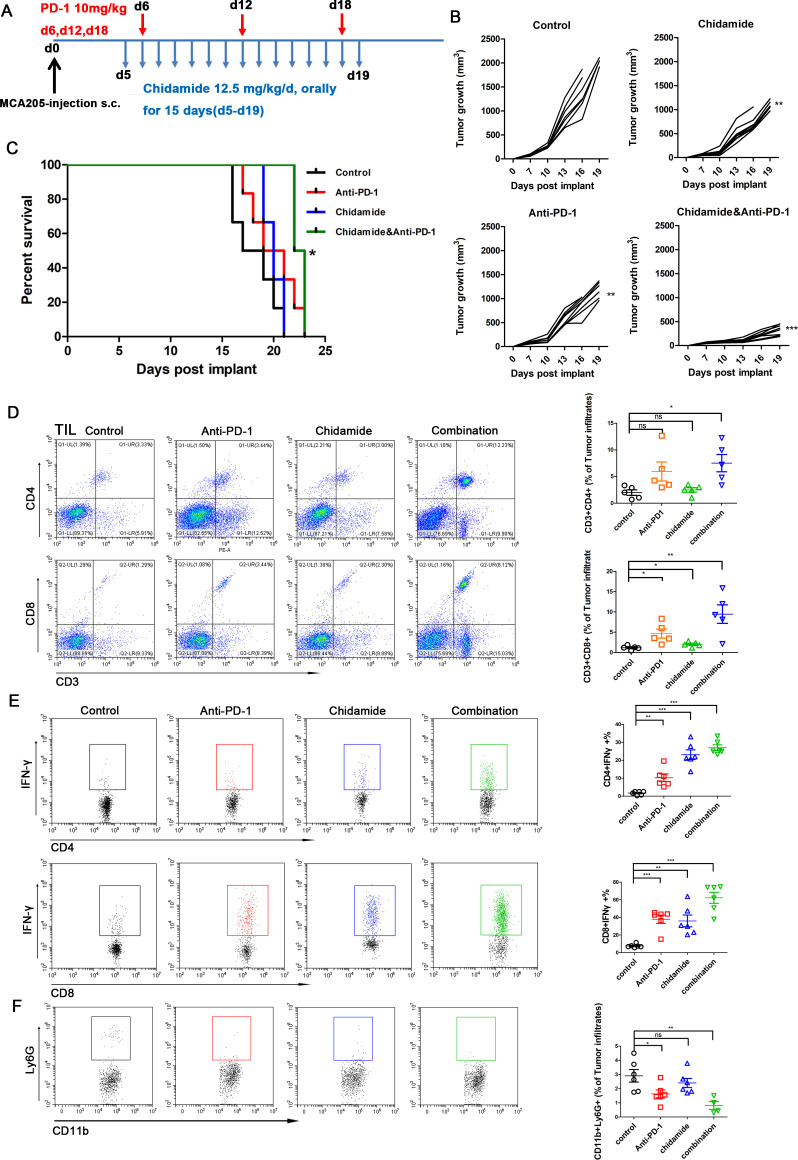
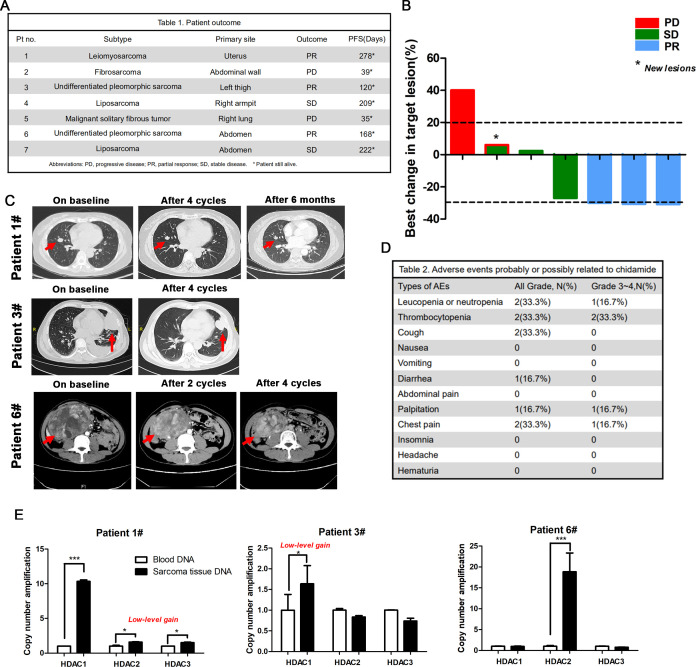
The HDAC gene family was frequently amplified in STS. SCNAs in the HDAC gene family were extensively amplified in 8 of 11 (73%) patients with liposarcoma, based on a drug-target gene set, and we verified amplification in 76.65% (197/257) of cases by analyzing TCGA sarcoma cohort. Class I HDAC expression is associated with a poor prognosis for patients with STS, and its inhibition is responsible for promoting apoptosis and upregulating of programmed cell death ligand 1 (PD-L1). The HDAC class I inhibitor chidamide significantly increases PD-L1 expression, increased the infiltration of CD8 T cells and reduced the number of MDSCs in the tumor microenvironment. The combination of chidamide with an anti-PD-1 antibody significantly promotes tumor regression and improves survival in a murine model. Moreover, chidamide combined with the anti-PD-1 antibody toripalimab is effective in patients with advanced and metastatic sarcoma, and the side effects are tolerable. Mechanistically, chidamide increases histone acetylation at the PD-L1 gene through the activation of the transcriptional factor STAT1.
The combination of chidamide and anti-programmed cell death 1 (PD-1) therapy represents a potentially important strategy for STS.
免疫检查点治疗的出现是癌症治疗的重大进展。然而,在软组织肉瘤(STS)患者中,反应仍然不足。我们旨在确定合理的组合,以增加对免疫检查点治疗的反应并改善生存。
对 11 例脂肪肉瘤患者进行全外显子测序(WES)。在基因水平上分析体细胞拷贝数改变(SCNAs),以鉴定药物靶基因中明显的扩增模式。评估了我们中心 49 例肉瘤患者和 TCGA 数据库中 263 例肉瘤样本中 I 类组蛋白去乙酰化酶(HDACs)的表达和预后价值。在体外和体内进行 Q-PCR、流式细胞术和 RNA-seq 以确定 I 类 HDACs、西达本胺和 PD-L1 之间的相关性。在免疫活性小鼠模型和一小部分晚期肉瘤患者中探索了西达本胺联合 PD-1 阻断的疗效。在机制研究中应用了 Western blot、ChIP 测定和双荧光素酶评估。
HDAC 基因家族在 STS 中频繁扩增。基于药物靶基因集,在 11 例脂肪肉瘤患者中有 8 例(73%)中广泛扩增了 HDAC 基因家族中的 SCNAs,通过分析 TCGA 肉瘤队列,我们验证了 76.65%(197/257)的病例中存在扩增。I 类 HDAC 表达与 STS 患者的预后不良相关,其抑制作用负责促进细胞凋亡和上调程序性细胞死亡配体 1(PD-L1)。HDAC I 类抑制剂西达本胺可显著增加 PD-L1 表达,增加肿瘤微环境中 CD8 T 细胞浸润并减少 MDSC 数量。西达本胺联合抗 PD-1 抗体显著促进了小鼠模型中的肿瘤消退并改善了生存。此外,西达本胺联合抗 PD-1 抗体 toripalimab 对晚期和转移性肉瘤患者有效,副作用可耐受。从机制上讲,西达本胺通过激活转录因子 STAT1 增加 PD-L1 基因的组蛋白乙酰化。
西达本胺联合抗程序性细胞死亡 1(PD-1)治疗代表了 STS 的一种潜在重要策略。