Dipartimento di Agraria, Università degli Studi di Sassari, Sassari, Italia.
Dipartimento di Scienze Animali, della Nutrizione e degli Alimenti-DIANA, Università Cattolica del Sacro Cuore, Piacenza, Italia.
Genet Sel Evol. 2021 Feb 27;53(1):20. doi: 10.1186/s12711-021-00616-3.
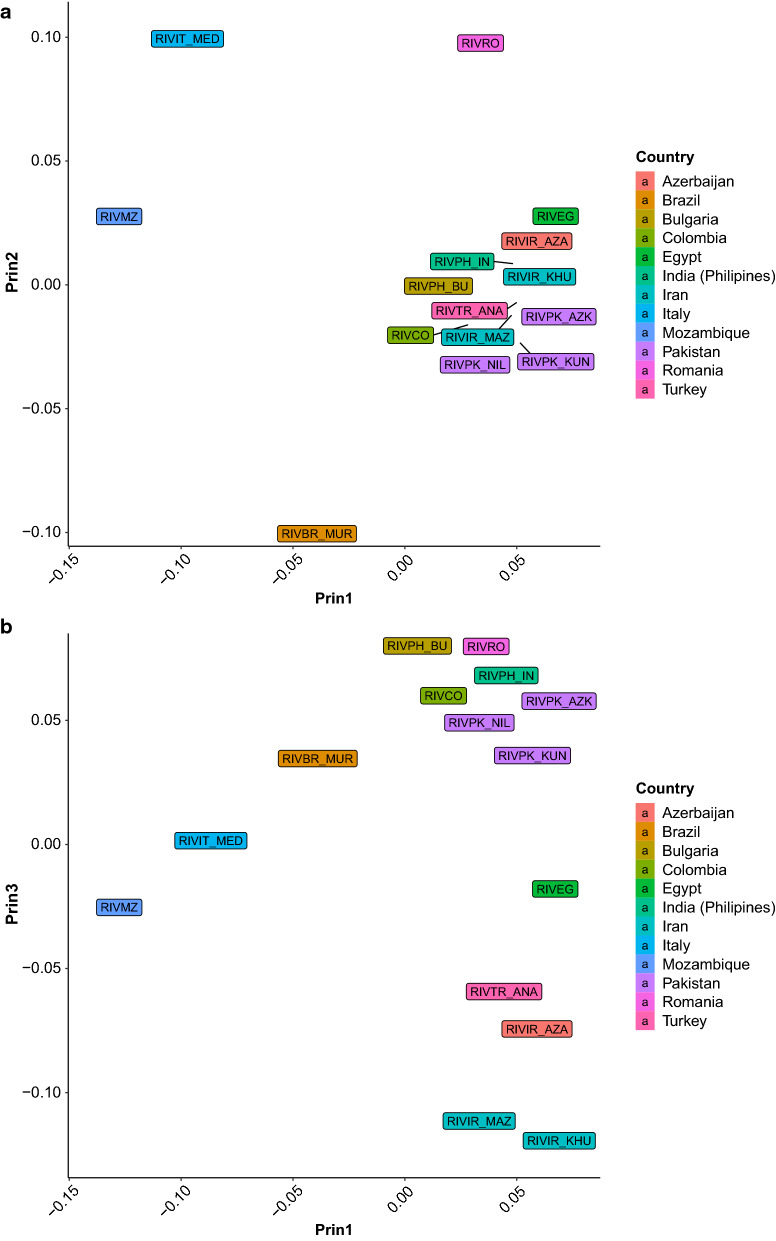
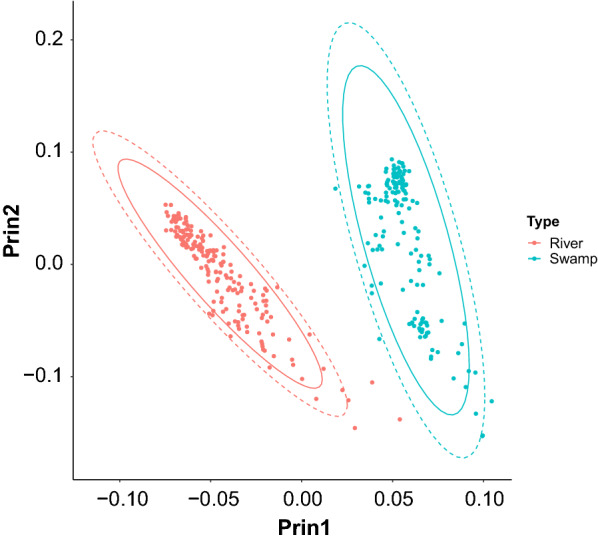
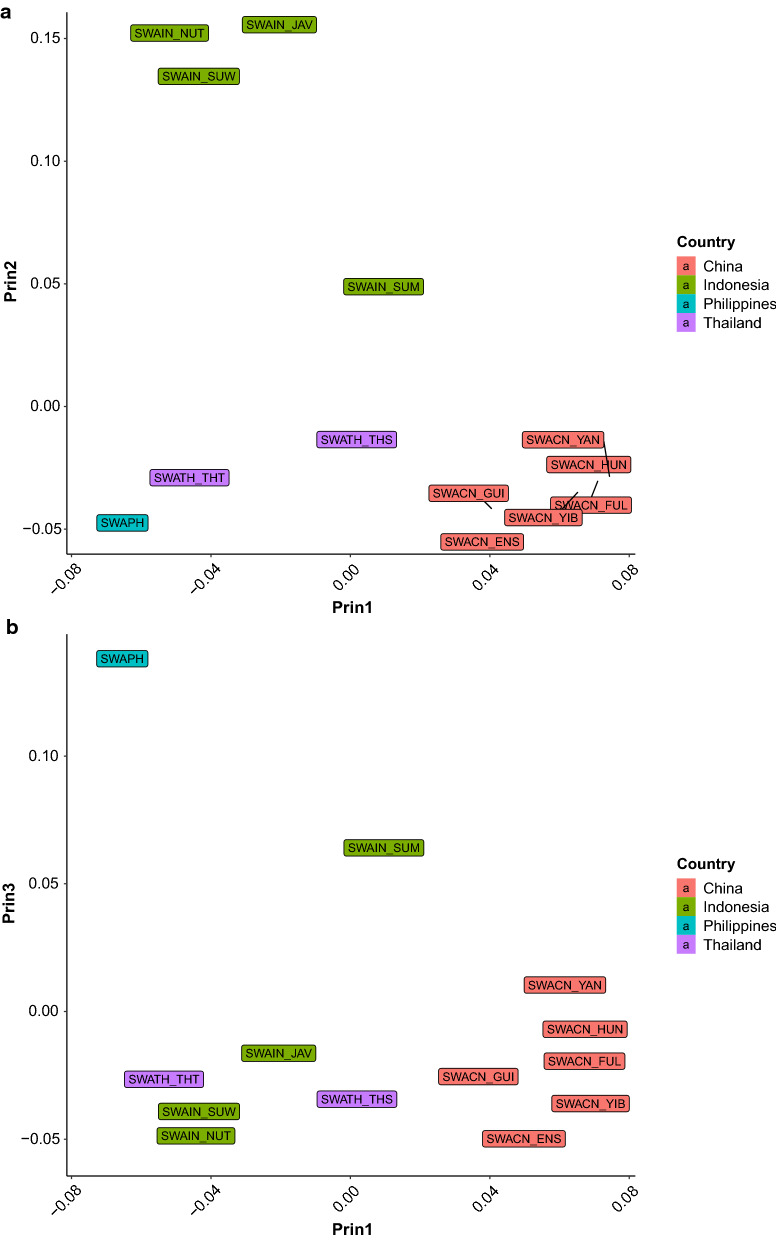
Water buffalo is one of the most important livestock species in the world. Two types of water buffalo exist: river buffalo (Bubalus bubalis bubalis) and swamp buffalo (Bubalus bubalis carabanensis). The buffalo genome has been recently sequenced, and thus a new 90 K single nucleotide polymorphism (SNP) bead chip has been developed. In this study, we investigated the genomic population structure and the level of inbreeding of 185 river and 153 swamp buffaloes using runs of homozygosity (ROH). Analyses were carried out jointly and separately for the two buffalo types.
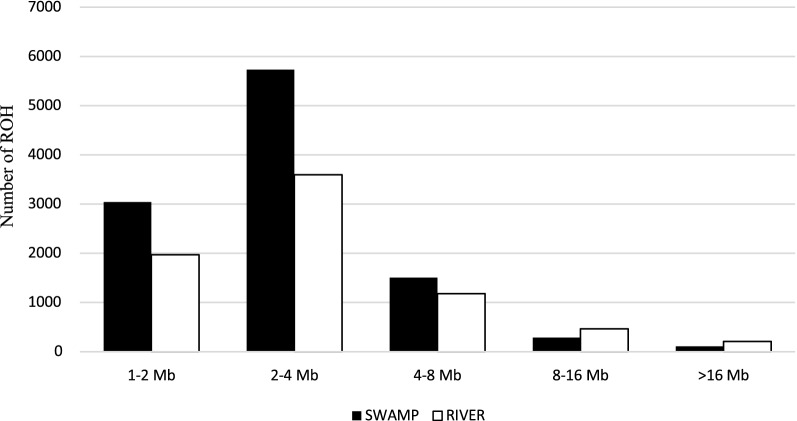
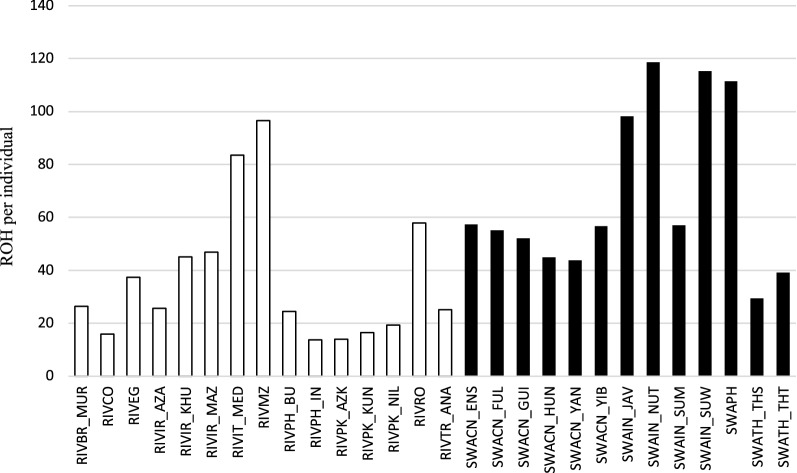
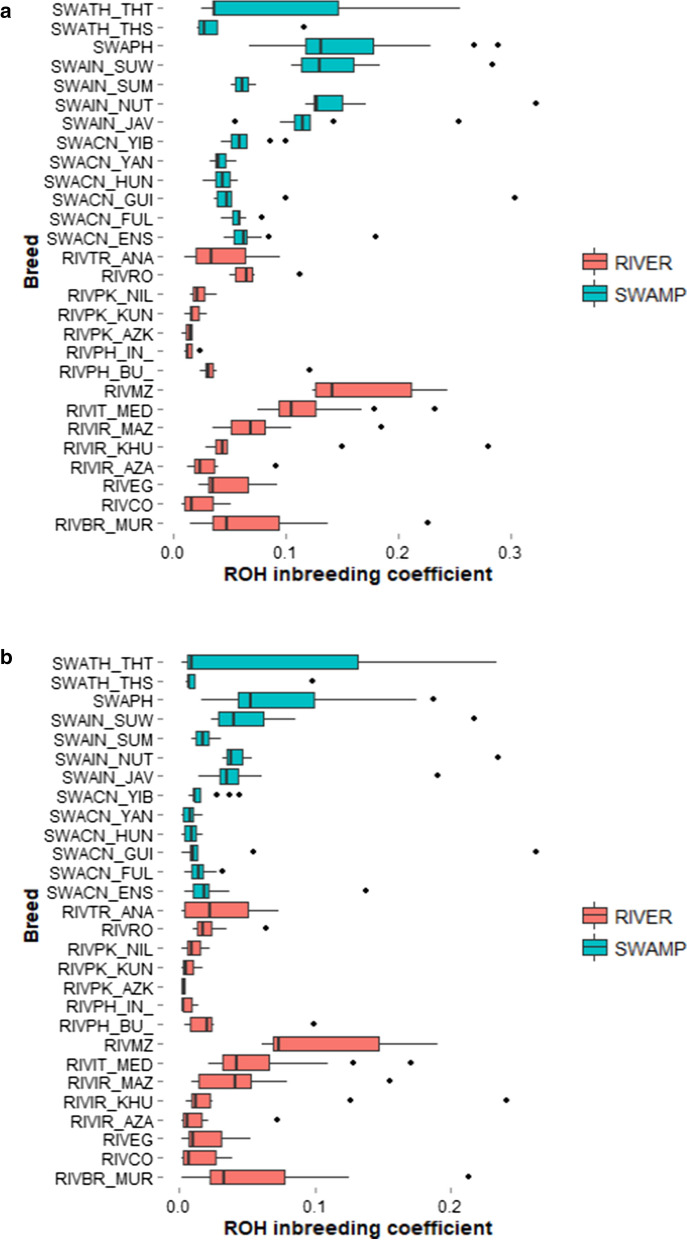
The SNP bead chip detected in swamp about one-third of the SNPs identified in the river type. In total, 18,116 ROH were detected in the combined data set (17,784 SNPs), and 16,251 of these were unique. ROH were present in both buffalo types mostly detected (~ 59%) in swamp buffalo. The number of ROH per animal was larger and genomic inbreeding was higher in swamp than river buffalo. In the separated datasets (46,891 and 17,690 SNPs for river and swamp type, respectively), 19,760 and 10,581 ROH were found in river and swamp, respectively. The genes that map to the ROH islands are associated with the adaptation to the environment, fitness traits and reproduction.
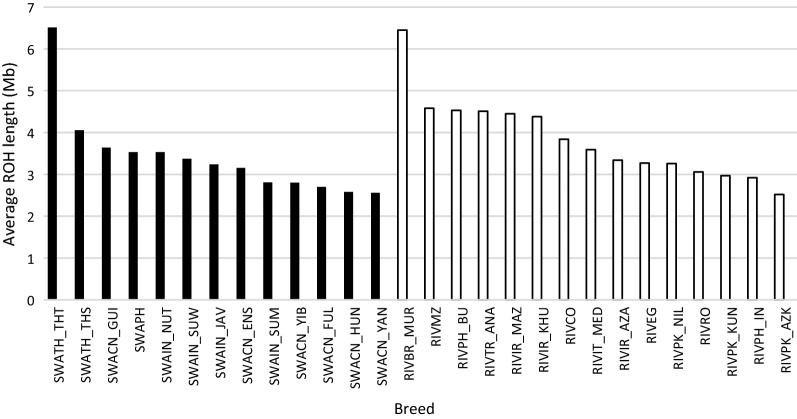
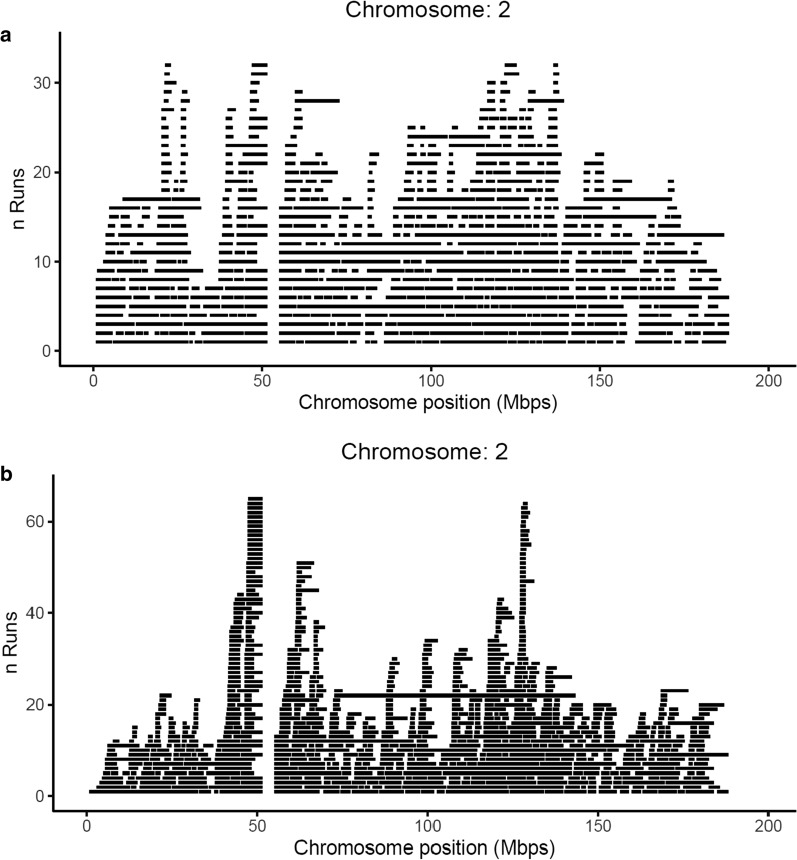
Analysis of ROH features in the genome of the two water buffalo types allowed their genomic characterization and highlighted differences between buffalo types and between breeds. A large ROH island on chromosome 2 was shared between river and swamp buffaloes and contained genes that are involved in environmental adaptation and reproduction.
水牛是世界上最重要的家畜之一。水牛有两种类型:河流型水牛(Bubalus bubalis bubalis)和沼泽型水牛(Bubalus bubalis carabanensis)。水牛基因组最近已被测序,因此开发了一种新的 90K 单核苷酸多态性(SNP)珠芯片。本研究利用纯合段(ROH)分析了 185 头河流型和 153 头沼泽型水牛的基因组种群结构和近交程度。对这两种水牛类型分别进行了联合和单独分析。
在沼泽型水牛中检测到的 SNP 珠芯片检测到的 SNP 约占河流型水牛的三分之一。在联合数据集(17784 个 SNP)中总共检测到 18116 个 ROH,其中 16251 个是独特的。ROH 存在于两种水牛中,主要存在于沼泽型水牛中(约 59%)。每只动物的 ROH 数量较多,沼泽型水牛的基因组近交程度高于河流型水牛。在分离的数据集(河流型和沼泽型分别为 46891 和 17690 个 SNP)中,分别在河流型和沼泽型水牛中发现了 19760 个和 10581 个 ROH。映射到 ROH 岛的基因与适应环境、适应性和繁殖有关。
对两种水牛类型基因组中 ROH 特征的分析,使其基因组特征得以表征,并突出了两种水牛类型之间以及品种之间的差异。2 号染色体上的一个大型 ROH 岛在河流型和沼泽型水牛之间共享,其中包含参与环境适应和繁殖的基因。