Department of General Surgery, Xiangya Hospital of Central South University, Changsha 410008, Hunan, China.
Hunan Key Laboratory of Precise Diagnosis and Treatment of Gastrointestinal Tumor, Changsha 410008, Hunan, China.
Aging (Albany NY). 2021 Feb 26;13(5):7300-7313. doi: 10.18632/aging.202584.
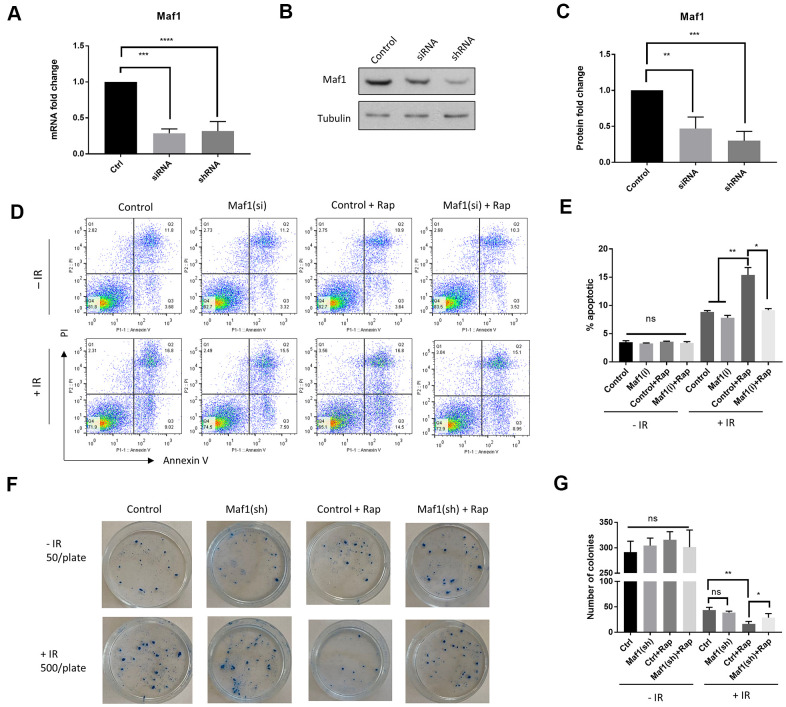
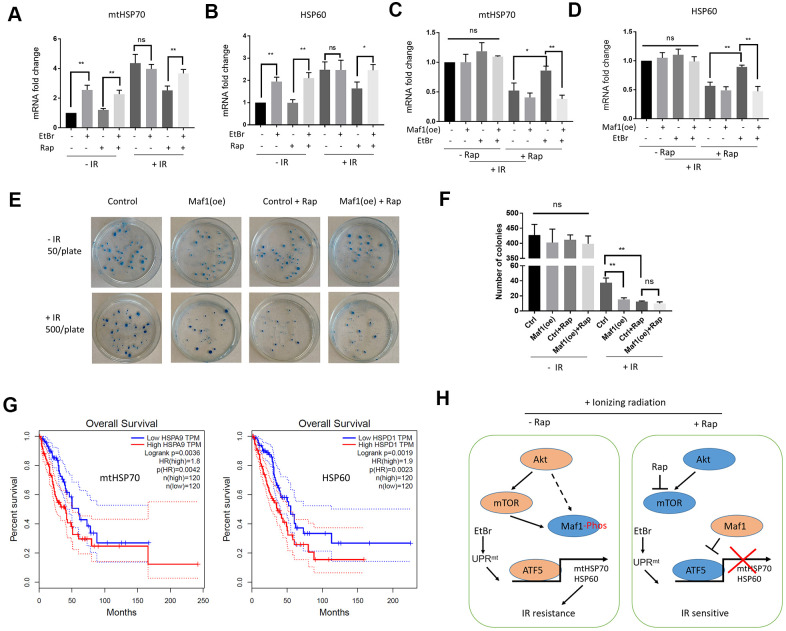
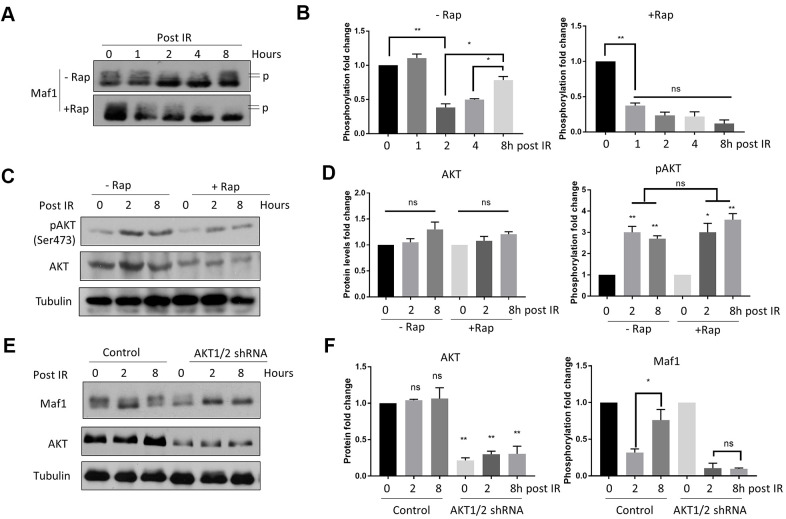
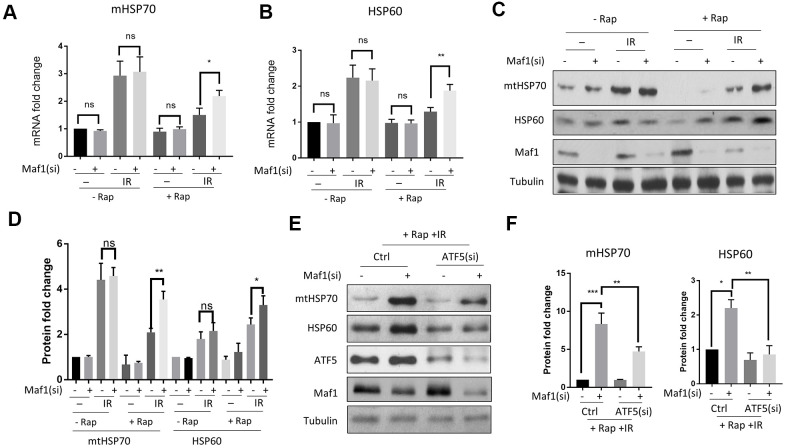
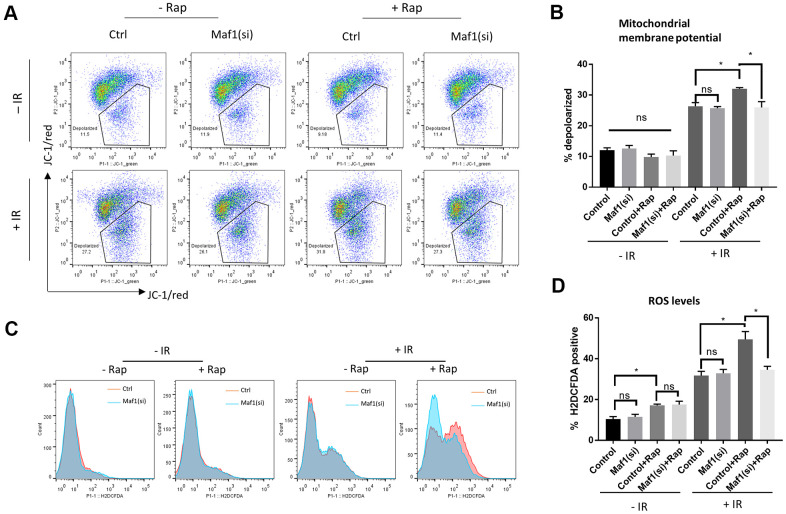
mTOR is well known to promote tumor growth but its roles in enhancing chemotherapy and radiotherapy have not been well studied. mTOR inhibition by rapamycin can sensitize cancer cells to radiotherapy. Here we show that Maf1 is required for rapamycin to increase radio-sensitivity in A549 lung cancer cells. In response to ionizing radiation (IR), Maf1 is inhibited by Akt-dependent re-phosphorylation, which activates mitochondrial unfolded protein response (UPR) through ATF5. Rapamycin suppresses IR-induced Maf1 re-phosphorylation and UPR activation in A549 cells, resulting in increased sensitivity to IR-mediated cytotoxicity. Consistently, Maf1 knockdown activates ATF5-transcription of mtHSP70 and HSP60, enhances mitochondrial membrane potential, reduces intracellular ROS levels and dampens rapamycin's effect on increasing IR-mediated cytotoxicity. In addition, Maf1 overexpression suppresses ethidium bromide-induced UPR and enhances IR-mediated cytotoxicity. Supporting our cell-based studies, elevated expression of UPR makers (mtHSP70 and HSP60) are associated with poor prognosis in patients with lung adenocarcinoma (LAUD). Together, our study reveals a novel role of Maf1-UPR axis in mediating rapamycin's enhancing effect on IR sensitivity in A549 lung cancer cells.
mTOR 众所周知可促进肿瘤生长,但它在增强化疗和放疗方面的作用尚未得到充分研究。雷帕霉素对 mTOR 的抑制作用可以使癌细胞对放疗敏感。在这里,我们表明 Maf1 是雷帕霉素在 A549 肺癌细胞中增加放射敏感性所必需的。在电离辐射(IR)的作用下,Maf1 被 Akt 依赖性再磷酸化抑制,从而通过 ATF5 激活线粒体未折叠蛋白反应(UPR)。雷帕霉素抑制 A549 细胞中 IR 诱导的 Maf1 再磷酸化和 UPR 激活,导致对 IR 介导的细胞毒性增加敏感。一致地,Maf1 敲低激活 ATF5- mtHSP70 和 HSP60 的转录,增强线粒体膜电位,降低细胞内 ROS 水平,并抑制雷帕霉素对增加 IR 介导的细胞毒性的作用。此外,Maf1 过表达抑制溴化乙锭诱导的 UPR 并增强 IR 介导的细胞毒性。支持我们的细胞研究,UPR 标志物(mtHSP70 和 HSP60)的上调与肺腺癌(LAUD)患者的预后不良相关。总之,我们的研究揭示了 Maf1-UPR 轴在介导雷帕霉素增强 A549 肺癌细胞对 IR 敏感性中的新作用。