Ver Hoef Lawrence, Deshpande Hrishikesh, Cure Joel, Selladurai Goutham, Beattie Julia, Kennedy Richard E, Knowlton Robert C, Szaflarski Jerzy P
Department of Neurology, The University of Alabama at Birmingham, Birmingham, AL, United States.
Department of Biomedical Engineering, The University of Alabama at Birmingham, Birmingham, AL, United States.
Front Neurosci. 2021 Feb 11;15:546312. doi: 10.3389/fnins.2021.546312. eCollection 2021.
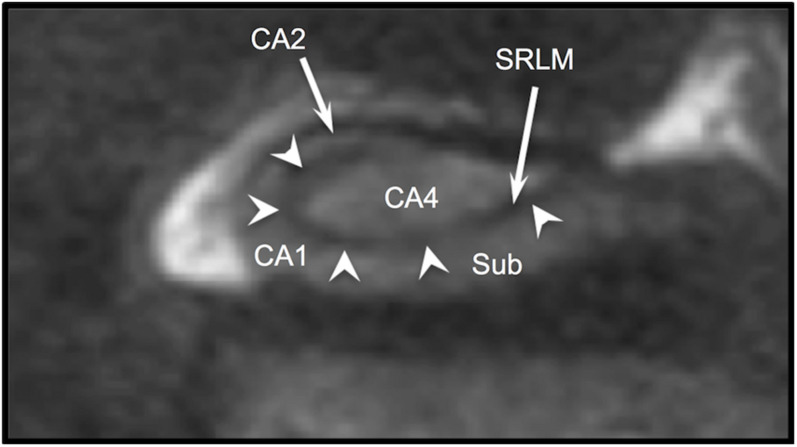
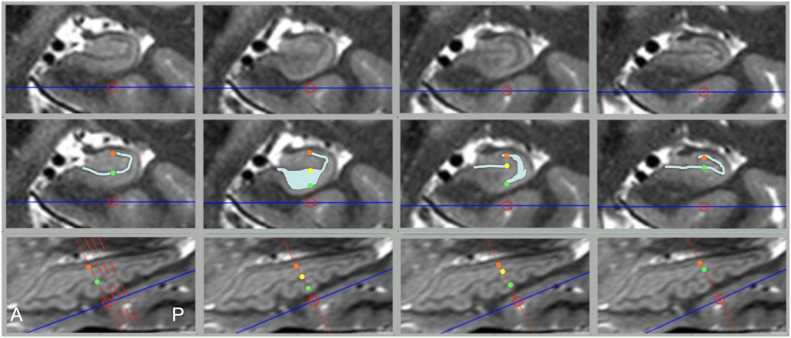
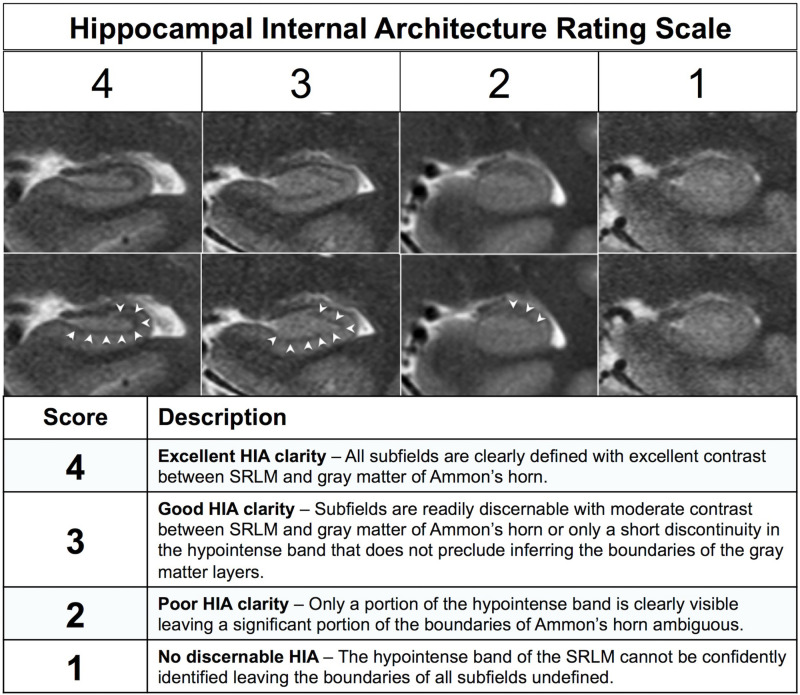
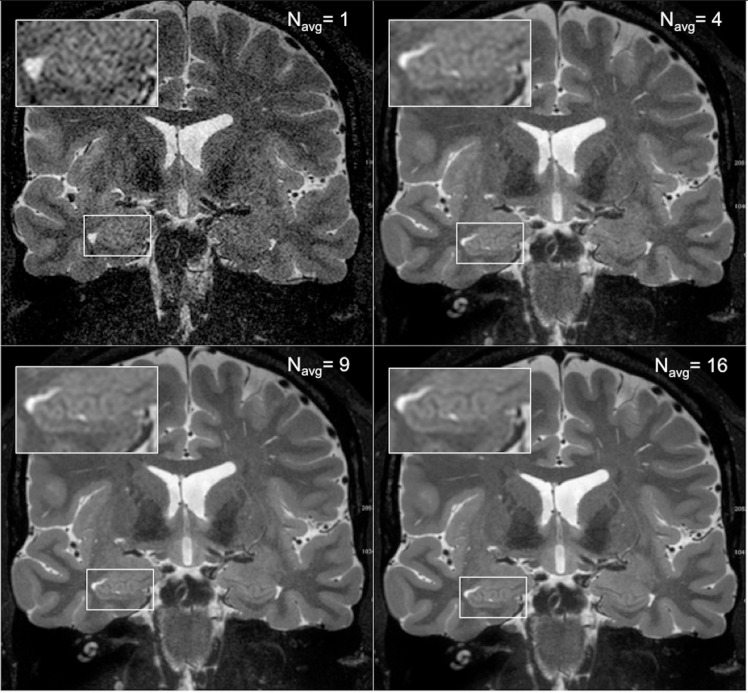
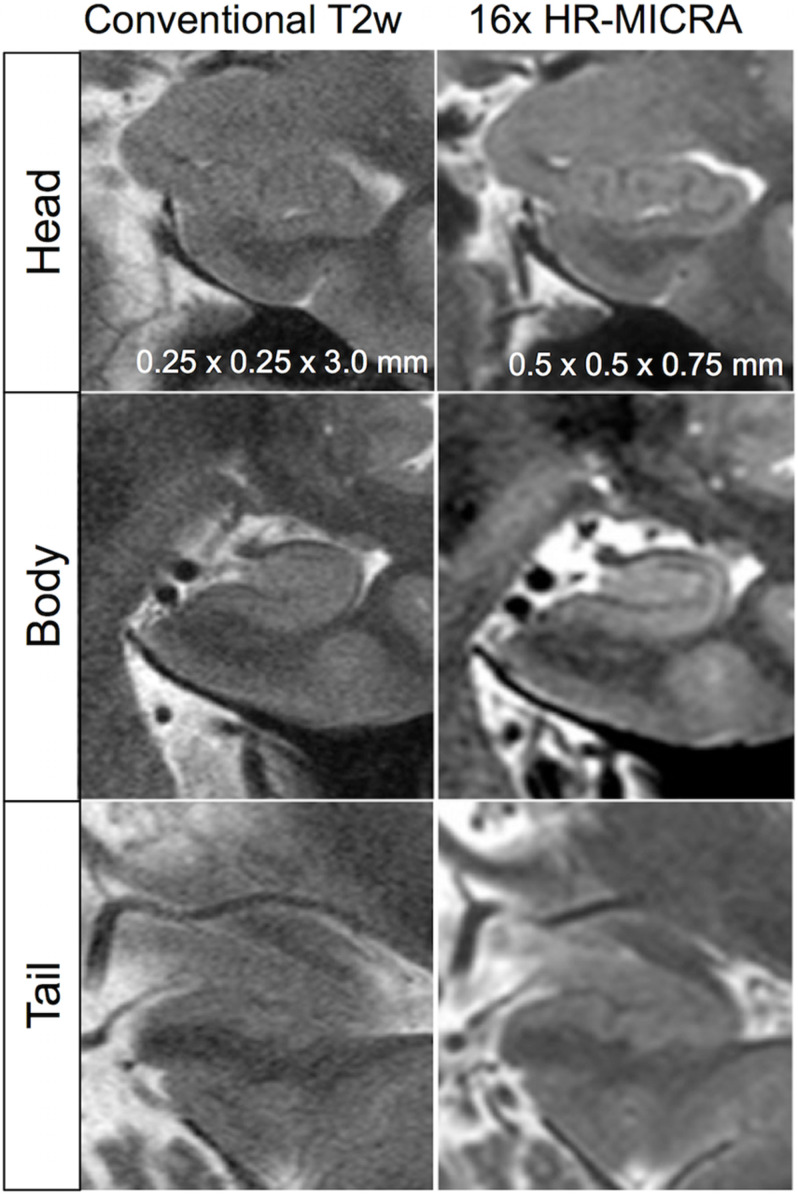
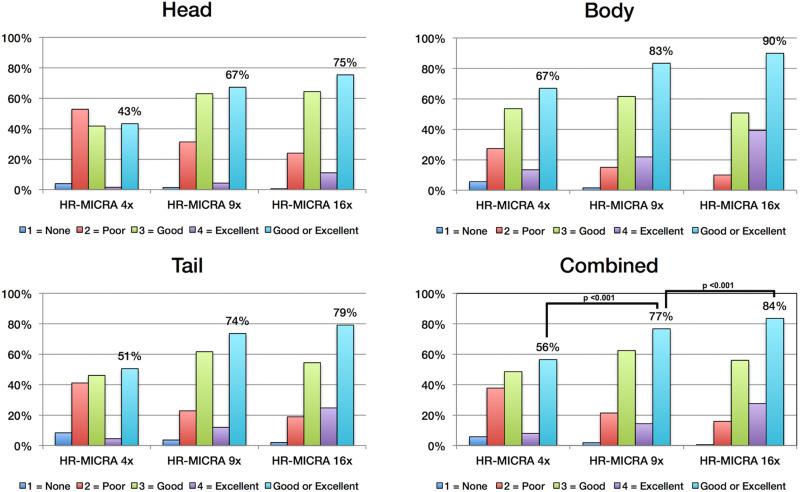
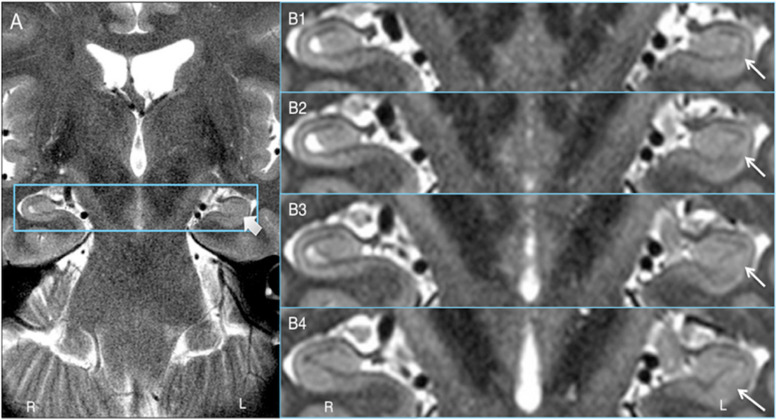
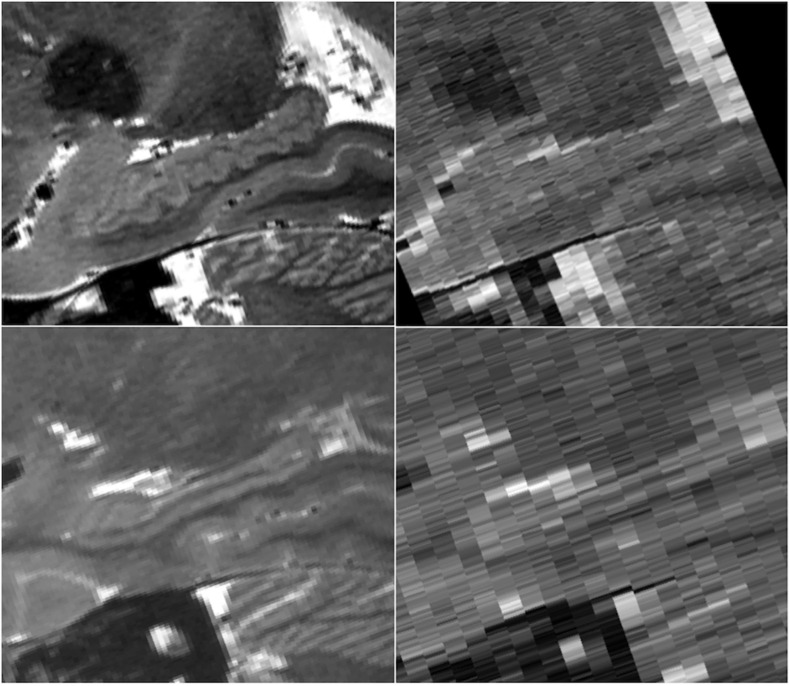
Magnetic resonance imaging of hippocampal internal architecture (HIA) at 3T is challenging. HIA is defined by layers of gray and white matter that are less than 1 mm thick in the coronal plane. To visualize HIA, conventional MRI approaches have relied on sequences with high in-plane resolution (≤0.5 mm) but comparatively thick slices (2-5 mm). However, thicker slices are prone to volume averaging effects that result in loss of HIA clarity and blurring of the borders of the hippocampal subfields in up to 61% of slices as has been reported. In this work we describe an approach to hippocampal imaging that provides consistently high HIA clarity using a commonly available sequence and post-processing techniques that is flexible and may be applicable to any MRI platform. We refer to this approach as High Resolution Multiple Image Co-registration and Averaging (HR-MICRA). This approach uses a variable flip angle turbo spin echo sequence to repeatedly acquire a whole brain T2w image volume with high resolution in three dimensions in a relatively short amount of time, and then co-register the volumes to correct for movement and average the repeated scans to improve SNR. We compared the averages of 4, 9, and 16 individual scans in 20 healthy controls using a published HIA clarity rating scale. In the body of the hippocampus, the proportion of slices with good or excellent HIA clarity was 90%, 83%, and 67% for the 16x, 9x, and 4x HR-MICRA images, respectively. Using the 4x HR-MICRA images as a baseline, the 9x HR-MICRA images were 2.6 times and 16x HR-MICRA images were 3.2 times more likely to have high HIA ratings ( < 0.001) across all hippocampal segments (head, body, and tail). The thin slices of the HR-MICRA images allow reformatting in any plane with clear visualization of hippocampal dentation in the sagittal plane. Clear and consistent visualization of HIA will allow application of this technique to future hippocampal structure research, as well as more precise manual or automated segmentation.
在3T条件下对海马体内部结构(HIA)进行磁共振成像具有挑战性。HIA由冠状面中厚度小于1毫米的灰质和白质层所界定。为了可视化HIA,传统的MRI方法依赖于具有高平面分辨率(≤0.5毫米)但切片相对较厚(2 - 5毫米)的序列。然而,较厚的切片容易出现容积平均效应,导致HIA清晰度下降,海马亚区边界模糊,据报道高达61%的切片会出现这种情况。在这项工作中,我们描述了一种海马成像方法,该方法使用常用序列和后处理技术,能始终如一地提供高清晰度的HIA,具有灵活性,且可能适用于任何MRI平台。我们将这种方法称为高分辨率多图像配准与平均(HR - MICRA)。这种方法使用可变翻转角快速自旋回波序列,在相对较短的时间内三维重复采集具有高分辨率的全脑T2加权图像容积,然后对这些容积进行配准以校正运动,并对重复扫描进行平均以提高信噪比。我们使用已发表的HIA清晰度评级量表,比较了20名健康对照者4次、9次和16次个体扫描的平均值。在海马体主体部分,1×、9×和4×HR - MICRA图像中HIA清晰度良好或优秀的切片比例分别为90%、83%和67%。以4×HR - MICRA图像作为基线,在所有海马段(头部、主体和尾部),9×HR - MICRA图像具有高HIA评级(<0.001)的可能性是4×HR - MICRA图像的2.6倍,16×HR - MICRA图像是其3.2倍。HR - MICRA图像的薄片允许在任何平面进行重新格式化,矢状面中海马齿状结构清晰可见。HIA清晰且一致的可视化将使该技术能够应用于未来的海马结构研究,以及更精确的手动或自动分割。