Department of Pediatric Retina, Narayana Nethralaya, Bangalore, India.
GROW Research Lab, Narayana Nethralaya Foundation, Bangalore, India.
Invest Ophthalmol Vis Sci. 2021 Mar 1;62(3):2. doi: 10.1167/iovs.62.3.2.
To determine the status of proangiogenic factors in the tear fluid of preterm infants with and without retinopathy of prematurity (ROP).
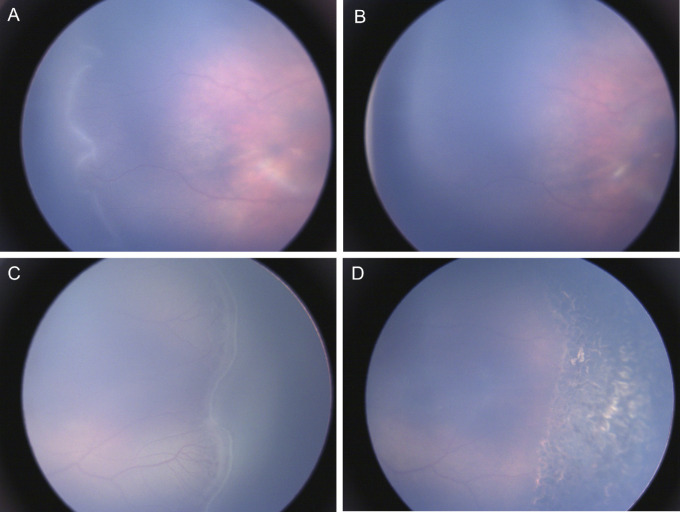
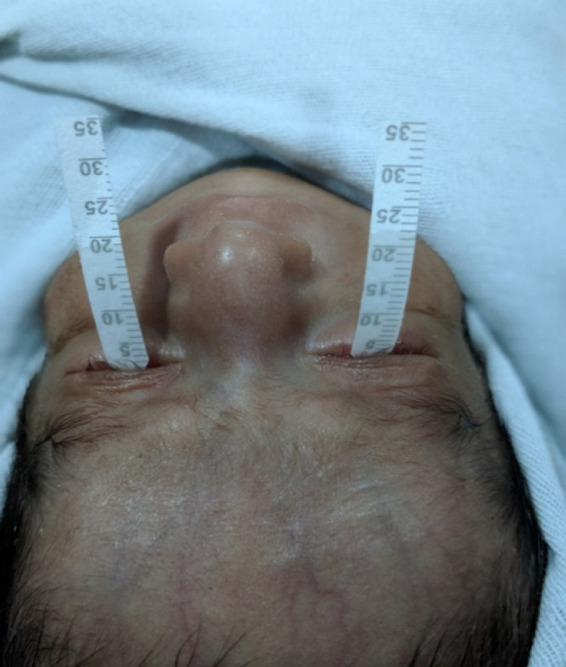
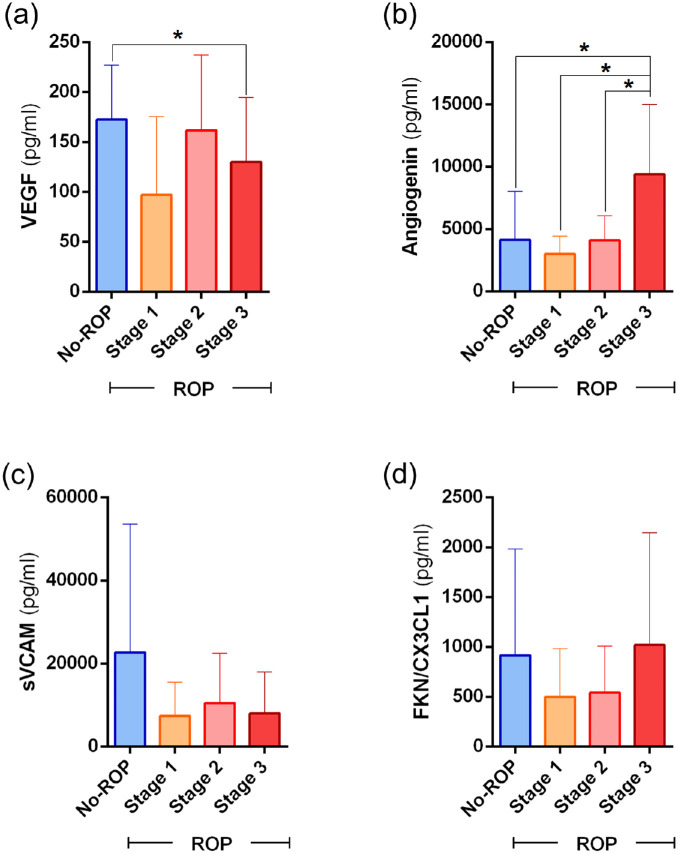
Preterm infants (n = 36) undergoing routine ROP screening included in the prospective study were categorized as No-ROP (n = 13, no ROP at any visits), ROP (if ROP was present at first visit; n = 18), or No-ROP to ROP (no disease at first visit, but developed ROP subsequently; n = 5). Infants with ROP were also grouped as progressing (n = 7) and regressing (n = 16) based on ROP evolution between the first and subsequent visits. Schirmer's strips were used to collect tear fluid and proangiogenic factors (VEGF, angiogenin, soluble vascular cell adhesion molecule, and fractalkine) levels (in picograms per milliliter) in tear fluid were measured by multiplex ELISA.
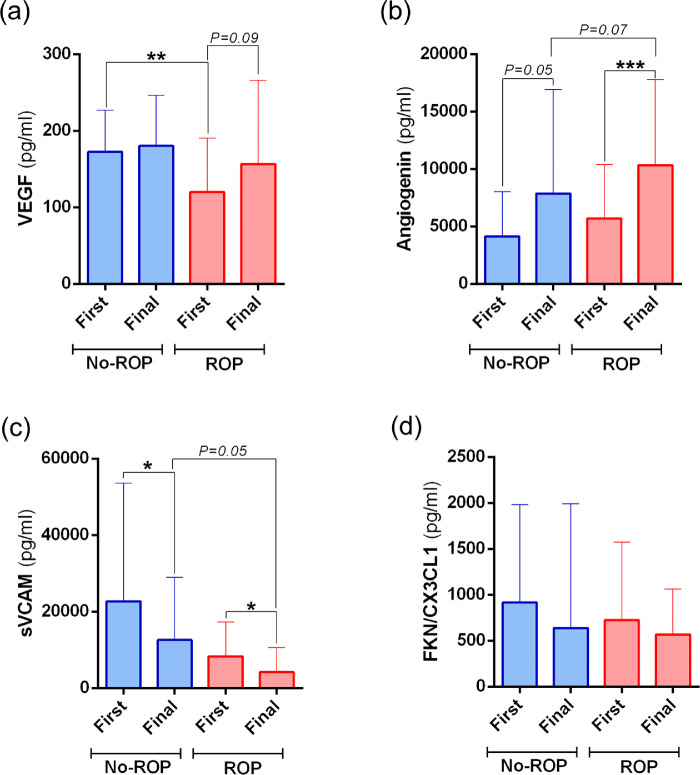
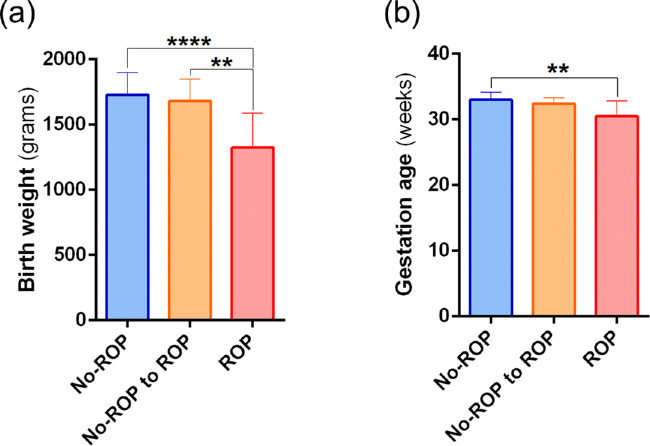
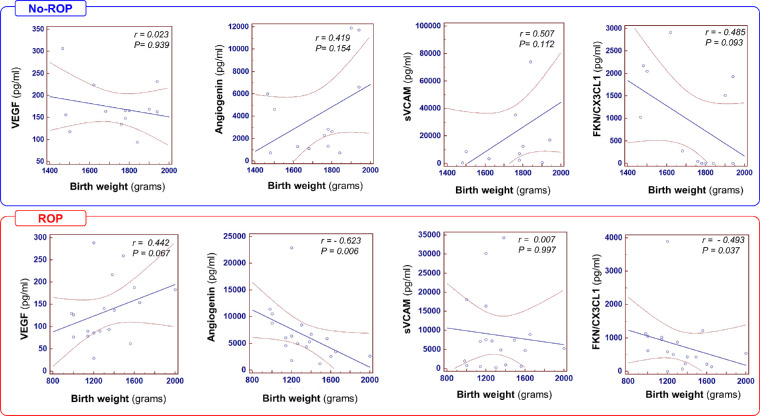
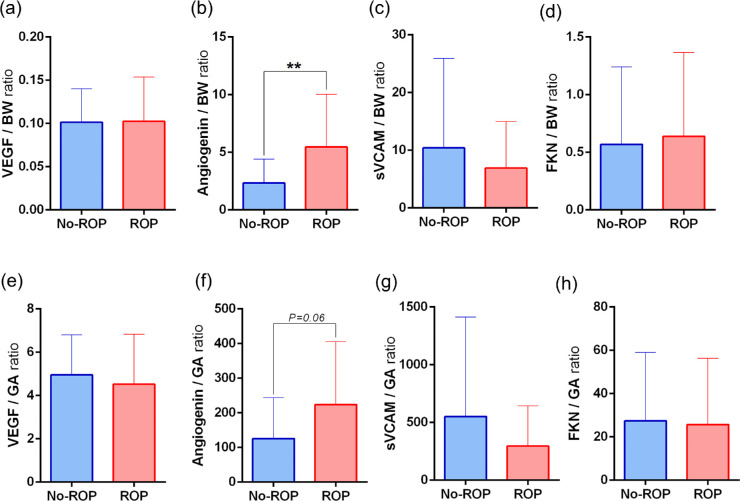
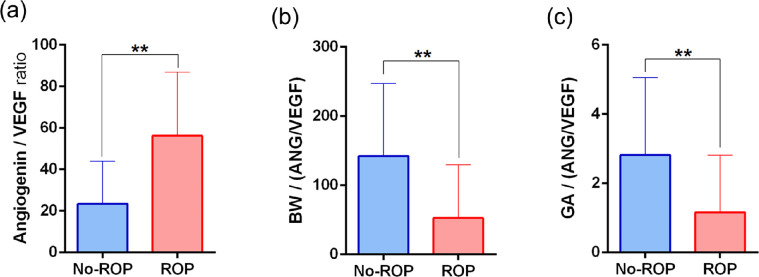
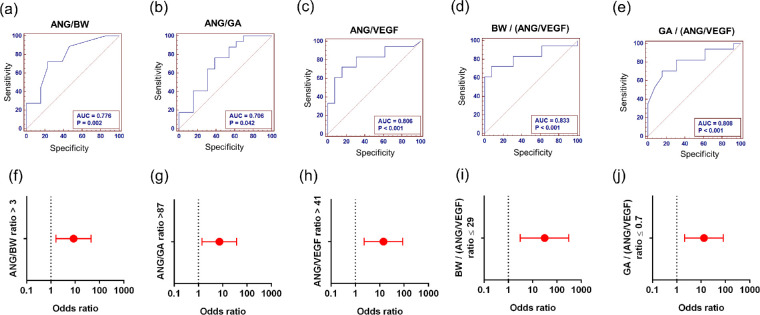
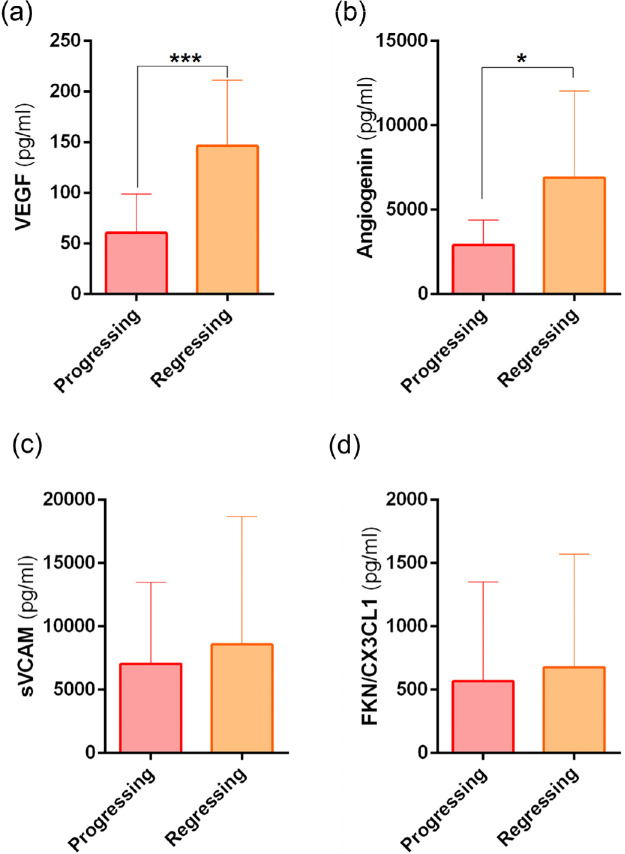
Lower levels of VEGF (135 ± 69; mean ± standard deviation) and higher levels of angiogenin (6568 ± 4975) were observed in infants with ROP compared with infants without ROP (172.5 ± 54.0; 4139 ± 3909) at the first visit. Significantly lower levels of VEGF were observed in the No-ROP to ROP group compared with the No-ROP and ROP groups. The VEGF and angiogenin levels at the first visit were significantly lower in infants with ROP with progressing disease. Angiogenin levels negatively correlated with birth weight and gestational age in ROP. The area under the curve (AUC) and odds ratio (OR) analysis demonstrated that angiogenin/birth weight (AUC = 0.776; OR, 8.6); angiogenin/gestational age (AUC = 0.706; OR, 7.3) and Angiogenin/VEGF (AUC = 0.806; OR, 14.3) ratios were able to differentiated preterm infants with and without ROP.
The association between angiogenin and ROP suggests its possible role in ROP. The ratio of angiogenin level with birth weight, gestational age, and/or VEGF could serve as a potential noninvasive screening biomarker for ROP.
确定早产儿有无早产儿视网膜病变(ROP)的泪液中促血管生成因子的状态。
纳入前瞻性研究的接受常规 ROP 筛查的早产儿(n=36)根据有无 ROP 分为无 ROP 组(n=13,各次就诊均无 ROP)、ROP 组(首次就诊时即存在 ROP,n=18)或无 ROP 至 ROP 组(首次就诊时无疾病,但随后发展为 ROP,n=5)。ROP 患儿还根据首次和随后就诊之间的 ROP 进展情况分为进展组(n=7)和消退组(n=16)。用 Schirmer 条收集泪液,用多重 ELISA 法测定泪液中促血管生成因子(VEGF、血管生成素、可溶性血管细胞黏附分子和 fractalkine)水平(以皮克/毫升为单位)。
与无 ROP 组相比,首次就诊时 ROP 患儿的 VEGF 水平(135±69)较低,而血管生成素水平(6568±4975)较高(172.5±54.0,4139±3909)。无 ROP 至 ROP 组的 VEGF 水平显著低于无 ROP 组和 ROP 组。进展性 ROP 患儿首次就诊时 VEGF 和血管生成素水平显著较低。ROP 患儿的血管生成素水平与出生体重和胎龄呈负相关。ROC 曲线(AUC)和比值比(OR)分析表明,血管生成素/出生体重(AUC=0.776;OR,8.6)、血管生成素/胎龄(AUC=0.706;OR,7.3)和血管生成素/VEGF(AUC=0.806;OR,14.3)比值可区分有无 ROP 的早产儿。
血管生成素与 ROP 之间的关联表明其可能在 ROP 中起作用。血管生成素水平与出生体重、胎龄和/或 VEGF 的比值可能成为 ROP 的潜在非侵入性筛查生物标志物。