Department of Statistics, University of Wisconsin-Madison, Wisconsin, United States of America.
Morgridge Institute for Research, Madison, Wisconsin, United States of America.
PLoS Comput Biol. 2021 Mar 1;17(3):e1008778. doi: 10.1371/journal.pcbi.1008778. eCollection 2021 Mar.
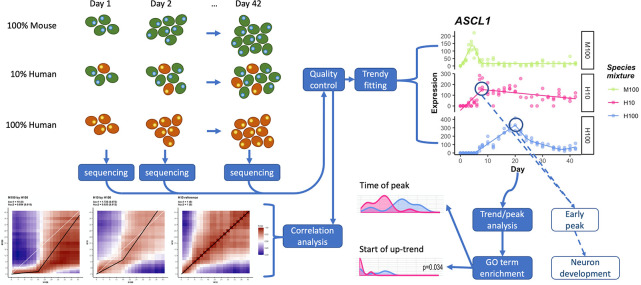
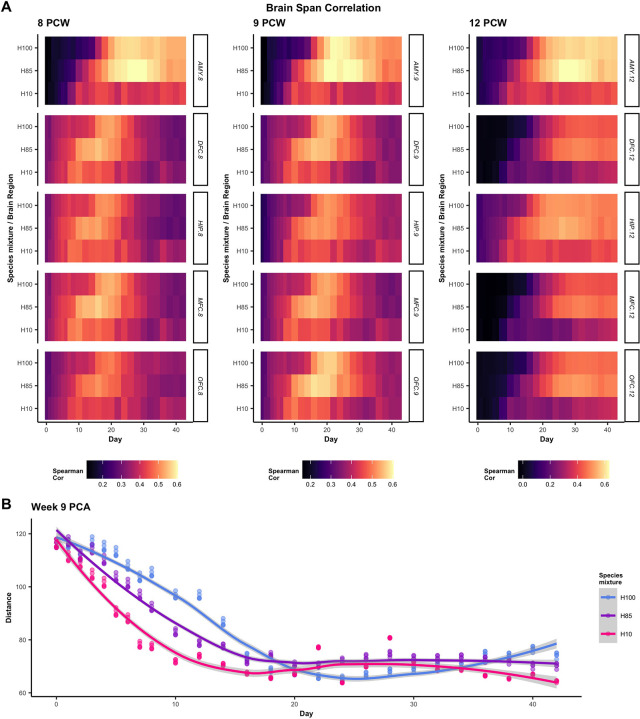
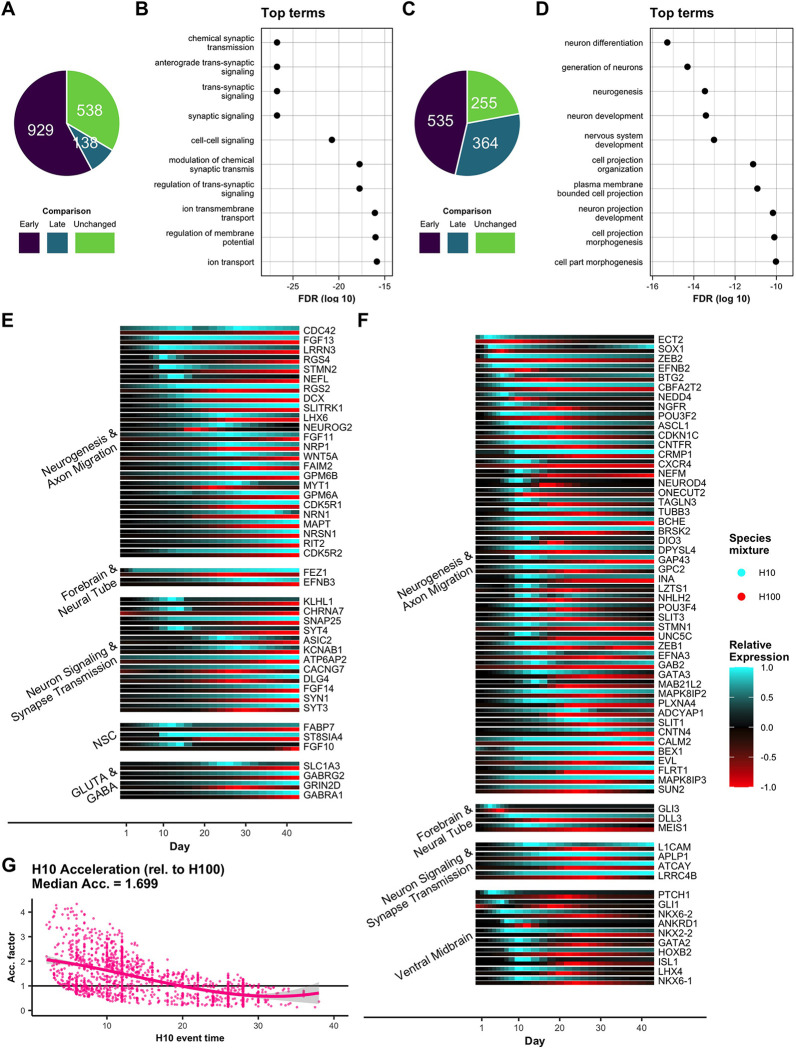
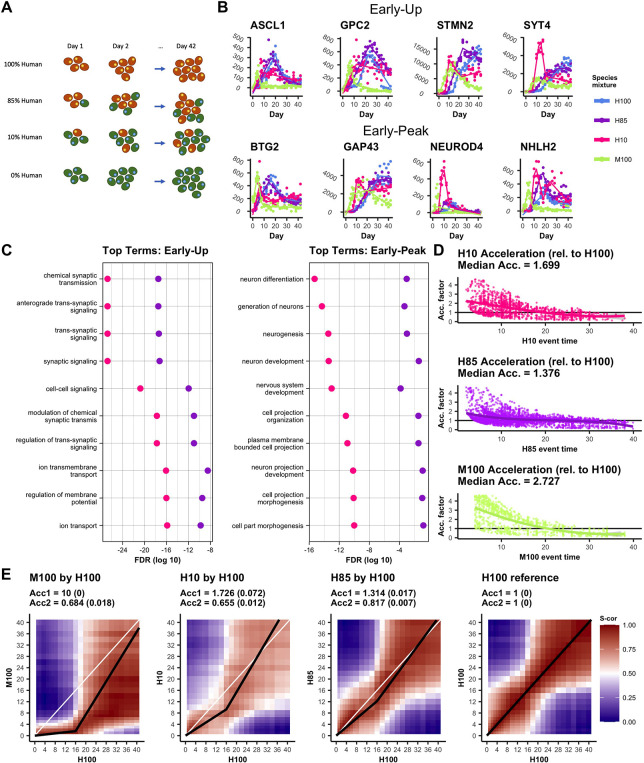
Human pluripotent stem cells hold significant promise for regenerative medicine. However, long differentiation protocols and immature characteristics of stem cell-derived cell types remain challenges to the development of many therapeutic applications. In contrast to the slow differentiation of human stem cells in vitro that mirrors a nine-month gestation period, mouse stem cells develop according to a much faster three-week gestation timeline. Here, we tested if co-differentiation with mouse pluripotent stem cells could accelerate the differentiation speed of human embryonic stem cells. Following a six-week RNA-sequencing time course of neural differentiation, we identified 929 human genes that were upregulated earlier and 535 genes that exhibited earlier peaked expression profiles in chimeric cell cultures than in human cell cultures alone. Genes with accelerated upregulation were significantly enriched in Gene Ontology terms associated with neurogenesis, neuron differentiation and maturation, and synapse signaling. Moreover, chimeric mixed samples correlated with in utero human embryonic samples earlier than human cells alone, and acceleration was dose-dependent on human-mouse co-culture ratios. The altered gene expression patterns and developmental rates described in this report have implications for accelerating human stem cell differentiation and the use of interspecies chimeric embryos in developing human organs for transplantation.
人类多能干细胞在再生医学中具有重要的应用前景。然而,干细胞来源的细胞类型的长期分化方案和不成熟特征仍然是许多治疗应用发展的挑战。与体外人类干细胞的缓慢分化相比,这种分化过程模拟了九个月的妊娠期,而小鼠干细胞则按照更快的三周妊娠期时间表发育。在这里,我们测试了与小鼠多能干细胞共分化是否可以加速人类胚胎干细胞的分化速度。在为期六周的神经分化 RNA 测序过程中,我们鉴定了 929 个人类基因,这些基因在嵌合细胞培养物中的上调时间早于单独的人类细胞培养物,而 535 个基因则表现出更早的峰值表达谱。具有加速上调的基因在与神经发生、神经元分化和成熟以及突触信号转导相关的基因本体术语中显著富集。此外,嵌合混合样本与体内人类胚胎样本的相关性早于单独的人类细胞,并且加速与人类-小鼠共培养比例有关。本报告中描述的改变的基因表达模式和发育速度对加速人类干细胞分化以及在开发用于移植的人类器官中使用种间嵌合胚胎具有重要意义。