Key Laboratory of Tumor Immunology and Microenvironmental Regulation of Guangxi, Guilin Medical University, Guilin 541004, Guangxi, China.
Department of Physiology, Guilin Medical University, Guilin 541004, Guangxi, China.
Aging (Albany NY). 2021 Mar 1;13(8):11026-11042. doi: 10.18632/aging.202641.
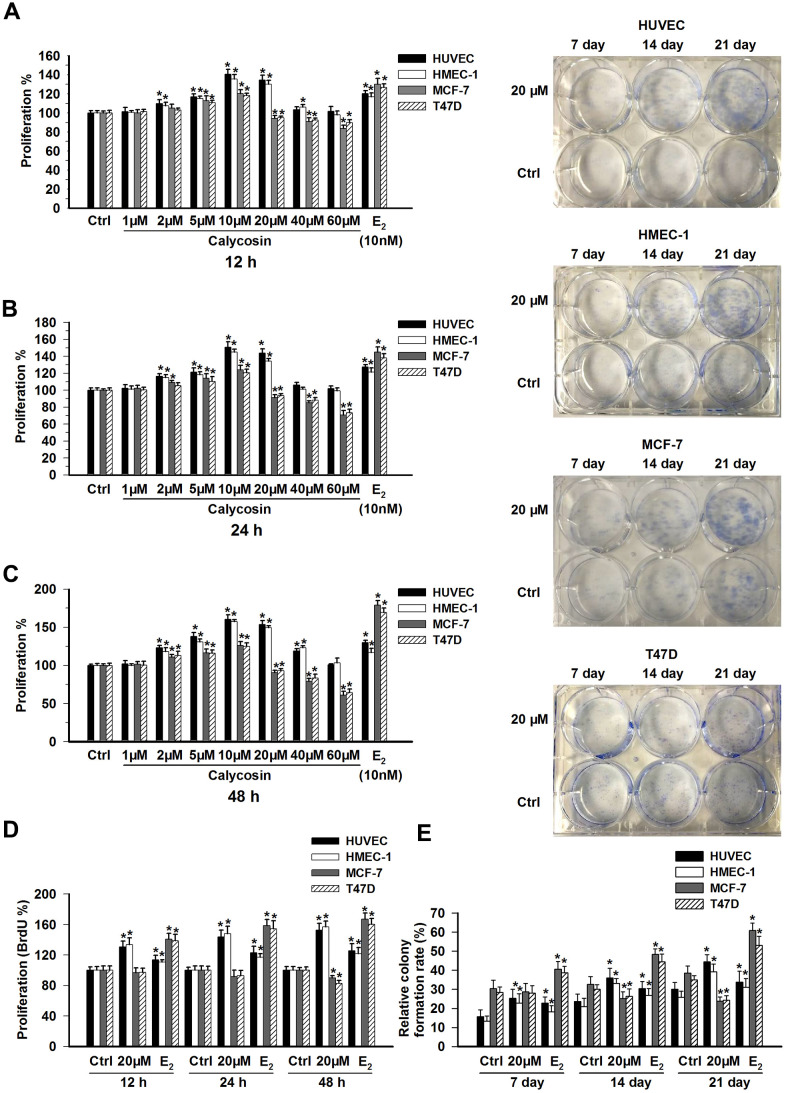
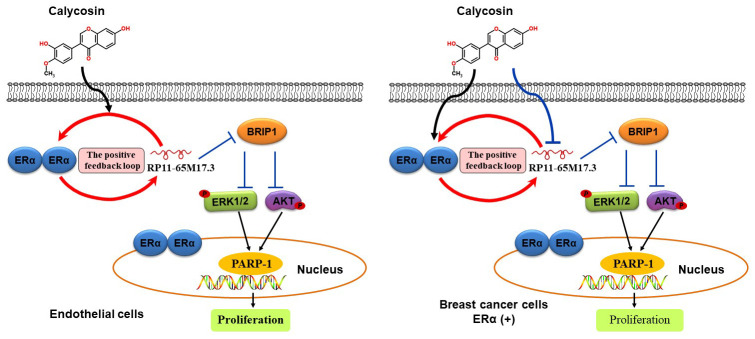
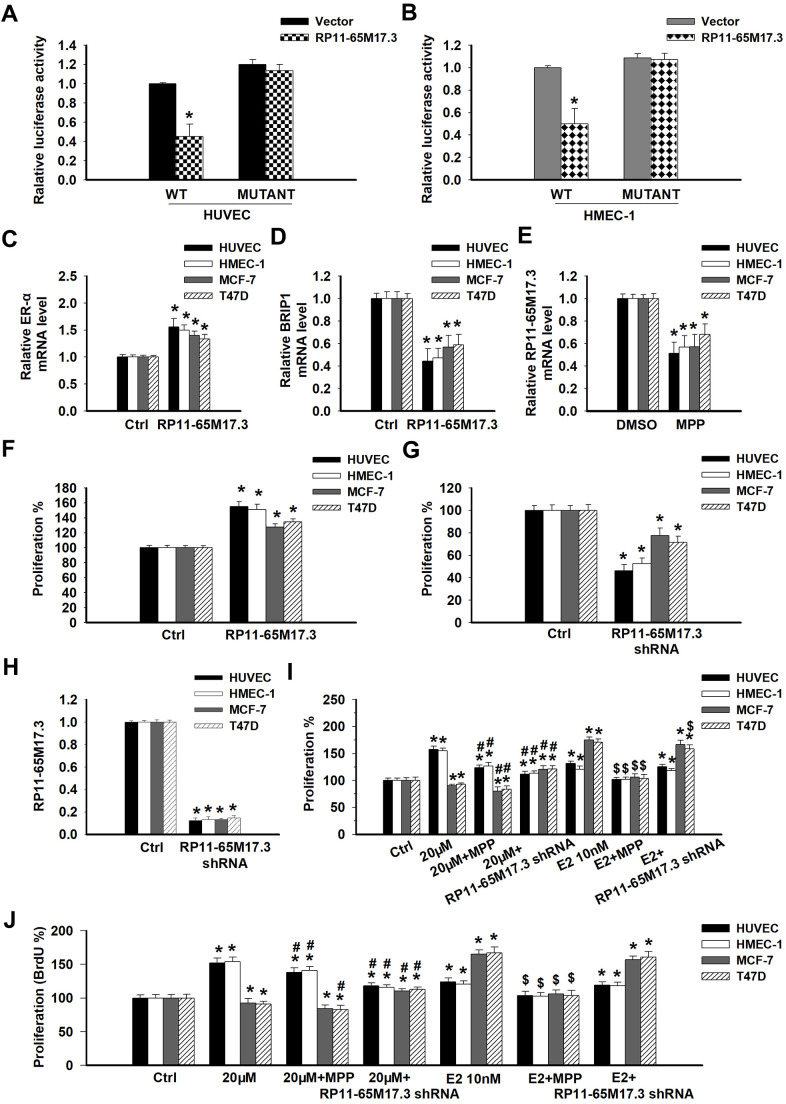
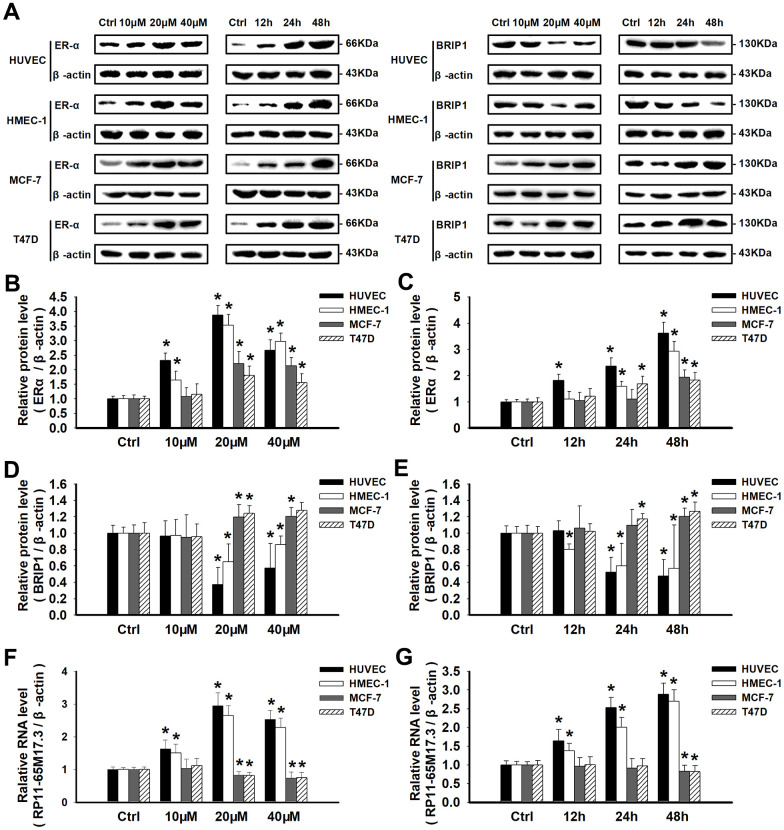
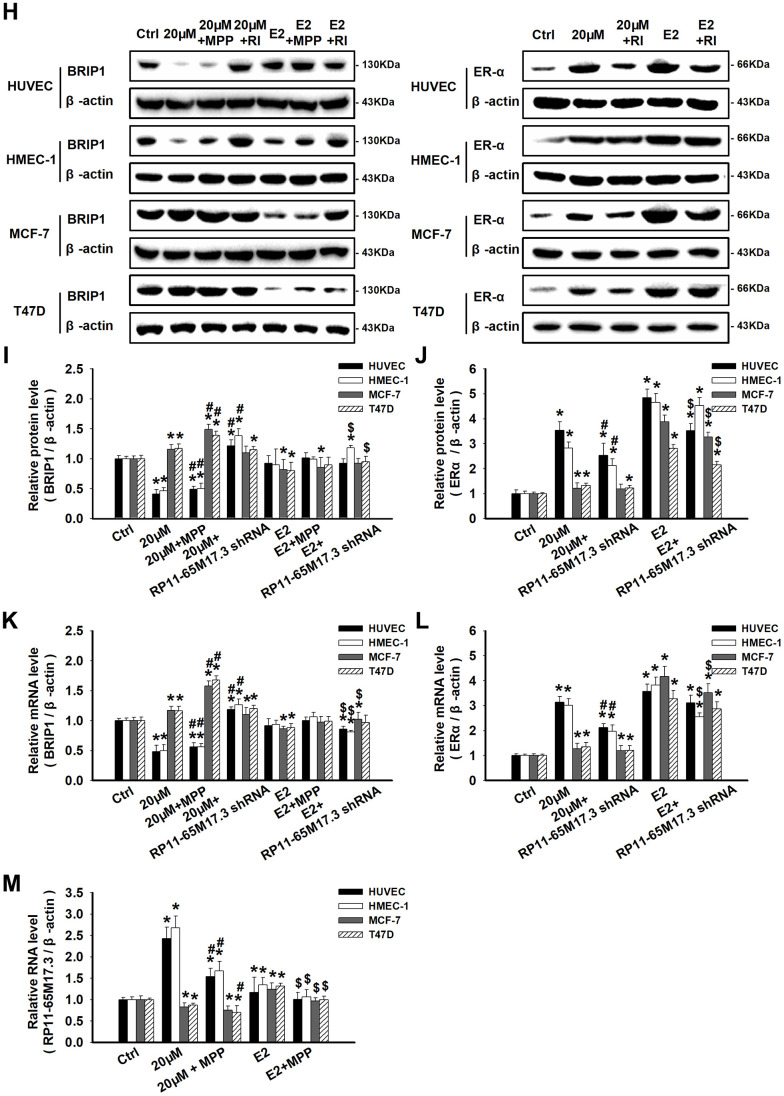
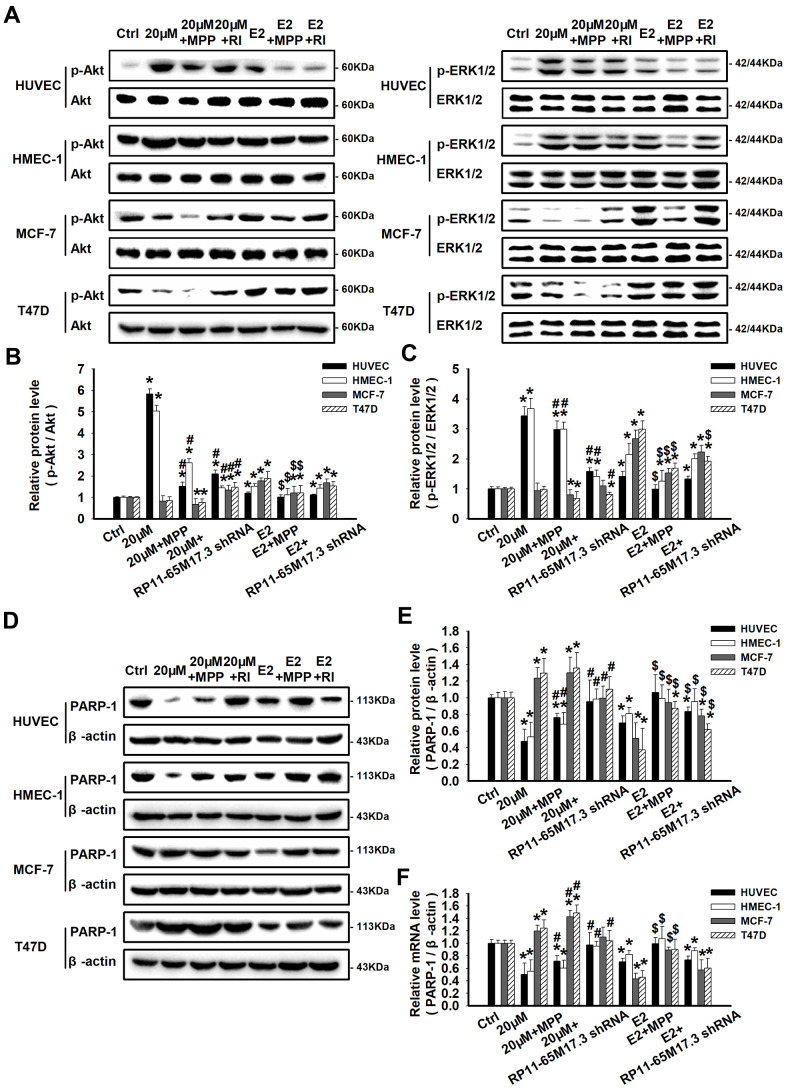
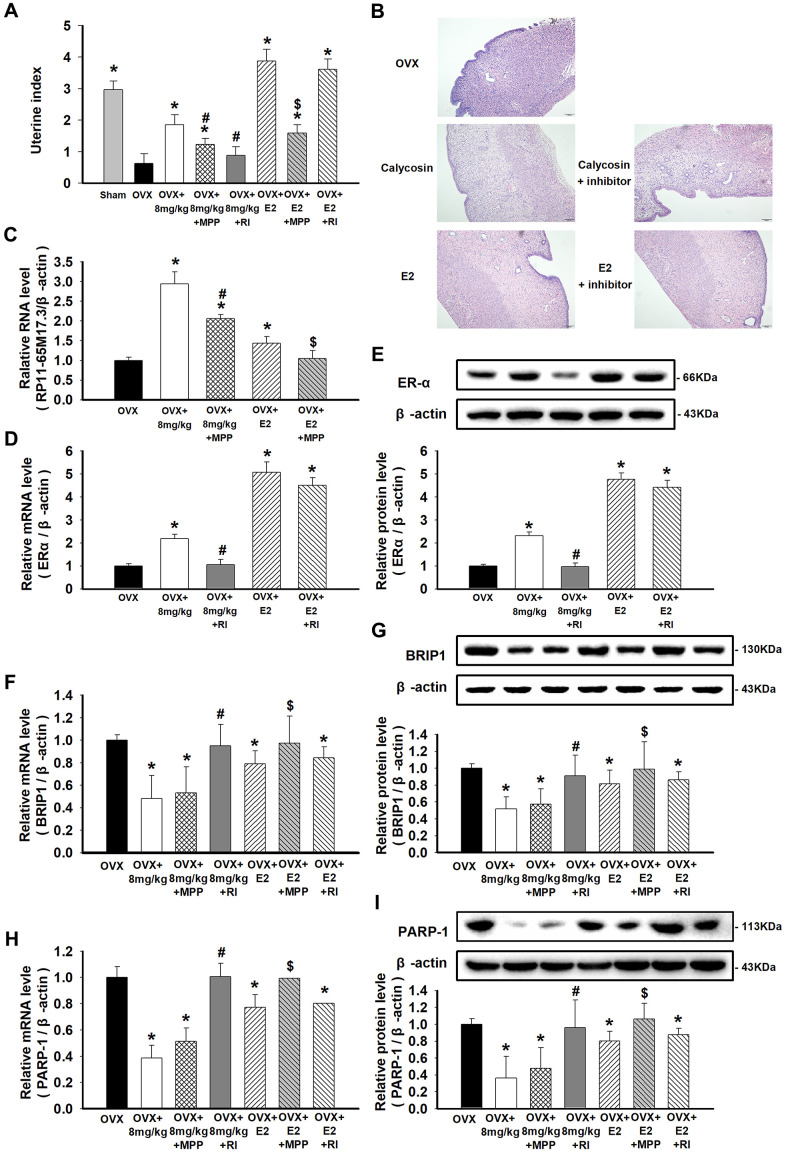
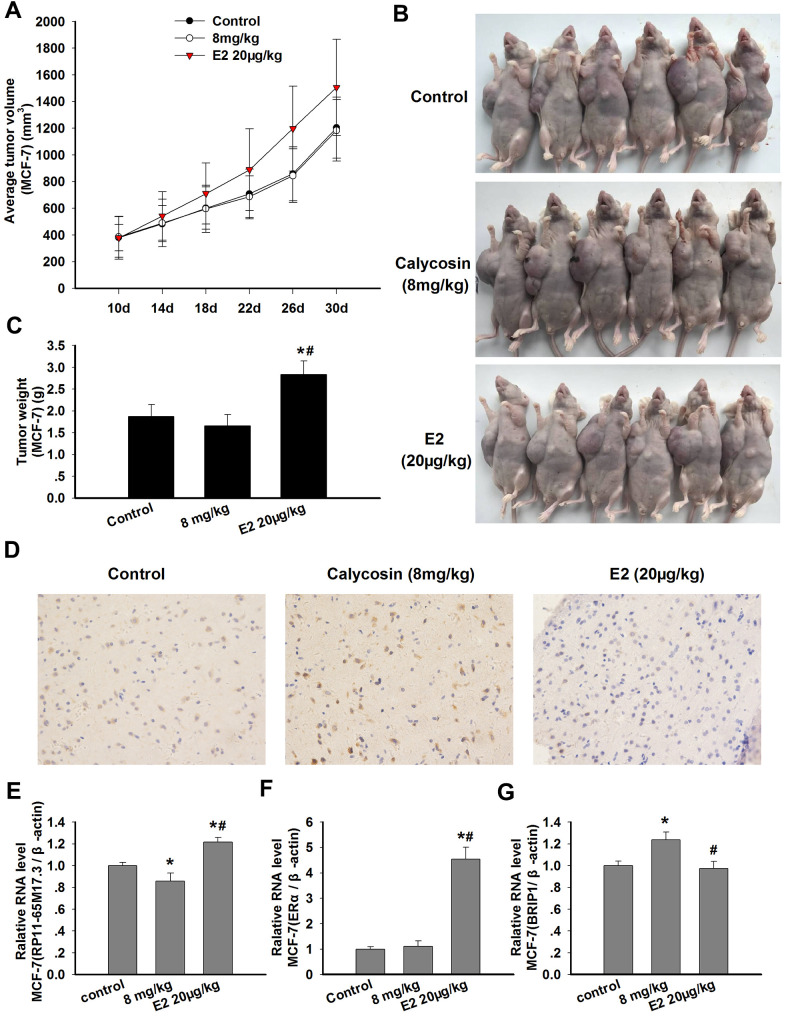
It is widely accepted that estrogen can be replaced by phytoestrogens to treat postmenopausal cardiovascular disease and possibly decrease the risk of breast cancer. However, few studies have investigated the effects of phytoestrogens on vascular endothelial cells (ECs). In the present study, we show that the phytoestrogen calycosin (20 μM) stimulated the proliferation of ECs (HUVECs and HMEC-1) but inhibited the growth of breast cancer cells (BCCs) expressing ERα (MCF-7 and T47D). Here we provide evidence for the presence of a positive feedback loop between ERα and long noncoding RNA RP11-65M17.3 in both normal and cancer cells, and calycosin stimulated this feedback loop in ECs but decreased RP11-65M17.3 expression in BCCs. Subsequently, the calycosin-induced activation of this loop decreased the expression of the target of BRIP1 (BRCA1 interacting protein C-terminal helicase 1), increased the phosphorylation of Akt and ERK1/2, and finally inhibited the cleavage of PARP-1 in ECs. In nude mice bearing MCF-7 xenografts, calycosin did not stimulate tumor growth as strongly as 17β-estradiol. Together, these results suggest that calycosin promotes the proliferation of ECs, and notable inhibits the growth of BCCs. A possible reason for these results is the involvement of a feedback loop between ERα and RP11-65M17.3.
人们普遍认为,植物雌激素可以替代雌激素来治疗绝经后心血管疾病,并可能降低乳腺癌的风险。然而,很少有研究调查植物雌激素对血管内皮细胞(ECs)的影响。在本研究中,我们表明植物雌激素芒柄花素(20 μM)刺激 ECs(HUVECs 和 HMEC-1)的增殖,但抑制表达 ERα 的乳腺癌细胞(MCF-7 和 T47D)的生长。在这里,我们提供了 ERα 和长非编码 RNA RP11-65M17.3 在正常和癌细胞中存在正反馈回路的证据,并且芒柄花素刺激了 ECs 中的这个反馈回路,但降低了 BCC 中的 RP11-65M17.3 表达。随后,芒柄花素诱导的该回路的激活降低了 BRIP1(BRCA1 相互作用蛋白 C 端解旋酶 1)的靶标表达,增加了 Akt 和 ERK1/2 的磷酸化,最终抑制了 PARP-1 在 ECs 中的裂解。在携带 MCF-7 异种移植瘤的裸鼠中,芒柄花素刺激肿瘤生长的作用不如 17β-雌二醇强。总之,这些结果表明芒柄花素促进 ECs 的增殖,并显著抑制 BCCs 的生长。这些结果的一个可能原因是 ERα 和 RP11-65M17.3 之间的反馈回路的参与。