Department of Hematology and Hematology Research Laboratory, West China Hospital, Sichuan University, Chengdu, China.
Int J Lab Hematol. 2021 Oct;43(5):1062-1069. doi: 10.1111/ijlh.13502. Epub 2021 Mar 2.
Myelodysplastic syndrome (MDS) is a group of heterogeneous hematological diseases characterized by ineffective hematopoiesis and dysplastic morphology. Single nucleotide polymorphism array (SNP-A)-based whole genome analysis has a much higher resolution for chromosomal alterations when compared with conventional cytogenetic tools. In the present study, we evaluated the diagnostic value and prognostic significance of SNP-A in MDS patients with normal karyotypes.
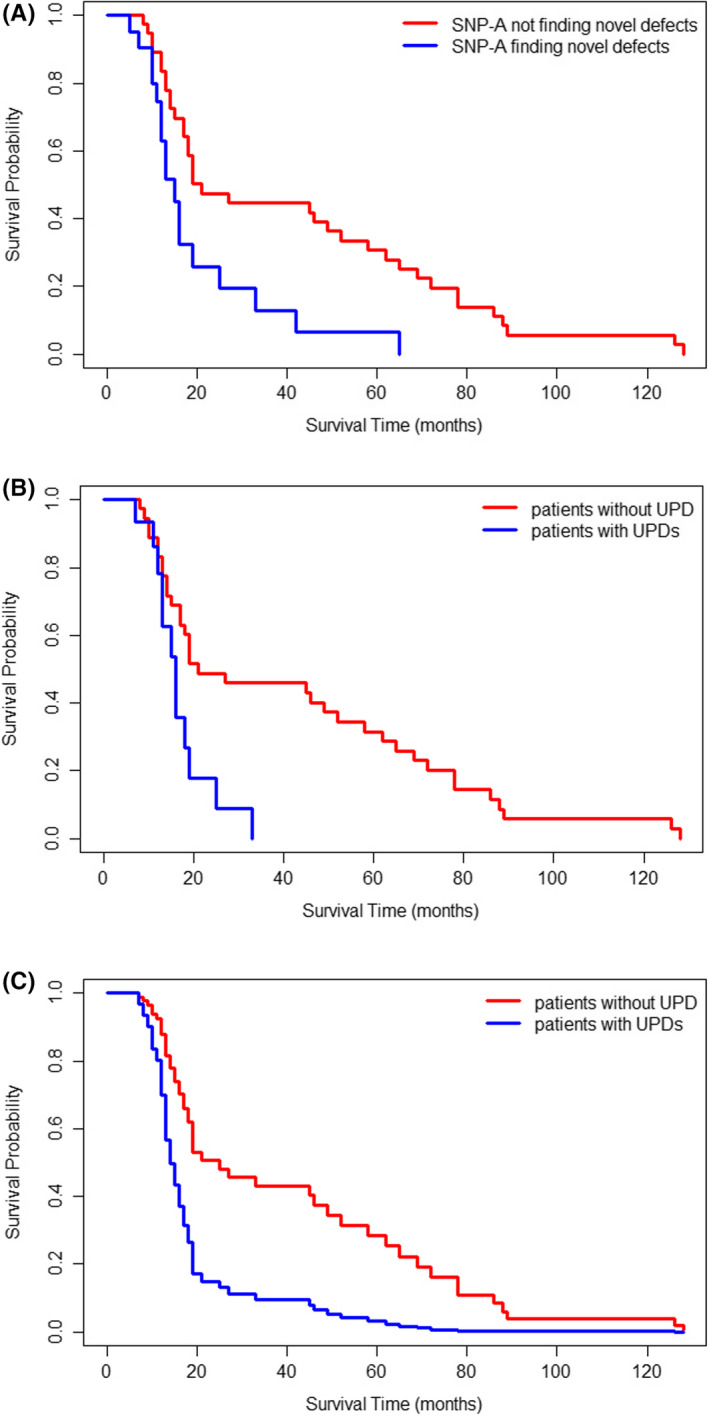
A total of 127 patients with MDS and myeloproliferative neoplasms or acute myeloid leukemia with myelodysplasia-related changes were included in our study. The advantages and disadvantages of SNP-A were compared with those of traditional metaphase cytogenetic analysis (MC). The Kaplan-Meier analysis and COX regression analysis were used to investigate the prognostic value of SNP-A and uniparental disomy (UPD) in MDS patients with normal karyotype. Furthermore, the chromosomal abnormalities detected by SNP-A in patients with specific gene mutations were explored.
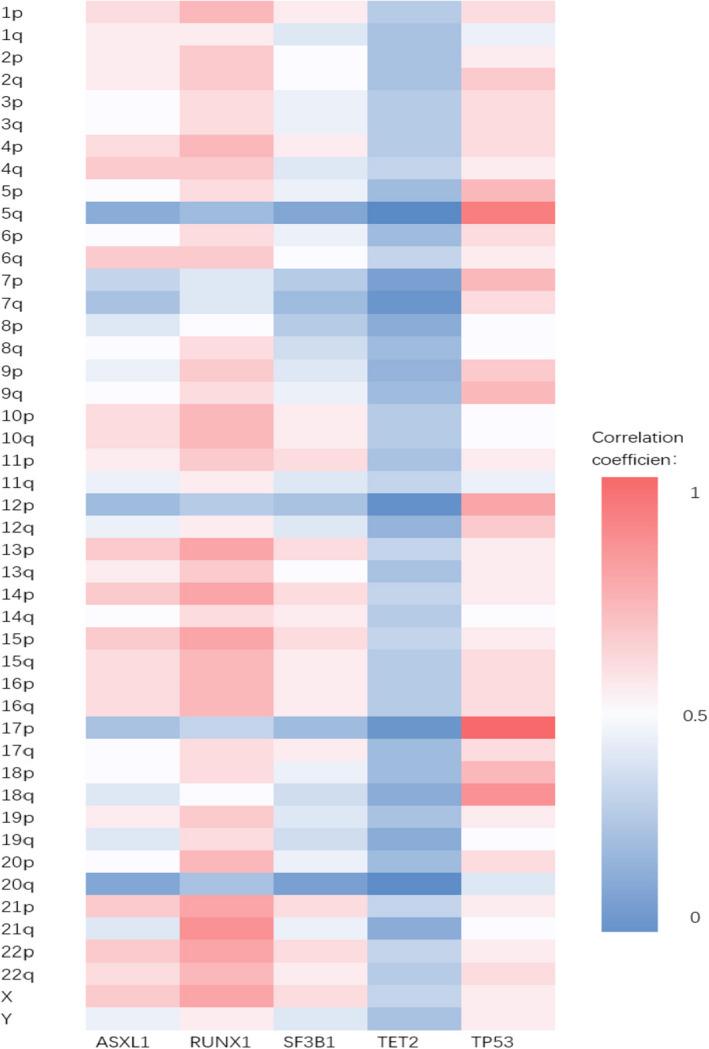
SNP-A was more sensitive toward meaningful chromosomal aberrations (58.2% vs 36.9%; P < .05) than MC. Among the patients with normal karyotype, those who were detected with new chromosomal abnormalities via SNP-A presented with inferior survival compared with those without the abnormalities (P = .003). Additionally, the presence of UPD was an independent prognostic factor in patients with normal karyotype (P = .01). TP53 and RUNX1 mutations often occurred with abnormalities in chromosomes 17p and 21q, respectively.
Compared with MC, SNP-A capable of detecting UPD can offer more diagnostic and prognostic information; TP53 and RUNX1 gene mutations are often accompanied by abnormalities in their chromosomes (17p, 22q).
骨髓增生异常综合征(MDS)是一组异质性血液系统疾病,其特征为无效造血和发育不良形态。与传统细胞遗传学工具相比,基于单核苷酸多态性阵列(SNP-A)的全基因组分析对染色体改变具有更高的分辨率。在本研究中,我们评估了 SNP-A 在核型正常的 MDS 患者中的诊断价值和预后意义。
共纳入 127 例伴有骨髓增生性肿瘤或伴有 MDS 相关改变的急性髓系白血病的 MDS 患者。将 SNP-A 的优缺点与传统中期细胞遗传学分析(MC)进行了比较。Kaplan-Meier 分析和 COX 回归分析用于研究 SNP-A 和单亲二体性(UPD)在核型正常的 MDS 患者中的预后价值。此外,还探讨了 SNP-A 检测到的特定基因突变患者的染色体异常。
SNP-A 对有意义的染色体异常的检测敏感性(58.2% vs 36.9%;P<.05)高于 MC。在核型正常的患者中,通过 SNP-A 检测到新的染色体异常的患者与无异常的患者相比,生存情况较差(P=.003)。此外,UPD 的存在是核型正常患者的独立预后因素(P=.01)。TP53 和 RUNX1 突变常与染色体 17p 和 21q 的异常相关。
与 MC 相比,能够检测 UPD 的 SNP-A 可以提供更多的诊断和预后信息;TP53 和 RUNX1 基因突变常伴有其染色体(17p、22q)的异常。