Guangxi Colleges and Universities Key Laboratory of Pharmacology, Guilin Medical University, Guilin, Guangxi 541004, P.R. China.
Oncol Rep. 2021 Mar;45(3):975-986. doi: 10.3892/or.2020.7916. Epub 2020 Dec 30.
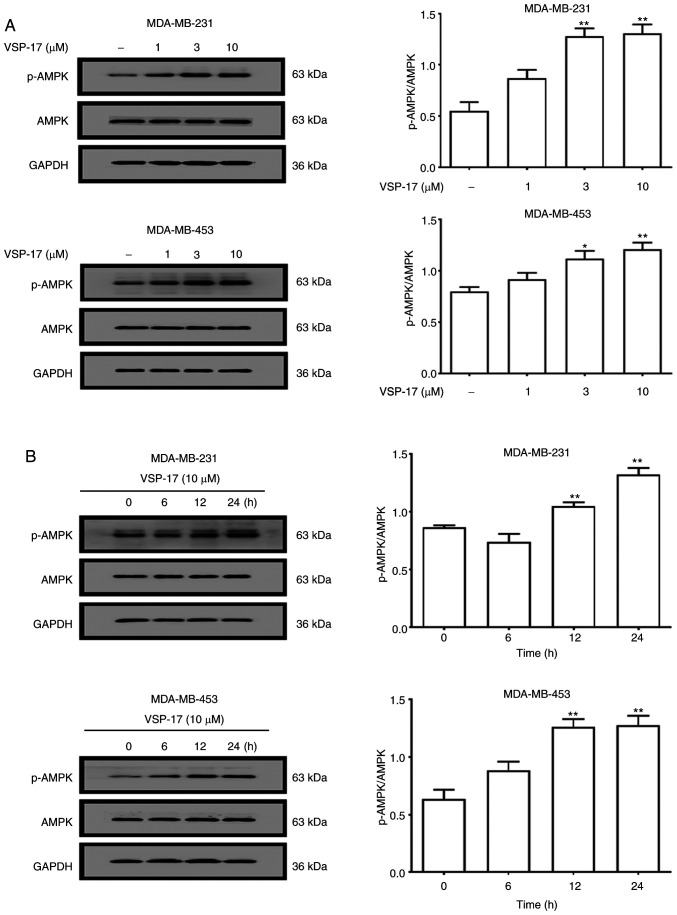
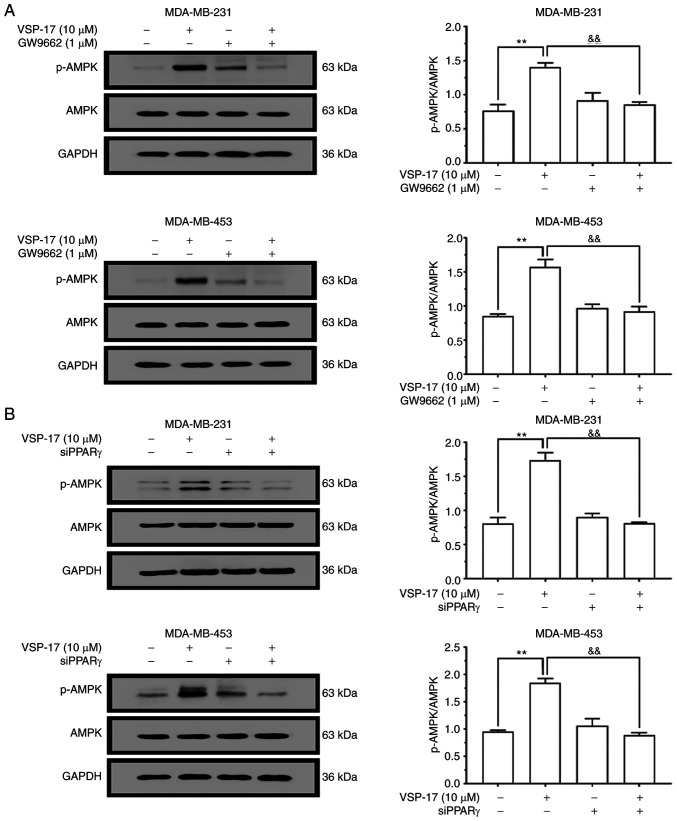
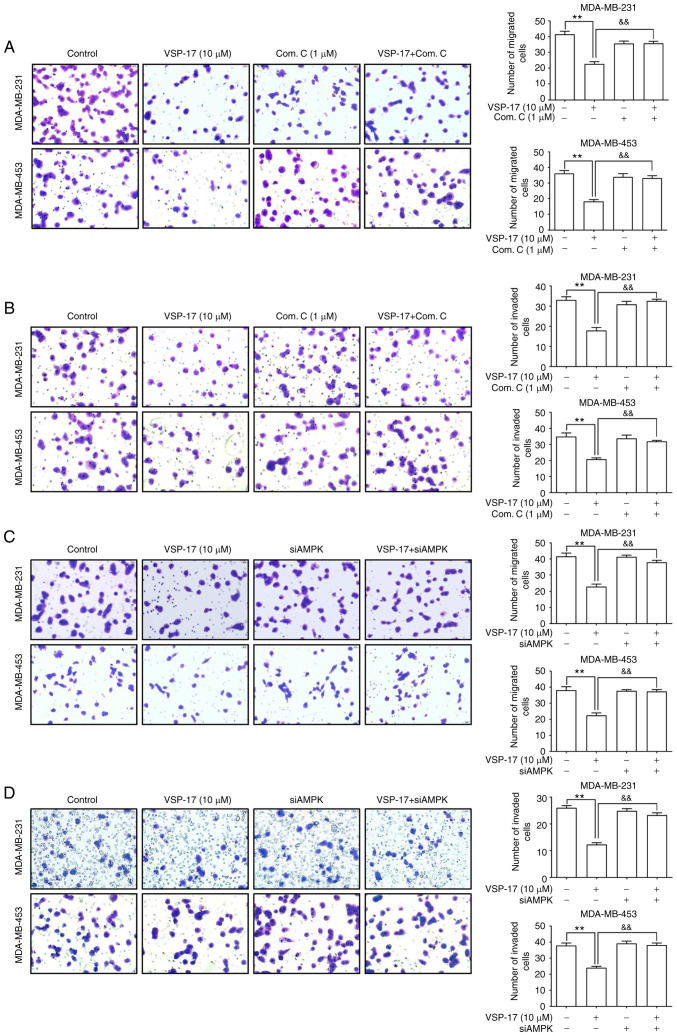
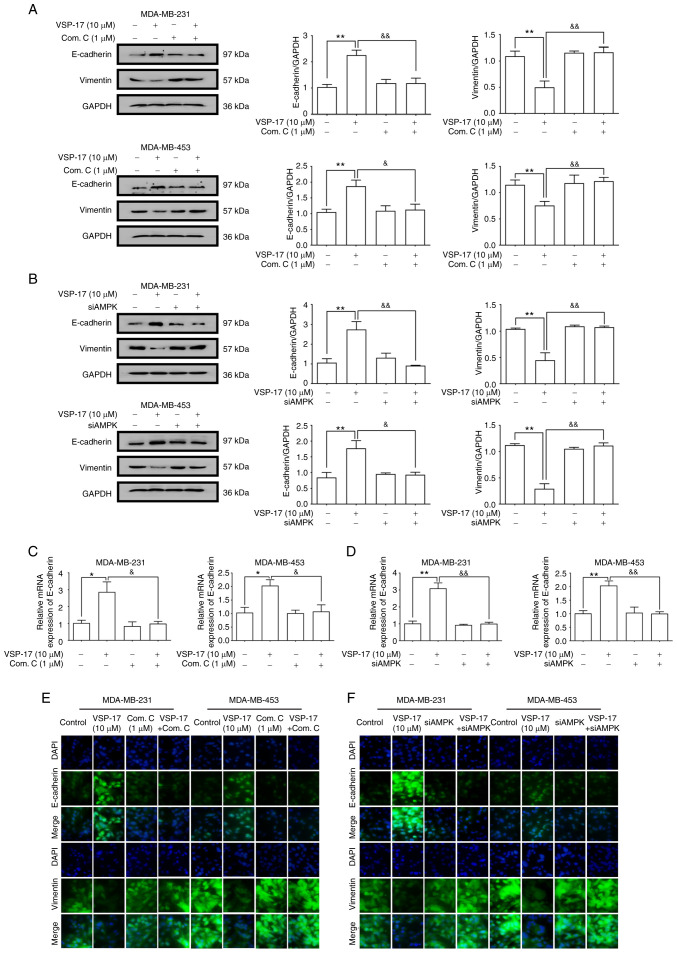
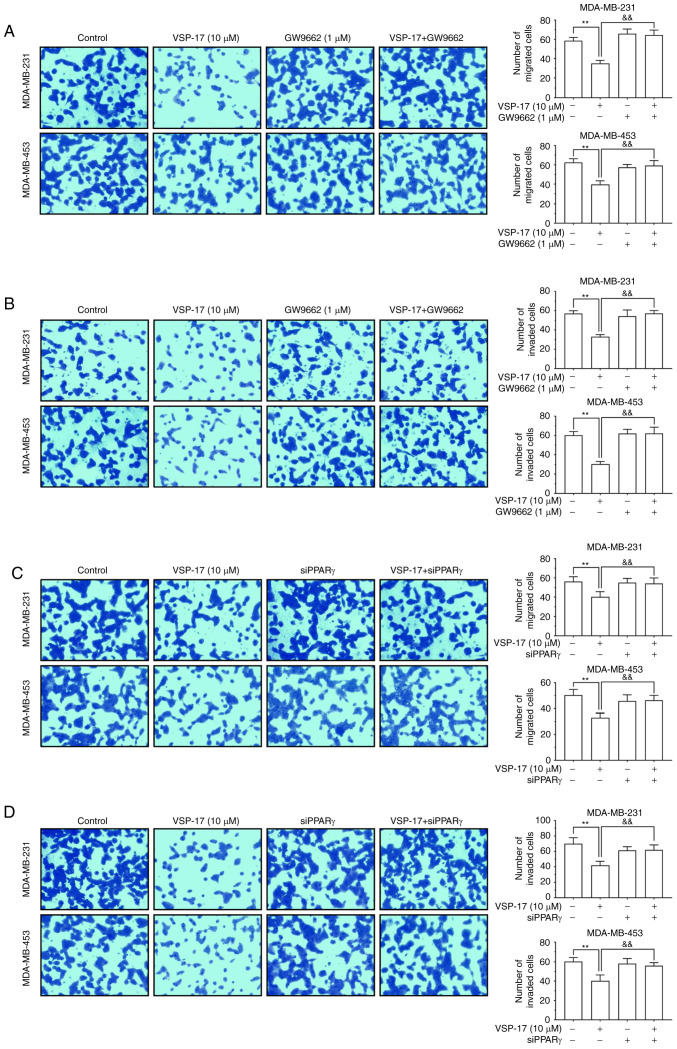
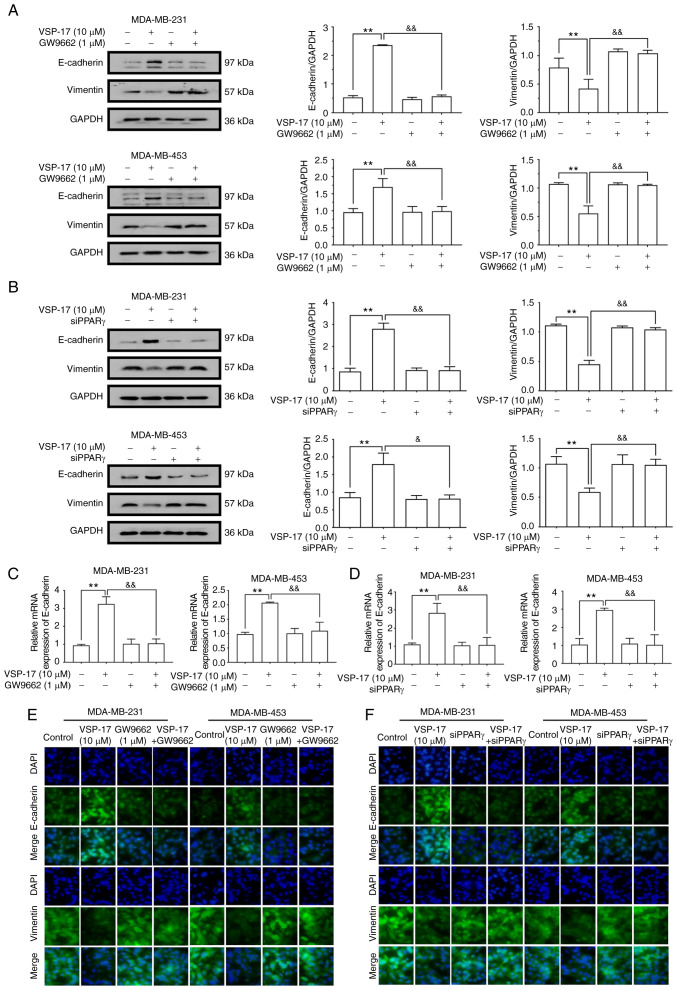
VSP‑17, a novel peroxisome proliferator‑activated receptor γ (PPARγ) agonist, has been previously demonstrated to suppress the metastasis of triple‑negative breast cancer (TNBC) by upregulating the expression levels of E‑cadherin, which is a key marker of epithelial‑mesenchymal transition (EMT). However, the mechanism of action of VSP‑17, in particular whether it may be associated with the EMT process, remains unknown. The present study investigated the ability of VSP‑17 to inhibit the invasiveness and migratory ability of TNBC cell lines (MDA‑MB‑231 and MDA‑MB‑453) performed in in vitro experiments. including cell migration assay, cell invasion assay, cell transfection, RT‑qPCR, western blot (WB) analysis and immunofluorescence. The present study aimed to ascertain whether and how the PPARγ/AMP‑activated protein kinase (AMPK) signaling pathway serves a role in the inhibitory effects of VSP‑17 on cell migration and invasion. The results revealed that both treatment with compound C (an AMPK inhibitor) and transfection with small interfering RNA (si)AMPK notably diminished the inhibitory effect of VSP‑17 treatment on the migration and invasion of MDA‑MB‑231 and MDA‑MB‑453 cells, indicating that VSP‑17 may, at least partly, exert its effects via AMPK. Furthermore, both compound C and siAMPK markedly diminished the VSP‑17‑induced downregulation of vimentin expression levels and upregulation of E‑cadherin expression levels, further indicating that the VSP‑17‑induced inhibition of the EMT process may be dependent on AMPK. The combination of GW9662 (a PPARγ antagonist) or siPPARγ diminished the inhibitory effect of VSP‑17 treatment on the migration and invasion of the TNBC cells, indicating that PPARγ may serve an important role in the VSP‑17‑induced inhibition of the migration and invasion of TNBC cells. In addition, both GW9662 and siPPARγ significantly reversed the VSP‑17‑induced downregulation of vimentin expression levels and upregulation of E‑cadherin expression levels, implying that the VSP‑17‑induced inhibition of the EMT process may be dependent on PPARγ. VSP‑17 treatment also upregulated the expression levels of p‑AMPK, which could be reversed by either GW9662 or siPPARγ, indicating that the VSP‑17‑induced activation of the AMPK signaling pathway was PPARγ‑dependent. In conclusion, the findings of the present study indicated that VSP‑17 treatment may inhibit the migration and invasion of TNBC cells by suppressing the EMT process via the PPARγ/AMPK signaling pathway.
VSP-17 是一种新型过氧化物酶体增殖物激活受体 γ(PPARγ)激动剂,先前的研究已经证实,它通过上调上皮-间充质转化(EMT)的关键标志物 E-钙黏蛋白的表达水平,抑制三阴性乳腺癌(TNBC)的转移。然而,VSP-17 的作用机制,特别是它是否与 EMT 过程有关,尚不清楚。本研究通过体外实验,包括细胞迁移实验、细胞侵袭实验、细胞转染、RT-qPCR、Western blot(WB)分析和免疫荧光实验,研究了 VSP-17 抑制 TNBC 细胞系(MDA-MB-231 和 MDA-MB-453)侵袭和迁移的能力。本研究旨在确定 PPARγ/AMP 激活蛋白激酶(AMPK)信号通路是否以及如何在 VSP-17 抑制细胞迁移和侵袭中发挥作用。结果表明,用化合物 C(AMPK 抑制剂)处理和用小干扰 RNA(si)AMPK 转染均显著减弱了 VSP-17 对 MDA-MB-231 和 MDA-MB-453 细胞迁移和侵袭的抑制作用,表明 VSP-17 可能至少部分通过 AMPK 发挥作用。此外,化合物 C 和 siAMPK 均显著减弱了 VSP-17 诱导的波形蛋白表达水平下调和 E-钙黏蛋白表达水平上调,进一步表明 VSP-17 诱导的 EMT 过程抑制可能依赖于 AMPK。GW9662(PPARγ 拮抗剂)或 siPPARγ 的组合减弱了 VSP-17 处理对 TNBC 细胞迁移和侵袭的抑制作用,表明 PPARγ 可能在 VSP-17 诱导的 TNBC 细胞迁移和侵袭抑制中发挥重要作用。此外,GW9662 和 siPPARγ 均显著逆转了 VSP-17 诱导的波形蛋白表达水平下调和 E-钙黏蛋白表达水平上调,表明 VSP-17 诱导的 EMT 过程抑制可能依赖于 PPARγ。VSP-17 处理还上调了 p-AMPK 的表达水平,这可以被 GW9662 或 siPPARγ 逆转,表明 VSP-17 诱导的 AMPK 信号通路的激活依赖于 PPARγ。综上所述,本研究结果表明,VSP-17 通过 PPARγ/AMPK 信号通路抑制 EMT 过程,从而抑制 TNBC 细胞的迁移和侵袭。