Golubovskaya Vita, Zhou Hua, Li Feng, Valentine Michael, Sun Jinying, Berahovich Robert, Xu Shirley, Quintanilla Milton, Ma Man Cheong, Sienkiewicz John, Huang Yanwei, Wu Lijun
Promab Biotechnologies, 2600 Hilltop Drive, Richmond, CA 94806, USA.
Biology and Environmental Science College, Hunan University of Arts and Science, Changde 415000, China.
Cancers (Basel). 2021 Feb 26;13(5):981. doi: 10.3390/cancers13050981.
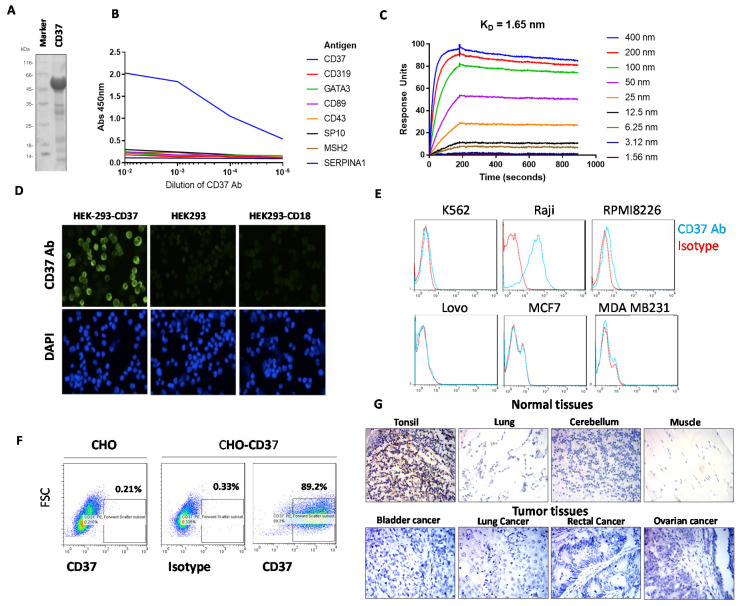
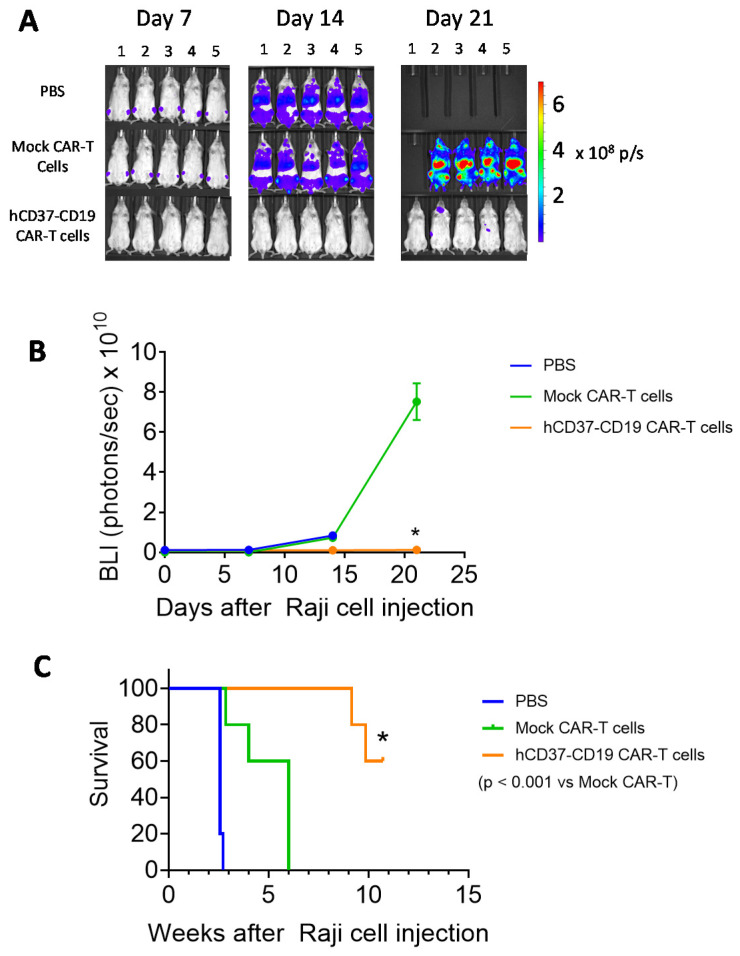
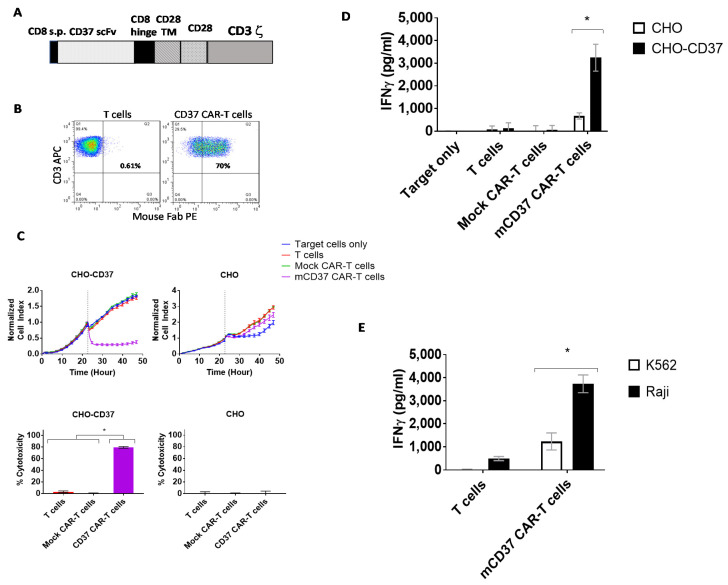
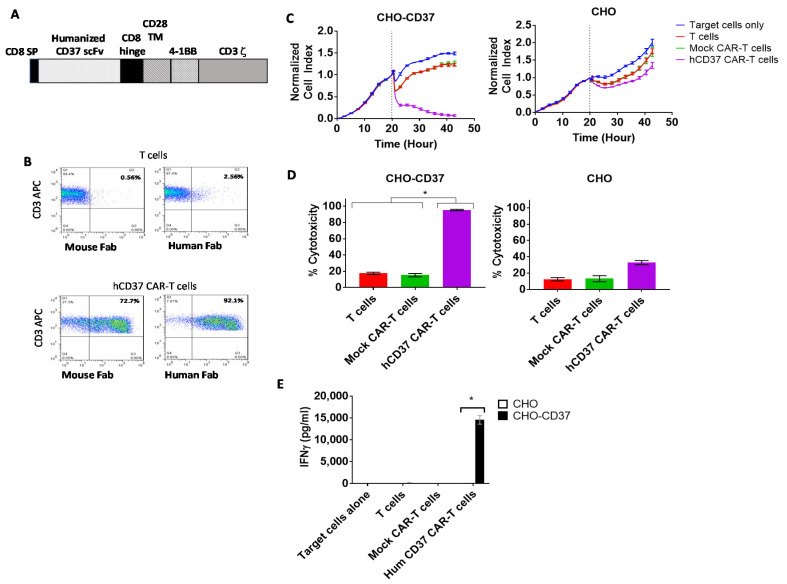
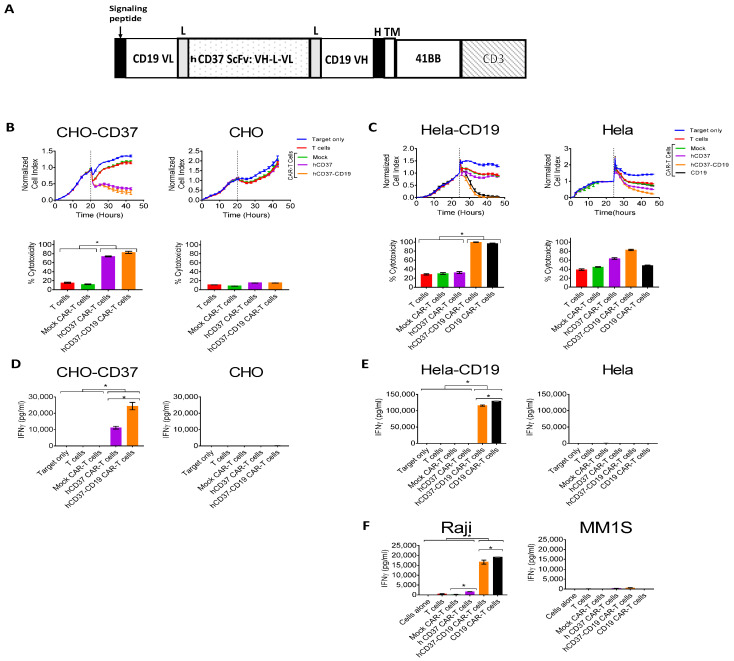
CD19 and CD37 proteins are highly expressed in B-cell lymphoma and have been successfully targeted with different monotherapies, including chimeric antigen receptor (CAR)-T cell therapy. The goal of this study was to target lymphoma with novel CD37, humanized CD37, and bi-specific humanized CD37-CD19 CAR-T cells. A novel mouse monoclonal anti-human CD37 antibody (clone 2B8D12F2D4) was generated with high binding affinity for CD37 antigen (KD = 1.6 nM). The CD37 antibody specifically recognized cell surface CD37 protein in lymphoma cells and not in multiple myeloma or other types of cancer. The mouse and humanized CD37-CAR-T cells specifically killed Raji and CHO-CD37 cells and secreted IFN-gamma. In addition, we generated bi-specific humanized hCD37-CD19 CAR-T cells that specifically killed Raji cells, CHO-CD37, and Hela-CD19 cells and did not kill control CHO or Hela cells. Moreover, the hCD37-CD19 CAR-T cells secreted IFN-gamma against CD37-positive and CD19-positive target CHO-CD37, Hela-CD19 cells, respectively, but not against CD19 and CD37-negative parental cell line. The bi-specific hCD37-CD19 significantly inhibited Raji xenograft tumor growth and prolonged mouse survival in NOD scid gamma mouse (NSG) mouse model. This study demonstrates that novel humanized CD37 and humanized CD37-CD19 CAR-T cells specifically targeted either CD37 positive or CD37 and CD19-positive cells and provides a basis for future clinical studies.
CD19和CD37蛋白在B细胞淋巴瘤中高度表达,并且已经通过包括嵌合抗原受体(CAR)-T细胞疗法在内的不同单一疗法成功靶向。本研究的目的是用新型CD37、人源化CD37和双特异性人源化CD37-CD19 CAR-T细胞靶向淋巴瘤。产生了一种对CD37抗原具有高结合亲和力(KD = 1.6 nM)的新型小鼠单克隆抗人CD37抗体(克隆2B8D12F2D4)。该CD37抗体特异性识别淋巴瘤细胞表面的CD37蛋白,而在多发性骨髓瘤或其他类型癌症中则不能识别。小鼠和人源化CD37-CAR-T细胞特异性杀死Raji和CHO-CD37细胞并分泌干扰素-γ。此外,我们产生了双特异性人源化hCD37-CD19 CAR-T细胞,其特异性杀死Raji细胞、CHO-CD37和Hela-CD19细胞,而不杀死对照CHO或Hela细胞。此外,hCD37-CD19 CAR-T细胞分别针对CD37阳性和CD19阳性靶细胞CHO-CD37、Hela-CD19细胞分泌干扰素-γ,但不针对CD19和CD37阴性亲本细胞系分泌。双特异性hCD37-CD19在NOD scid gamma小鼠(NSG)模型中显著抑制Raji异种移植肿瘤生长并延长小鼠存活时间。本研究表明,新型人源化CD37和人源化CD37-CD19 CAR-T细胞特异性靶向CD37阳性或CD37和CD19阳性细胞,并为未来的临床研究提供了基础。