Research Division, Federal Institute for Drugs and Medical Devices, Bonn, Germany.
Department of Physics, Chemistry and Pharmacy, University of Southern Denmark, Odense, Denmark.
PLoS One. 2021 Mar 3;16(3):e0247446. doi: 10.1371/journal.pone.0247446. eCollection 2021.
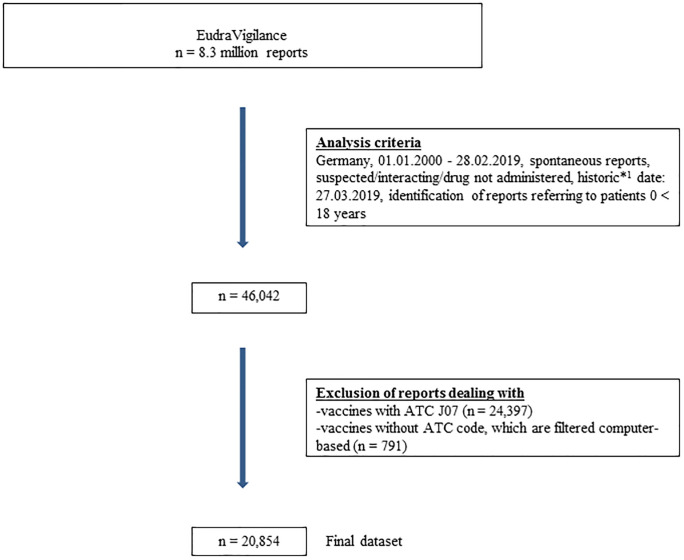
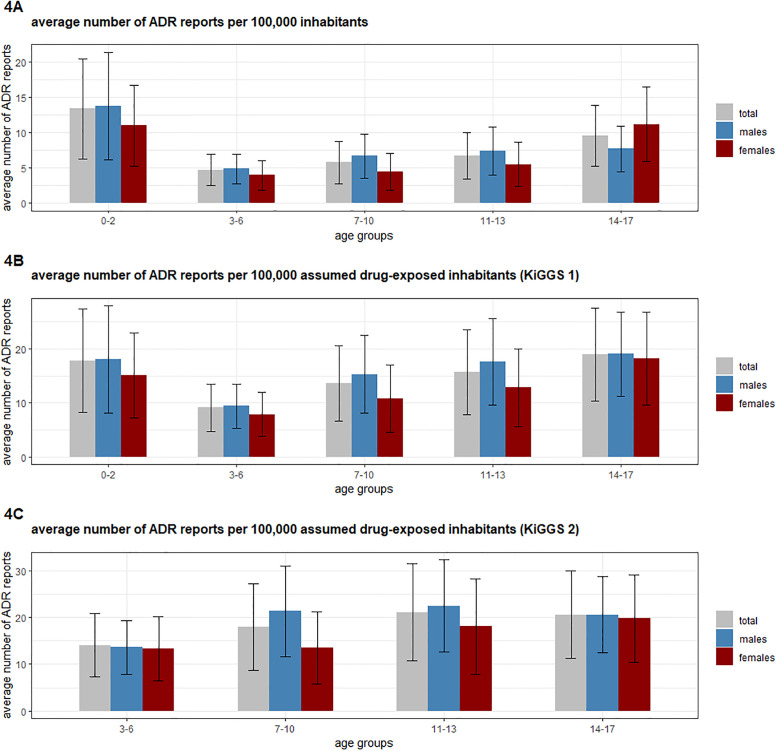
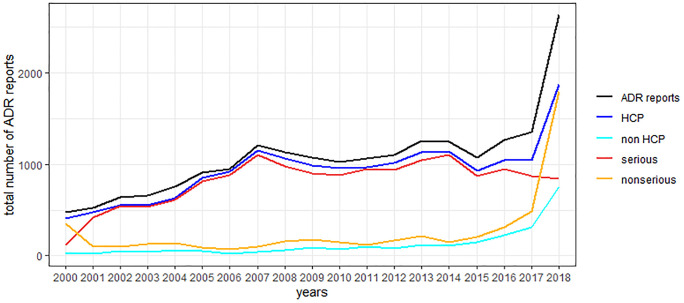
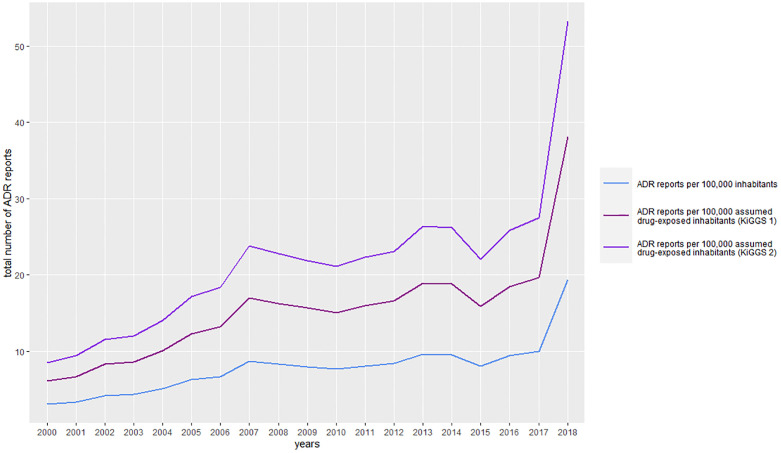
The objective of this study was to analyse reports on adverse drug reactions (ADRs) from Germany in the particularly vulnerable patient group of children and adolescents. Reporting characteristics, demographic parameters and off-label use were examined among others. The ratio of ADR reports per number of German inhabitants and the ratio of ADR reports per number of German inhabitants exposed to drugs were calculated and compared. These parameters were examined to derive trends in reporting of ADRs. 20,854 spontaneous ADR reports for the age group 0-17 years were identified in the European ADR database EudraVigilance for the time period 01.01.2000-28.02.2019 and analysed with regard to the aforementioned criteria. 86.5% (18,036/20,854) of the ADR reports originated from Healthcare Professionals and 12.2% (2,546/20,854) from non-Healthcare Professionals. 74.4% (15,522/20,854) of the ADR reports were classified as serious. The proportion of ADR reports per age group was 11.8% (0-1 month), 11.0% (2 months-1 year), 7.4% (2-3 years), 9.3% (4-6 years), 25.8% (7-12 years), and 34.8% (13-17 years) years, respectively. Male sex slightly dominated (51.2% vs. 44.8% females). Only 3.5% of the ADR reports reported off-label use. The annual number of ADR reports increased since 2000, even if set in context with the number of inhabitants and assumed drug-exposed inhabitants. The pediatric population declined in the study period which argues against its prominent role for the increase in the total number of ADR reports. Instead, among others, changes in reporting obligations may apply. The high proportion of serious ADR reports underlines the importance of pediatric drug safety.
本研究的目的是分析德国儿童和青少年这一特别脆弱患者群体的药物不良反应(ADR)报告。除其他外,还检查了报告特征、人口统计学参数和标签外使用等。计算并比较了每千名德国居民的 ADR 报告数和每千名接触药物的德国居民的 ADR 报告数的比值。检查这些参数是为了得出 ADR 报告趋势。在 2000 年 1 月 1 日至 2019 年 2 月 28 日期间,在欧洲 ADR 数据库 EudraVigilance 中,针对 0-17 岁年龄组确定了 20854 份自发 ADR 报告,并根据上述标准对其进行了分析。86.5%(18036/20854)的 ADR 报告来自医疗保健专业人员,12.2%(2546/20854)来自非医疗保健专业人员。74.4%(15522/20854)的 ADR 报告被归类为严重。按年龄组划分的 ADR 报告比例分别为 11.8%(0-1 个月)、11.0%(2 个月-1 岁)、7.4%(2-3 岁)、9.3%(4-6 岁)、25.8%(7-12 岁)和 34.8%(13-17 岁)。男性略占优势(51.2%比 44.8%女性)。只有 3.5%的 ADR 报告报告了标签外使用。自 2000 年以来,ADR 报告的年数量一直在增加,即使将其与居民人数和假定的药物暴露居民人数进行了对比。在研究期间,儿科人口有所下降,这表明其对总 ADR 报告数量增加的作用并不明显。相反,可能适用于其他报告义务的变化。严重 ADR 报告的高比例强调了儿科药物安全的重要性。