Díaz-Carballo David, Saka Sahitya, Acikelli Ali H, Homp Ekaterina, Erwes Julia, Demmig Rebecca, Klein Jacqueline, Schröer Katrin, Malak Sascha, D'Souza Flevy, Noa-Bolaño Adrien, Menze Saskia, Pano Emilio, Andrioff Swetlana, Teipel Marc, Dammann Philip, Klein Diana, Nasreen Amber, Tannapfel Andrea, Grandi Nicole, Tramontano Enzo, Ochsenfarth Crista, Strumberg Dirk
Ruhr University Bochum, Faculty of Medicine, Department of Haematology and Oncology, Institute of Molecular Oncology and Experimental Therapeutics, Marien Hospital Herne, Herne, Germany.
Central Animal Laboratory, University Hospital Essen, University of Duisburg-Essen, Essen, Germany.
Commun Biol. 2021 Mar 3;4(1):276. doi: 10.1038/s42003-021-01800-3.
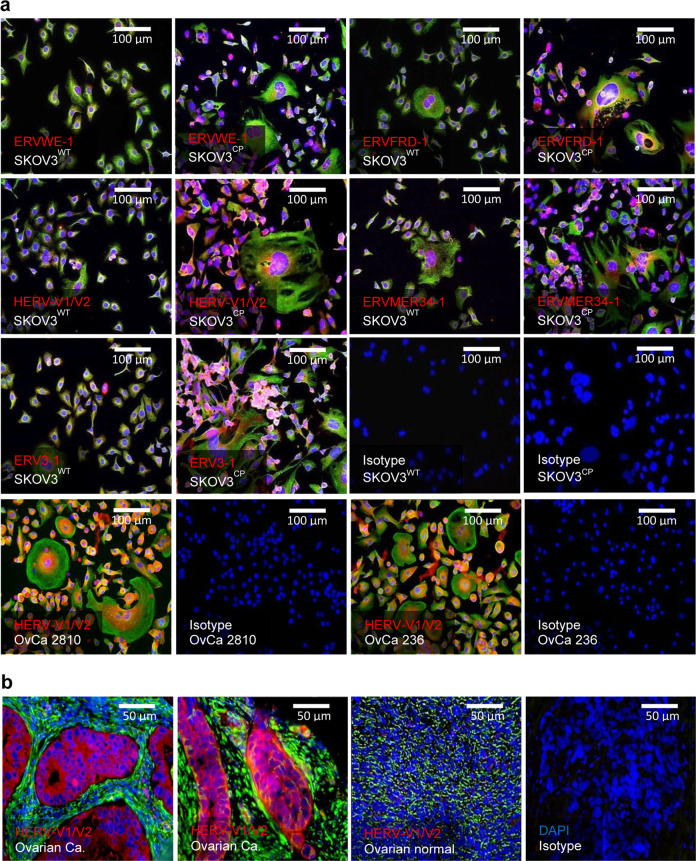
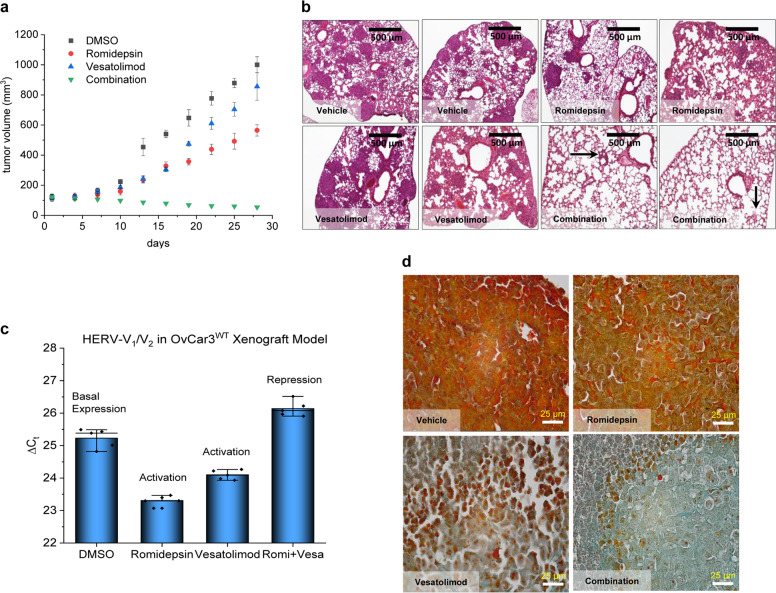
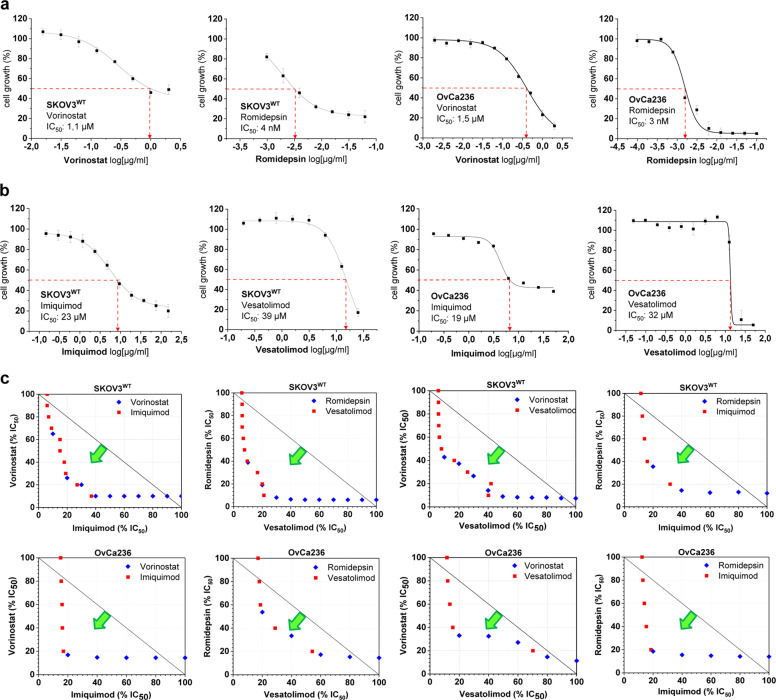
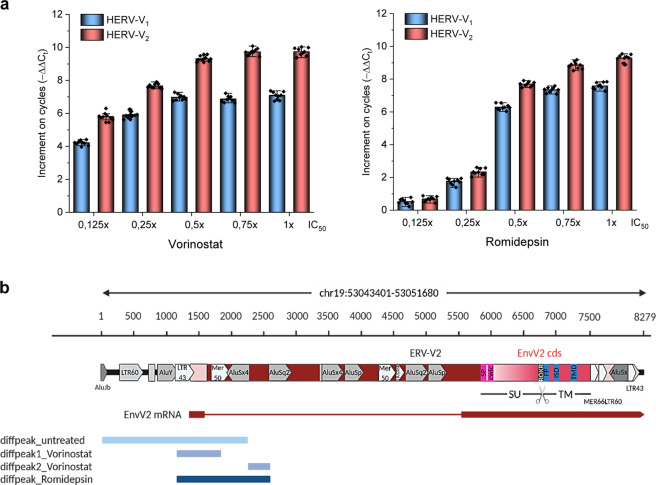
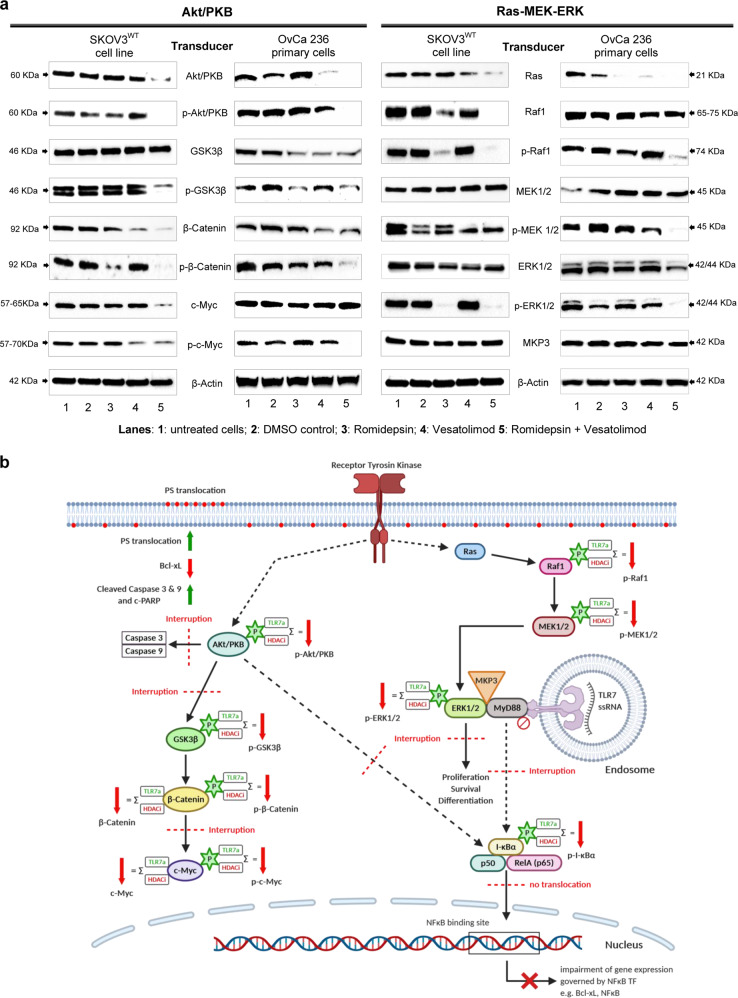
In this work, we are reporting that "Shock and Kill", a therapeutic approach designed to eliminate latent HIV from cell reservoirs, is extrapolatable to cancer therapy. This is based on the observation that malignant cells express a spectrum of human endogenous retroviral elements (HERVs) which can be transcriptionally boosted by HDAC inhibitors. The endoretroviral gene HERV-V2 codes for an envelope protein, which resembles syncytins. It is significantly overexpressed upon exposure to HDAC inhibitors and can be effectively targeted by simultaneous application of TLR7/8 agonists, triggering intrinsic apoptosis. We demonstrated that this synergistic cytotoxic effect was accompanied by the functional disruption of the TLR7/8-NFκB, Akt/PKB, and Ras-MEK-ERK signalling pathways. CRISPR/Cas9 ablation of TLR7 and HERV-V1/V2 curtailed apoptosis significantly, proving the pivotal role of these elements in driving cell death. The effectiveness of this new approach was confirmed in ovarian tumour xenograft studies, revealing a promising avenue for future cancer therapies.
在这项研究中,我们报告了“电击杀灭”(Shock and Kill)这种旨在从细胞储存库中清除潜伏性HIV的治疗方法可外推至癌症治疗。这是基于以下观察结果:恶性细胞表达一系列人类内源性逆转录病毒元件(HERVs),这些元件可被组蛋白去乙酰化酶(HDAC)抑制剂转录增强。内源性逆转录病毒基因HERV-V2编码一种包膜蛋白,类似于合胞素。在暴露于HDAC抑制剂后,它会显著过表达,并且通过同时应用Toll样受体7/8(TLR7/8)激动剂可有效靶向该蛋白,从而触发内源性凋亡。我们证明,这种协同细胞毒性作用伴随着TLR7/8-核因子κB(NFκB)、蛋白激酶B(Akt/PKB)和Ras-丝裂原活化蛋白激酶/细胞外信号调节激酶(Ras-MEK-ERK)信号通路的功能破坏。通过CRISPR/Cas9敲除TLR7和HERV-V1/V2可显著减少凋亡,证明了这些元件在驱动细胞死亡中的关键作用。这种新方法的有效性在卵巢肿瘤异种移植研究中得到证实,为未来的癌症治疗揭示了一条有前景的途径。