Riyad Jalish M, Weber Thomas
Cardiovascular Institute, Icahn School of Medicine at Mount Sinai, New York, NY, USA.
Graduate School of Biomedical Sciences, Icahn School of Medicine at Mount Sinai, New York, NY, USA.
Gene Ther. 2021 Dec;28(12):683-696. doi: 10.1038/s41434-021-00243-z. Epub 2021 Mar 3.
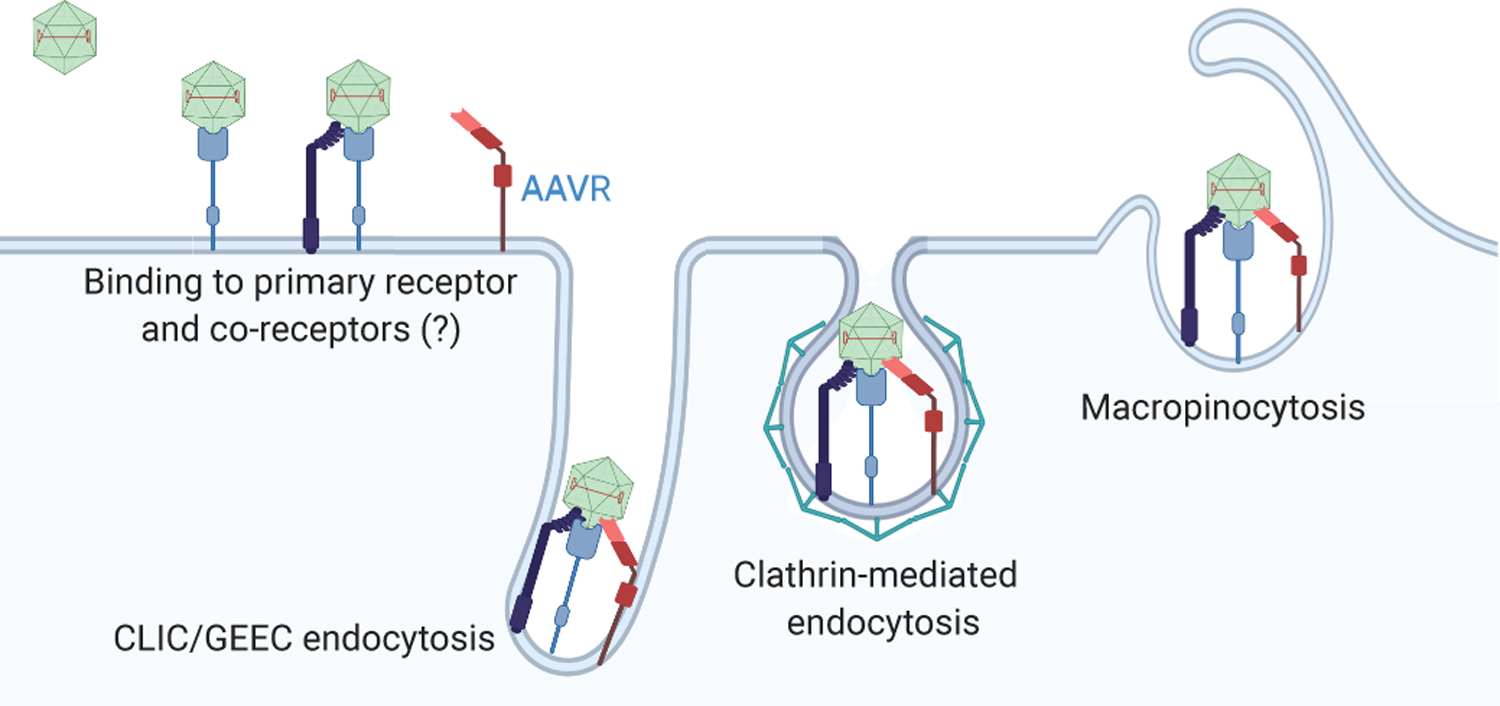
In the last two decades, recombinant adeno-associated virus has emerged as the most popular gene therapy vector. Recently AAV gene therapy has been approved by the FDA for the treatment of two rare genetic disorders, namely the early childhood blindness disease Leber congenital amaurosis and spinal muscular atrophy (SMA). As is the case for the treatment of SMA, if the AAV vector must be administered systemically, very high vector doses are often required for therapeutic efficacy. But higher vector doses inevitably increase the risk of adverse events. The tragic death of three children in a clinical trial to treat X-linked myotubular myopathy with an AAV vector has thrown this limitation into sharp relief. Regardless of the precise cause(s) that led to the death of the two children, it is critical that we develop better AAV vectors to achieve therapeutic levels of expression with lower vector doses. To transduce successfully a target cell, AAV has to overcome both systemic as well as cellular roadblocks. In this review, we discuss some of the most prominent cellular roadblocks that AAV must get past to deliver successfully its therapeutic payload. We also highlight recent advancements in our knowledge of AAV biology that can potentially be harnessed to improve AAV vector performance and thereby make AAV gene therapy safer.
在过去二十年中,重组腺相关病毒已成为最受欢迎的基因治疗载体。最近,腺相关病毒基因疗法已获美国食品药品监督管理局批准,用于治疗两种罕见的遗传疾病,即儿童期早期失明疾病莱伯先天性黑蒙和脊髓性肌萎缩症(SMA)。就治疗SMA的情况而言,如果必须全身给药腺相关病毒载体,通常需要非常高的载体剂量才能达到治疗效果。但更高的载体剂量不可避免地会增加不良事件的风险。在一项用腺相关病毒载体治疗X连锁肌管性肌病的临床试验中,三名儿童不幸死亡,这一局限性凸显无遗。无论导致这两名儿童死亡的确切原因是什么,至关重要的是我们要开发出更好的腺相关病毒载体,以便用更低的载体剂量实现治疗水平的表达。为了成功转导靶细胞,腺相关病毒必须克服全身和细胞层面的障碍。在这篇综述中,我们讨论了腺相关病毒为成功递送其治疗性载荷必须克服的一些最突出的细胞层面障碍。我们还强调了在腺相关病毒生物学知识方面的最新进展,这些进展有可能被利用来改善腺相关病毒载体的性能,从而使腺相关病毒基因治疗更安全。