Zhang Jiaqi, Liang Xiaoqiang, Li Jiacheng, Yin Hao, Liu Fangchen, Hu Cheng, Li Ling
Shanghai TCM-Integrated Institute of Vascular Anomalies, Shanghai TCM-Integrated Hospital, Shanghai University of Traditional Chinese Medicine, Shanghai, China.
Longhua Hospital Affiliated to Shanghai University of Traditional Chinese Medicine, Shanghai, China.
Front Pharmacol. 2020 Nov 20;11:549057. doi: 10.3389/fphar.2020.549057. eCollection 2020.
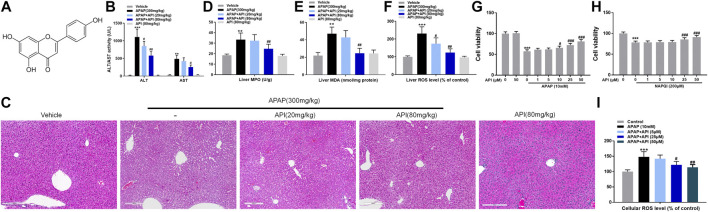
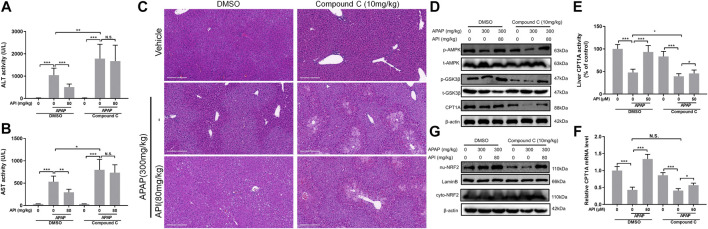
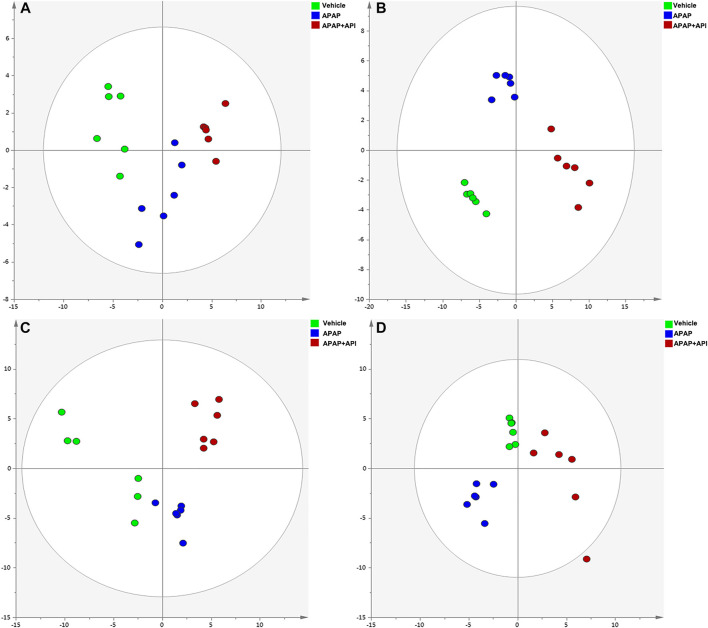
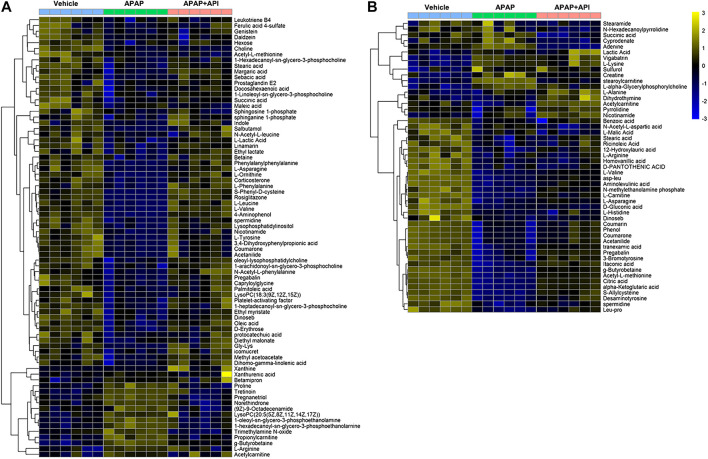
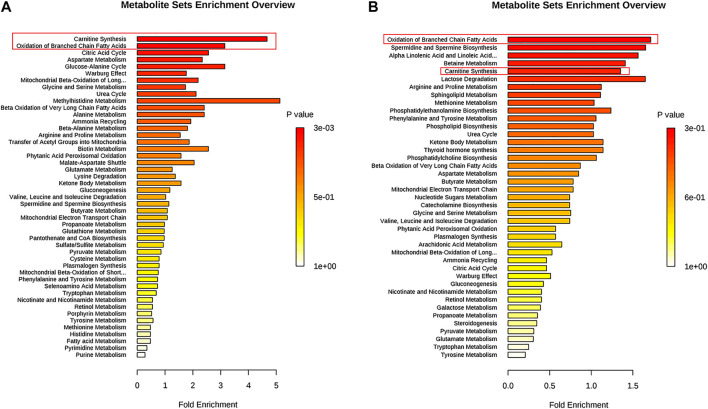
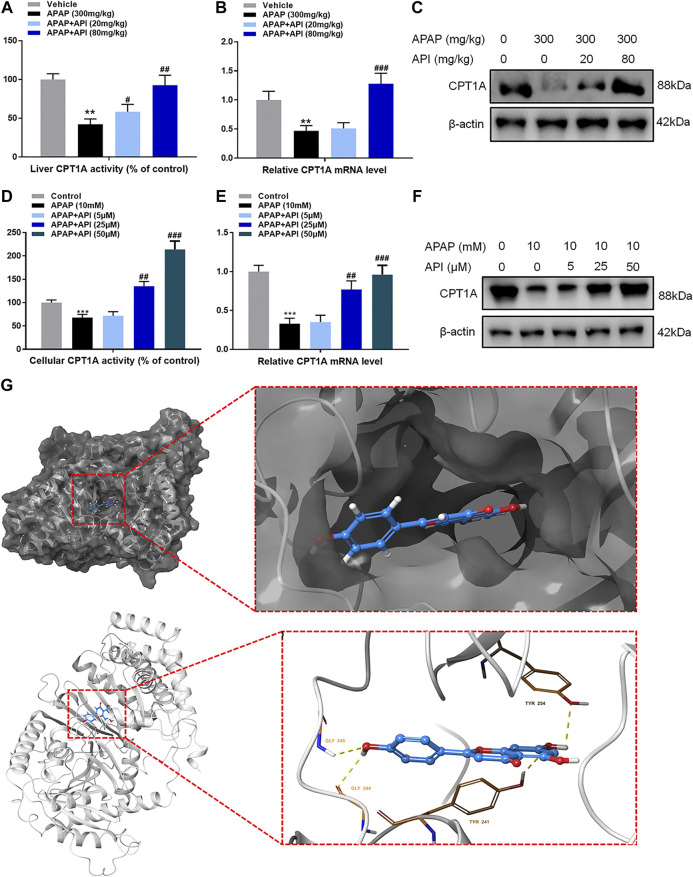
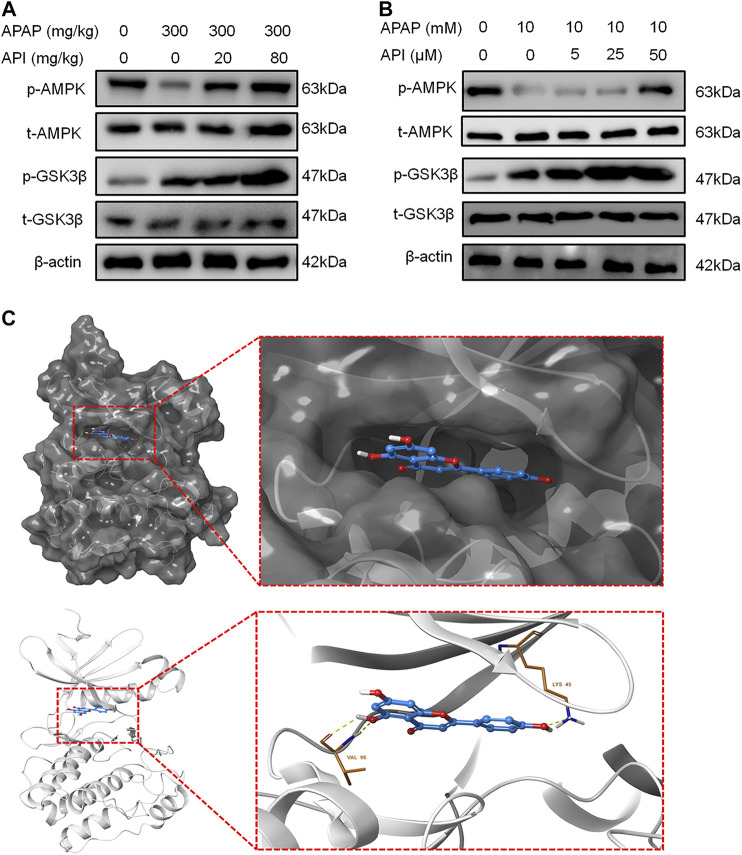
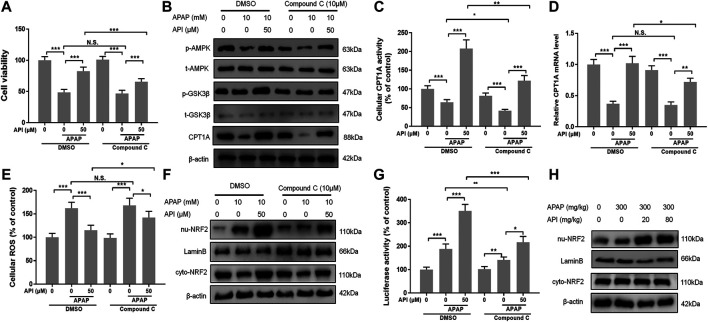
Overuse of acetaminophen (APAP) is a major cause of drug-induced liver failure at the clinics. Apigenin (API) is a natural flavonoid derived from The aim of the present study was to investigate the amelioration function of API in APAP-induced hepatotoxicity both and and investigate its potential mechanisms. Analysis results of the activities of serum alanine and aspartate aminotransferases (ALT and AST), malondialdehyde, myeloperoxidase (MPO), and reactive oxygen species (ROS) demonstrated therapeutic effects of API. MTT assay results revealed that API attenuated APAP and its metabolic product, N-acetyl-p-benzoquinone imine (NAPQI) induced cytotoxicity in a dose-dependent manner in human liver cells, L-02 cells. Subsequently, metabolomic results of cells and serum analyses demonstrated an aberrant level of carnitine palmitoyltransferase I (CPT1A). We established that API stimulated CPT1A activity in mice liver tissues and L-02 cells. Molecular docking analyses revealed potential interaction of API with CPT1A. Further investigation of the role of CPT1A in L0-2 cells revealed that API reversed cytotoxicity the AMP-activated protein kinase (AMPK)/GSK-3β signaling pathway and compound C, which is a selective AMPK inhibitor, inhibited activation of CPT1A induced by API. API was bound to the catalytic region of AMPK as indicated by molecular docking results. In addition, compound C suppressed nuclear translocation of nuclear factor erythroid 2-related factor 2 (NRF2) that is enhanced by API and inhibited the antioxidative function of API. In summary, the study demonstrates that API attenuates APAP-induced hepatotoxicity by activating the AMPK/GSK-3β signaling pathway, which subsequently promotes CPT1A activity and activates the NRF2 antioxidant pathway.
对乙酰氨基酚(APAP)的过度使用是临床上药物性肝衰竭的主要原因。芹菜素(API)是一种天然黄酮类化合物,来源于……本研究的目的是研究API对APAP诱导的肝毒性的改善作用,并探讨其潜在机制。血清丙氨酸和天冬氨酸转氨酶(ALT和AST)、丙二醛、髓过氧化物酶(MPO)和活性氧(ROS)活性的分析结果证明了API的治疗效果。MTT试验结果显示,API在人肝细胞L-02细胞中以剂量依赖的方式减轻APAP及其代谢产物N-乙酰对苯醌亚胺(NAPQI)诱导的细胞毒性。随后,细胞和血清分析的代谢组学结果显示肉碱棕榈酰转移酶I(CPT1A)水平异常。我们确定API刺激小鼠肝组织和L-02细胞中CPT1A的活性。分子对接分析揭示了API与CPT1A的潜在相互作用。对CPT1A在L0-2细胞中作用的进一步研究表明,API通过AMP激活蛋白激酶(AMPK)/糖原合成酶激酶-3β(GSK-3β)信号通路逆转细胞毒性,而选择性AMPK抑制剂化合物C抑制API诱导的CPT1A激活。分子对接结果表明API与AMPK的催化区域结合。此外,化合物C抑制了API增强的核因子红细胞2相关因子2(NRF2)的核转位,并抑制了API的抗氧化功能。总之,该研究表明API通过激活AMPK/GSK-3β信号通路减轻APAP诱导的肝毒性,随后促进CPT1A活性并激活NRF2抗氧化途径。