Loeuille Benoit, Thode Verônica, Siniscalchi Carolina, Andrade Sonia, Rossi Magdalena, Pirani José Rubens
Departamento de Botânica, Universidade Federal de Pernambuco, Recife, Pernambuco, Brazil.
Instituto de Biociências, Universidade Federal do Rio Grande do Sul, Porto Alegre, Rio Grande do Sul, Brazil.
PeerJ. 2021 Feb 24;9:e10886. doi: 10.7717/peerj.10886. eCollection 2021.
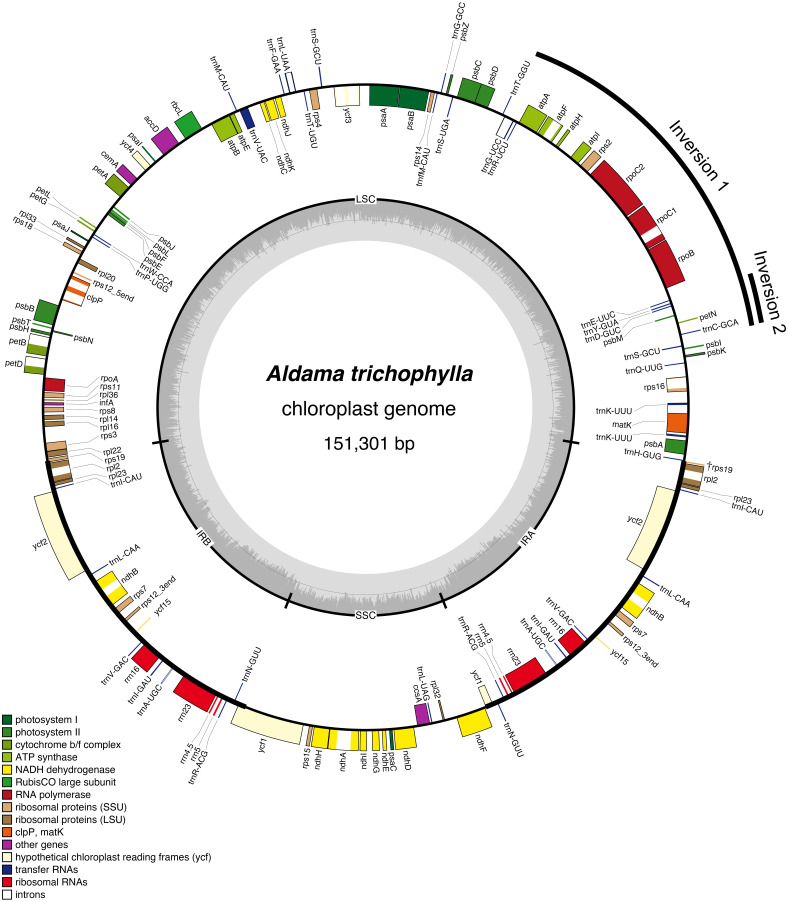
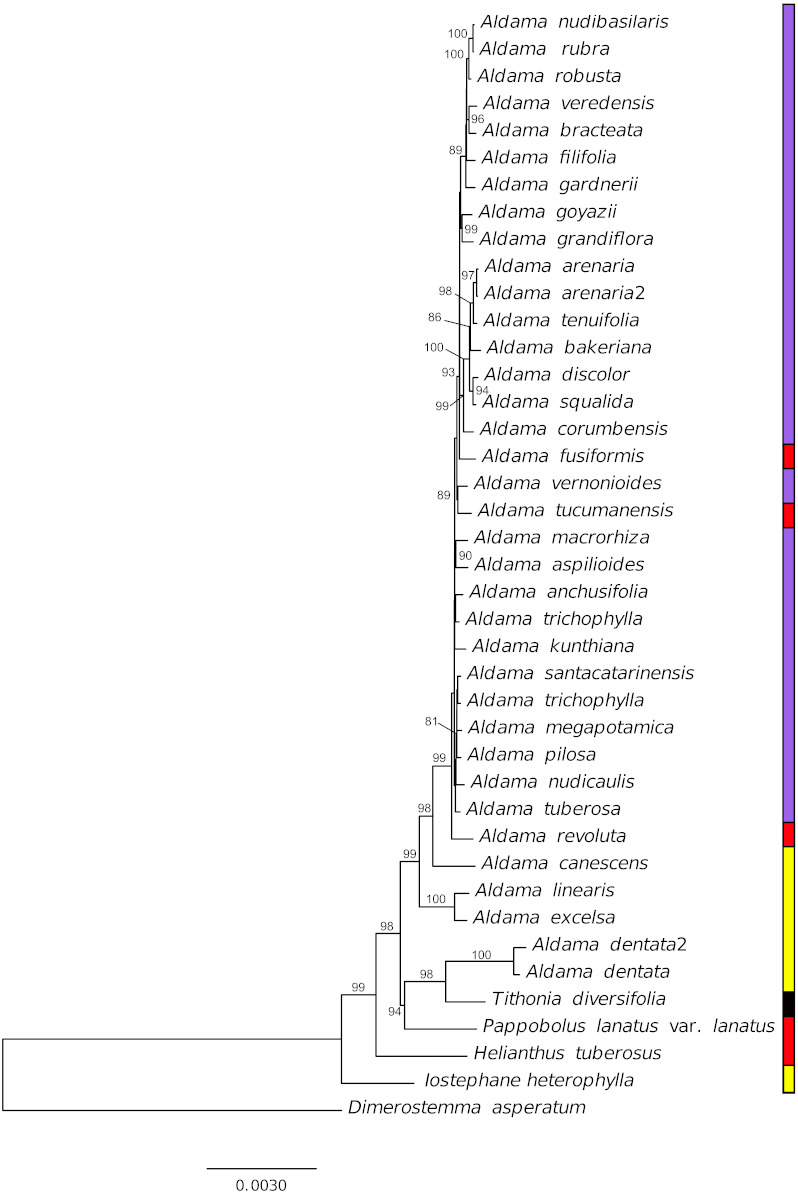
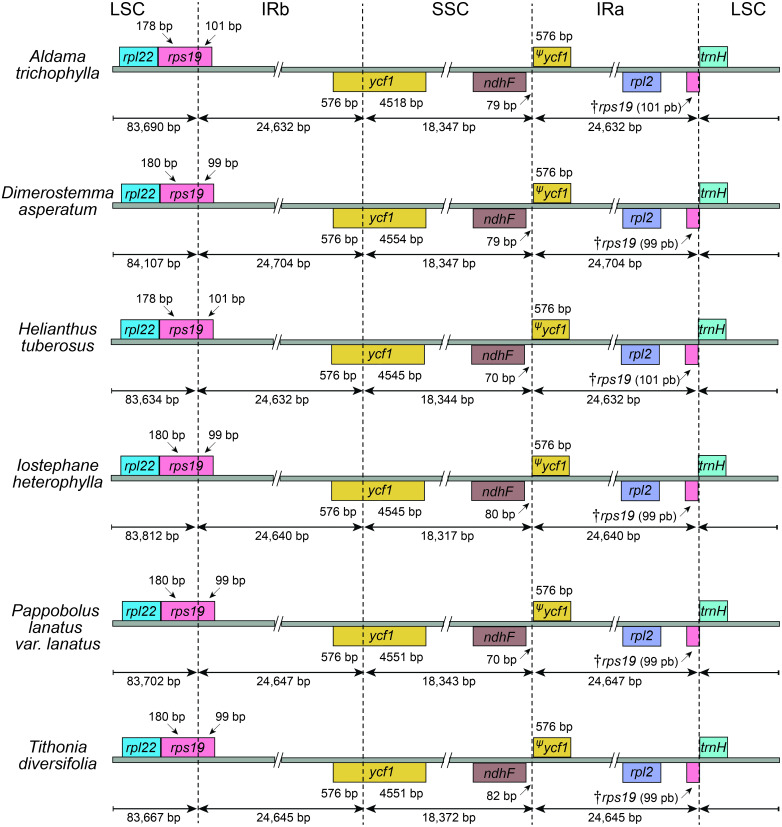
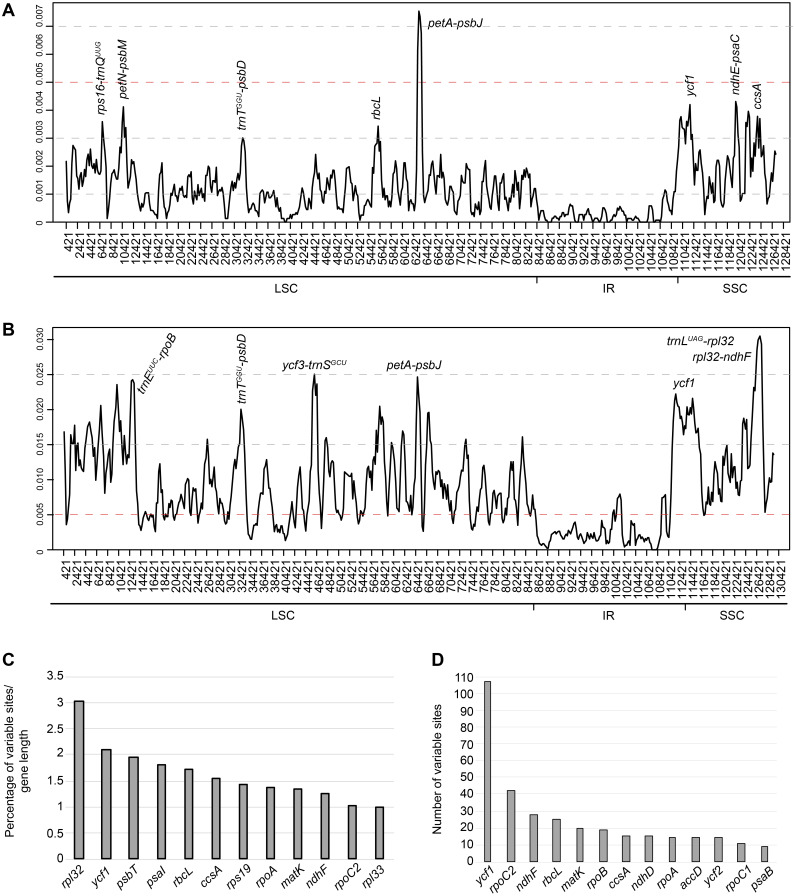
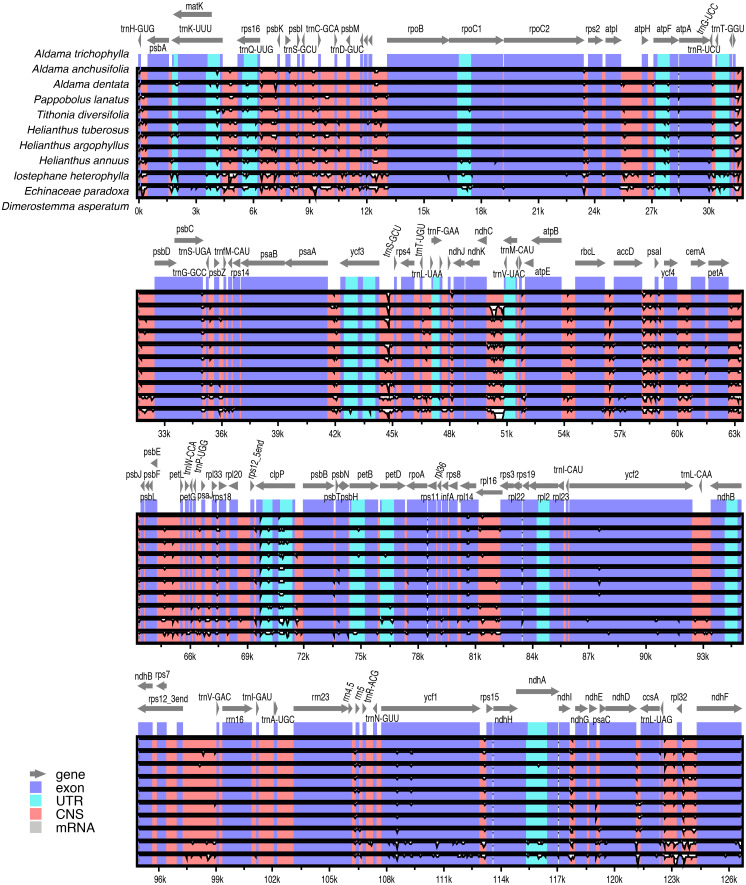
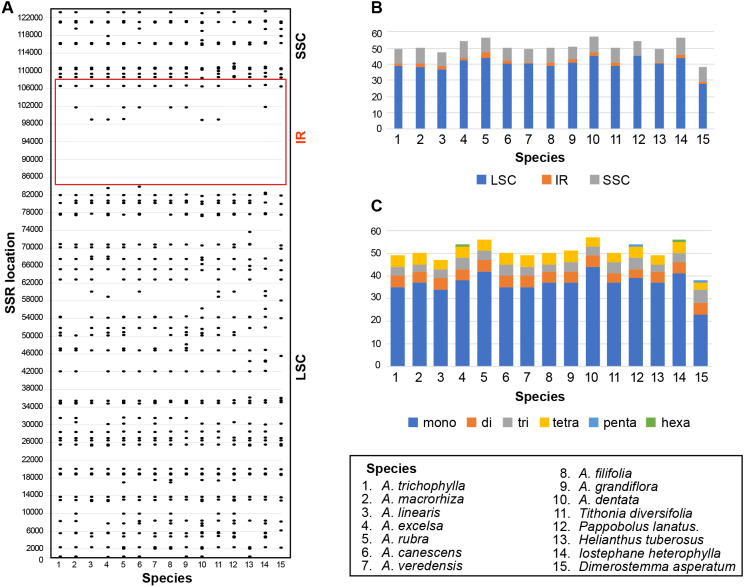
(Heliantheae, Asteraceae) is a diverse genus in the sunflower family. To date, nearly 200 Asteraceae chloroplast genomes have been sequenced, but the plastomes of remain undescribed. Plastomes in Asteraceae usually show little sequence divergence, consequently, our hypothesis is that species of will be overall conserved. In this study, we newly sequenced 36 plastomes of and of five species belonging to other Heliantheae genera selected as outgroups (i.e., var. We analyzed the structure and gene content of the assembled plastomes and performed comparative analyses within and with other closely related genera. As expected, plastomes are very conserved, with the overall gene content and orientation being similar in all studied species. The length of the plastome is also consistent and the junction between regions usually contain the same genes and have similar lengths. A large ∼20 kb and a small ∼3 kb inversion were detected in the Large Single Copy (LSC) regions of all assembled plastomes, similarly to other Asteraceae species. The nucleotide diversity is very low, with only 1,509 variable sites in 127,466 bp (i.e., 1.18% of the sites in the alignment of 36 plastomes, with one of the IRs removed, is variable). Only one gene, , shows signatures of positive selection. The plastomes of the selected outgroups feature a similar gene content and structure compared to and also present the two inversions in the LSC region. Deletions of different lengths were observed in the gene . Multiple SSRs were identified for the sequenced and outgroups. The phylogenetic analysis shows that is not monophyletic due to the position of the Mexican species . All Brazilian species form a strongly supported clade. Our results bring new understandings into the evolution and diversity of plastomes at the species level.
(菊科向日葵族)是向日葵科中一个多样化的属。迄今为止,已对近200个菊科叶绿体基因组进行了测序,但[该属某些物种]的质体基因组仍未被描述。菊科的质体基因组通常显示出很少的序列差异,因此,我们的假设是[该属某些物种]的物种在整体上是保守的。在本研究中,我们新测序了36个[该属某些物种]的质体基因组以及另外五个被选作外类群的向日葵族其他属的物种(即[具体物种名称]变种)。我们分析了组装后的质体基因组的结构和基因内容,并在[该属某些物种]内部以及与其他近缘属进行了比较分析。正如预期的那样,[该属某些物种]的质体基因组非常保守,所有研究物种的整体基因内容和方向相似。质体基因组的长度也一致,区域之间的连接处通常包含相同的基因且长度相似。与其他菊科物种类似,在所有组装的质体基因组的大单拷贝(LSC)区域检测到一个大约20 kb的大倒位和一个大约3 kb的小倒位。核苷酸多样性非常低,在127,466 bp中只有1,509个可变位点(即36个[该属某些物种]质体基因组比对中,去除其中一个IR后的位点中有1.18%是可变的)。只有一个基因[具体基因名称]显示出正选择的特征。所选外类群的质体基因组与[该属某些物种]具有相似的基因内容和结构,并且在LSC区域也存在这两个倒位。在[基因名称]基因中观察到不同长度的缺失。为测序的[该属某些物种]和外类群鉴定出多个简单序列重复(SSR)。系统发育分析表明,由于墨西哥物种[具体物种名称]的位置,[该属某些物种]不是单系的。所有巴西物种形成一个得到有力支持的分支。我们的结果为物种水平上质体基因组的进化和多样性带来了新的认识。