Chung Wei-Pang, Huang Wei-Lun, Liao Wei-An, Huang Wan-Ling, Liu You-Yu, Su Wu-Chou
Institute of Clinical Medicine, College of Medicine, National Cheng Kung University, Tainan, Taiwan.
Department of Oncology, National Cheng Kung University Hospital, College of Medicine, National Cheng Kung University, Tainan, Taiwan.
Cancer Med. 2021 Apr;10(7):2370-2379. doi: 10.1002/cam4.3824. Epub 2021 Mar 5.
Patients with human epidermal growth factor receptor 2 (HER2)-positive breast cancer who fail to respond to anti-HER2 treatments have poor prognoses. Most trastuzumab-resistant breast cancer cell lines available from biobanks feature either phosphoinositide-3-kinase, catalytic, alpha (PIK3CA) mutation or the loss of phosphatase and tensin homolog (PTEN). However, PIK3CA mutations and/or PTEN loss do not account for most trastuzumab-resistant tumors in humans.
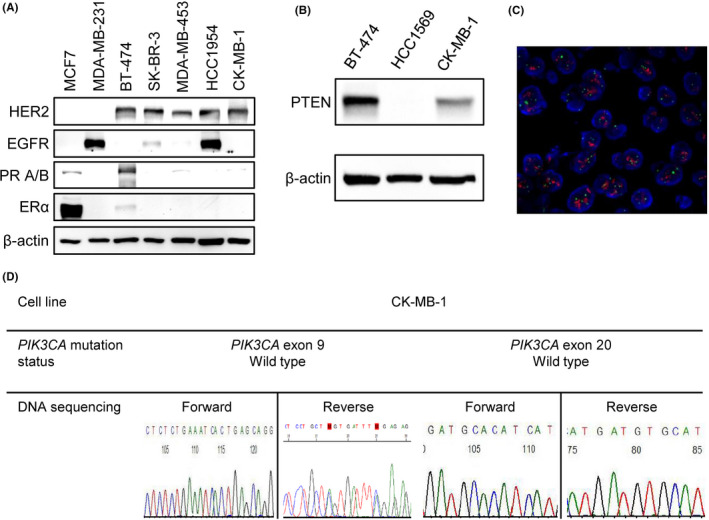
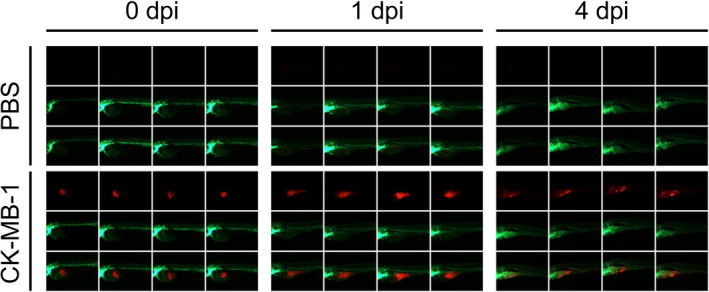
Breast cancer cells were collected from one patient's malignant ascites. These cells were cultured and maintained to develop a stable cell line, which we named CK-MB-1. We used western blotting to evaluate protein expression. The PIK3CA status of CK-MB-1 cells was analyzed using Sanger sequencing and validated using next-generation sequencing. In vivo, CK-MB-1 xenograft tumor models were developed in zebrafish and immunodeficient mice.
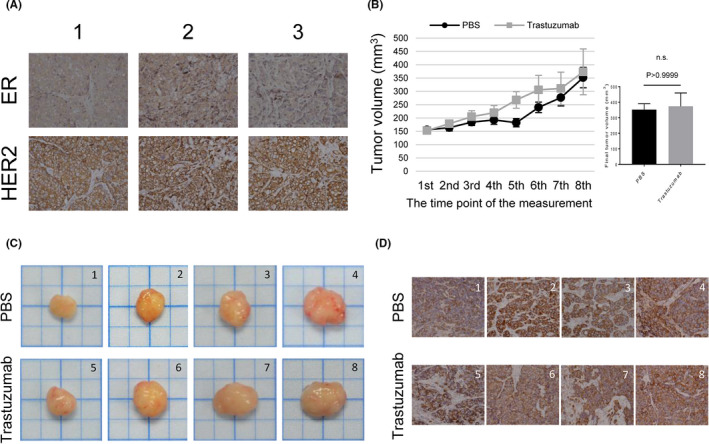
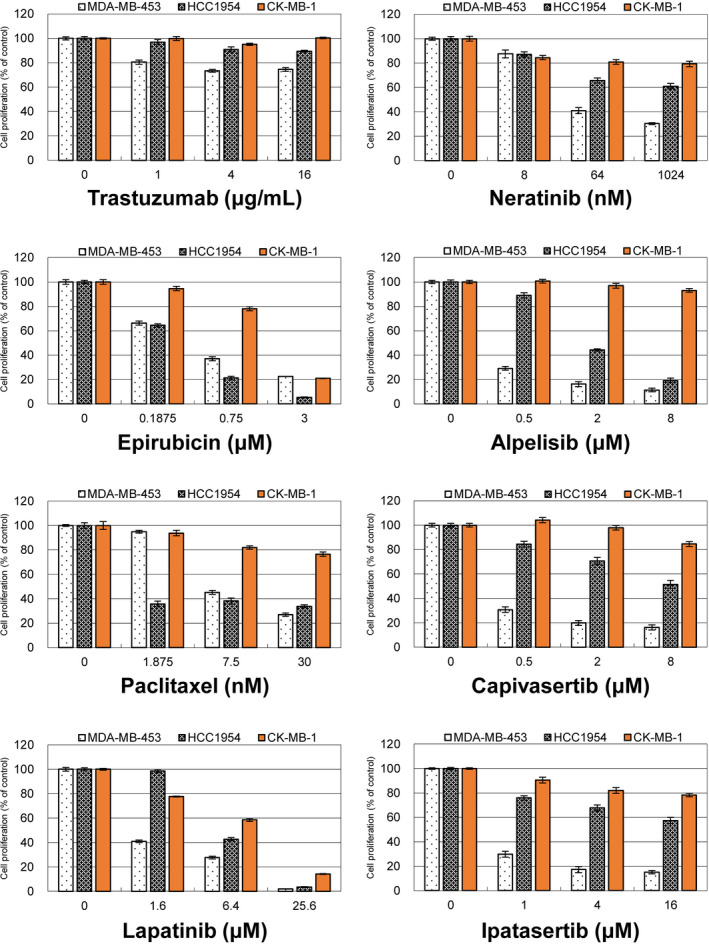
CK-MB-1 cells maintained the major characteristics of the parental tumor including HER2 positivity and estrogen receptor negativity. The HER2 gene amplification of CK-MB-1 cells was detected by fluorescence in situ hybridization. The integrity of PTEN was confirmed by its positive protein expression and the absence of gene mutations. No common PIK3CA mutation was detected. Compared with the findings in two other HER2-positive trastuzumab-resistant cell lines, CK-MB-1 cells exhibited greater resistance to trastuzumab, chemotherapeutics, and small-molecule drugs. Trastuzumab resistance in CK-MB-1 cells was confirmed in vivo using the NOD SCID mouse model.
CK-MB-1 cells represent a stable HER2-positive trastuzumab-resistant breast cancer cell line. The resistance of CK-MB-1 cells does not originate from the PTEN or phosphoinositide 3-kinase signaling pathway, which can provide an alternative approach for potential drugs.
人表皮生长因子受体2(HER2)阳性乳腺癌患者若对抗HER2治疗无反应,则预后较差。生物样本库提供的大多数曲妥珠单抗耐药乳腺癌细胞系具有磷酸肌醇-3-激酶催化亚基α(PIK3CA)突变或磷酸酶及张力蛋白同源物(PTEN)缺失的特征。然而,PIK3CA突变和/或PTEN缺失并不能解释大多数人类曲妥珠单抗耐药肿瘤。
从一名患者的恶性腹水中收集乳腺癌细胞。对这些细胞进行培养和维持以建立一个稳定的细胞系,我们将其命名为CK-MB-1。我们使用蛋白质印迹法评估蛋白质表达。使用桑格测序法分析CK-MB-1细胞的PIK3CA状态,并使用下一代测序法进行验证。在体内,在斑马鱼和免疫缺陷小鼠中建立CK-MB-1异种移植肿瘤模型。
CK-MB-1细胞保留了亲本肿瘤的主要特征,包括HER2阳性和雌激素受体阴性。通过荧光原位杂交检测到CK-MB-1细胞的HER2基因扩增。通过PTEN阳性蛋白质表达和无基因突变证实了PTEN的完整性。未检测到常见的PIK3CA突变。与另外两种HER2阳性曲妥珠单抗耐药细胞系的结果相比,CK-MB-1细胞对曲妥珠单抗、化疗药物和小分子药物表现出更大的耐药性。使用NOD SCID小鼠模型在体内证实了CK-MB-1细胞中的曲妥珠单抗耐药性。
CK-MB-1细胞代表一种稳定的HER2阳性曲妥珠单抗耐药乳腺癌细胞系。CK-MB-1细胞的耐药性并非源于PTEN或磷酸肌醇3-激酶信号通路,这可为潜在药物提供一种替代方法。