Cipriano Matheus Aparecido Pereira, Freitas-Iório Raquel de Paula, Dimitrov Maurício Rocha, de Andrade Sara Adrián López, Kuramae Eiko Eurya, Silveira Adriana Parada Dias da
Centro de Solos e Recursos Agroambientais, Instituto Agronômico, IAC, 13020-902 Campinas, São Paulo, Brazil.
Microbial Ecology Department, Netherlands Institute of Ecology, NIOO-KNAW, 6708 PB Wageningen, The Netherlands.
Microorganisms. 2021 Feb 25;9(3):479. doi: 10.3390/microorganisms9030479.
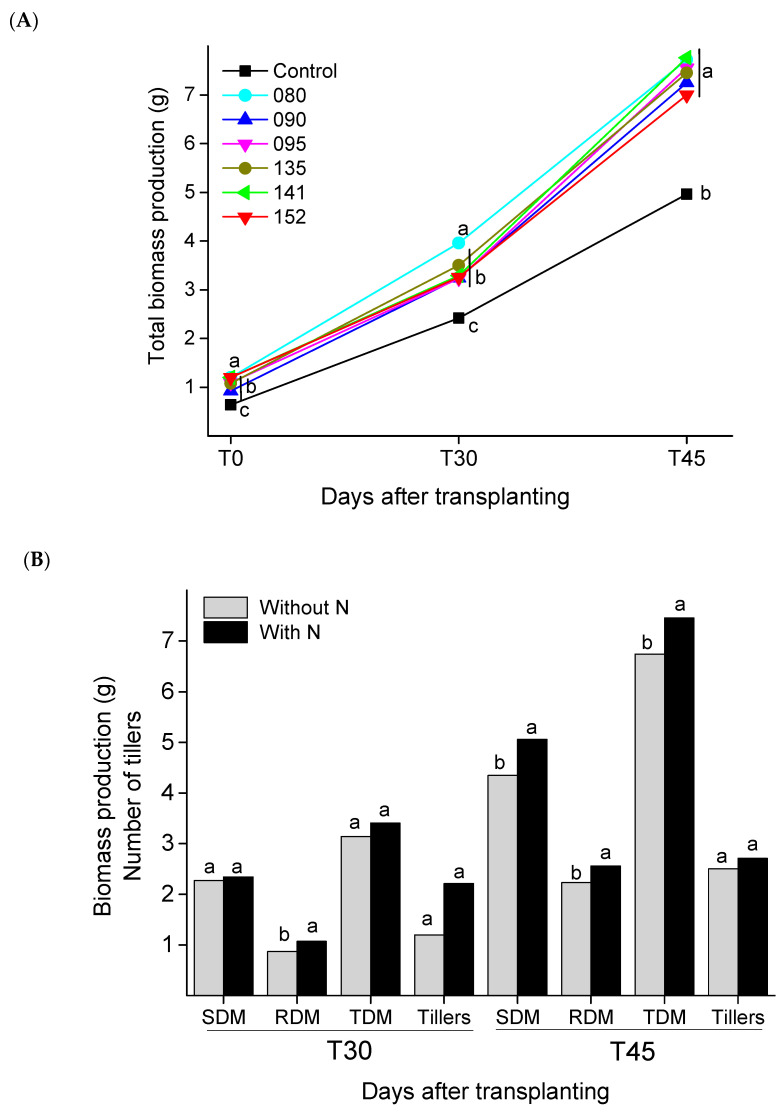
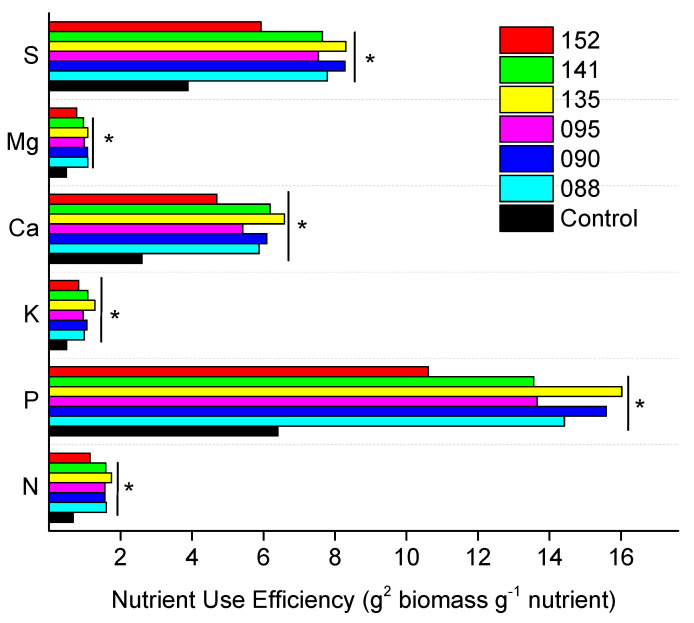
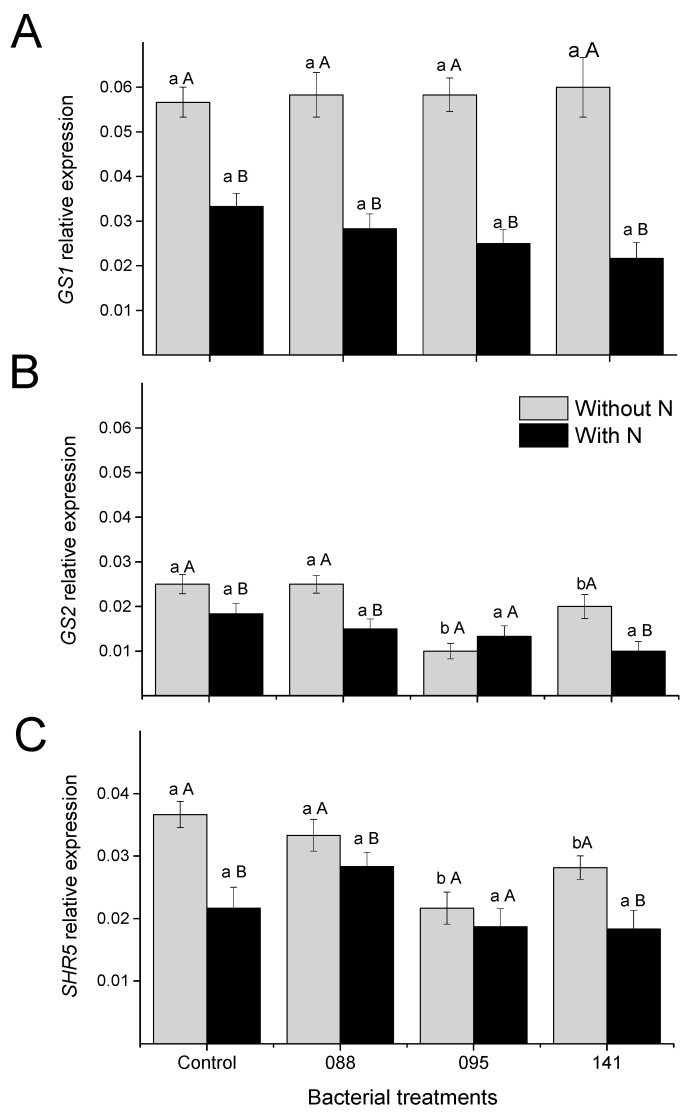
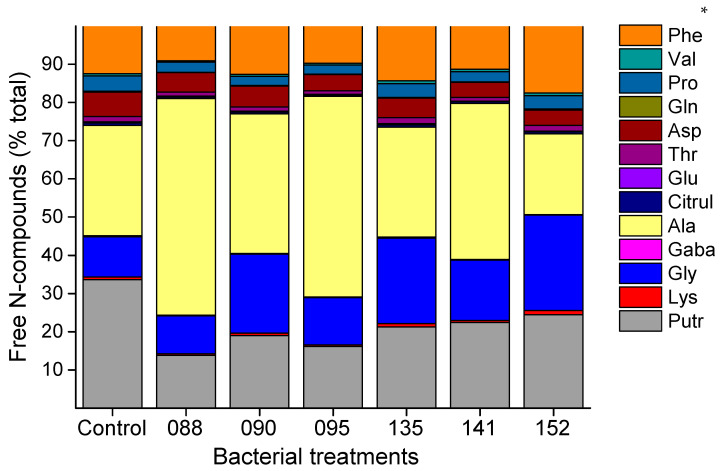
Beneficial plant-microbe interactions lead to physiological and biochemical changes that may result in plant-growth promotion. This study evaluated the effect of the interaction between sugarcane and endophytic bacterial strains on plant physiological and biochemical responses under two levels of nitrogen (N) fertilization. Six strains of endophytic bacteria, previously selected as plant growth-promoting bacteria (PGPB), were used to inoculate sugarcane mini stalks, with and without N fertilization. After 45 days, biomass production; shoot nutrient concentrations; foliar polyamine and free amino acid profiles; activities of nitrate reductase and glutamine synthase; and the relative transcript levels of the , , and genes in sugarcane leaves were determined. All six endophytic strains promoted sugarcane growth, increasing shoot and root biomass, plant nutritional status, and the use efficiency of most nutrients. The inoculation-induced changes at the biochemical level altered the foliar free amino acid and polyamine profiles, mainly regarding the relative concentrations of citrulline, putrescine, glycine, alanine, glutamate, glutamine, proline, and aspartate. The transcription of , , and was higher in the N fertilized seedlings, and almost not altered by endophytic bacterial strains. The endophytic strains promoted sugarcane seedlings growth mainly by improving nutrient efficiency. This improvement could not be explained by their ability to induce the production of amino acid and polyamine composts, or , , and , showing that complex interactions may be associated with enhancement of the sugarcane seedlings' performance by endophytic bacteria. The strains demonstrated biotechnological potential for sugarcane seedling production.
有益的植物-微生物相互作用会导致生理和生化变化,这可能促进植物生长。本研究评估了甘蔗与内生细菌菌株之间的相互作用在两种施氮水平下对植物生理和生化反应的影响。六种先前被选为植物促生细菌(PGPB)的内生细菌菌株用于接种甘蔗微型茎段,分别在施氮和不施氮的情况下。45天后,测定生物量生产、地上部养分浓度、叶片多胺和游离氨基酸谱、硝酸还原酶和谷氨酰胺合成酶的活性,以及甘蔗叶片中、和基因的相对转录水平。所有六种内生菌株均促进了甘蔗生长,增加了地上部和根部生物量、植物营养状况以及大多数养分的利用效率。接种诱导的生化水平变化改变了叶片游离氨基酸和多胺谱,主要涉及瓜氨酸、腐胺、甘氨酸、丙氨酸、谷氨酸、谷氨酰胺、脯氨酸和天冬氨酸的相对浓度。在施氮的幼苗中,、和的转录较高,且几乎不受内生细菌菌株的影响。内生菌株主要通过提高养分效率促进甘蔗幼苗生长。这种改善无法通过它们诱导氨基酸和多胺复合物或、和产生的能力来解释,这表明复杂的相互作用可能与内生细菌增强甘蔗幼苗性能有关。这些菌株在甘蔗幼苗生产中显示出生物技术潜力。