Cancer and Inflammation Program, Olivia Newton-John Cancer Research Institute and School of Cancer Medicine, La Trobe University, Heidelberg, VIC 3084, Australia.
Int J Mol Sci. 2021 Feb 19;22(4):2067. doi: 10.3390/ijms22042067.
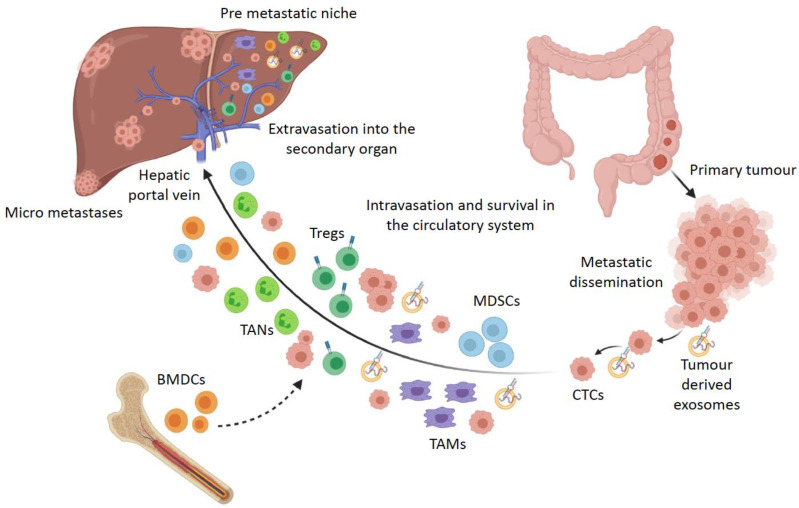
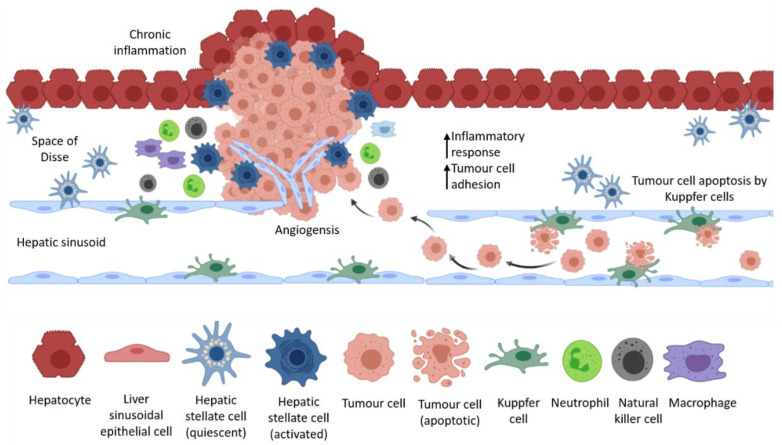
Liver metastasis is the primary contributor to the death of patients with colorectal cancer. Despite the overall success of current treatments including targeted therapy, chemotherapy, and immunotherapy combinations in colorectal cancer patients, the prognosis of patients with liver metastasis remains poor. Recent studies have highlighted the importance of the tumour microenvironment and the crosstalk within that determines the fate of circulating tumour cells in distant organs. Understanding the interactions between liver resident cells and tumour cells colonising the liver opens new therapeutic windows for the successful treatment of metastatic colorectal cancer. Here we discuss critical cellular interactions within the tumour microenvironment in primary tumours and in liver metastases that highlight potential therapeutic targets. We also discuss recent therapeutic advances for the treatment of metastatic colorectal cancer.
肝转移是导致结直肠癌患者死亡的主要原因。尽管目前针对结直肠癌患者的治疗方法(包括靶向治疗、化疗和免疫治疗联合)总体上取得了成功,但肝转移患者的预后仍然较差。最近的研究强调了肿瘤微环境及其内部相互作用的重要性,这些相互作用决定了循环肿瘤细胞在远处器官中的命运。了解驻留于肝脏的细胞与在肝脏中定植的肿瘤细胞之间的相互作用,为成功治疗转移性结直肠癌开辟了新的治疗窗口。在这里,我们讨论了原发肿瘤和肝转移灶中肿瘤微环境内的关键细胞相互作用,这些相互作用突出了潜在的治疗靶点。我们还讨论了转移性结直肠癌治疗的最新治疗进展。