Department of Neurology, University of Mississippi Medical Center, Jackson, MS 39216, USA.
Department of Pharmacology and Toxicology, University of Mississippi Medical Center, Jackson, MS 39216, USA.
Int J Mol Sci. 2021 Feb 19;22(4):2074. doi: 10.3390/ijms22042074.
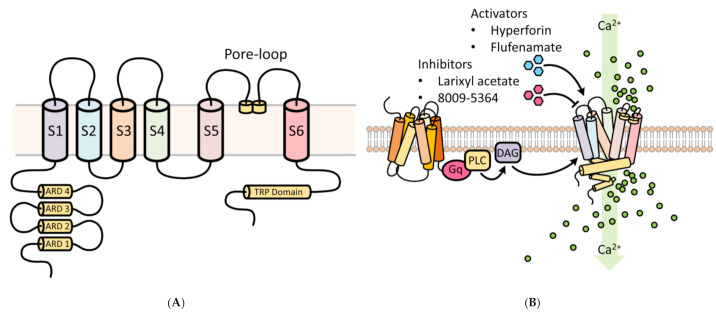
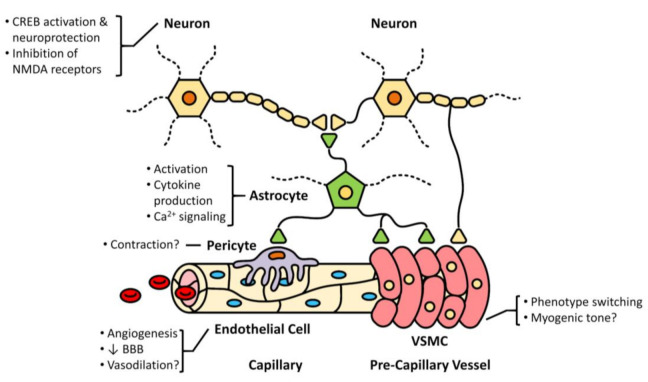
Ischemic stroke is one of the most disabling diseases and a leading cause of death globally. Despite advances in medical care, the global burden of stroke continues to grow, as no effective treatments to limit or reverse ischemic injury to the brain are available. However, recent preclinical findings have revealed the potential role of transient receptor potential cation 6 (TRPC6) channels as endogenous protectors of neuronal tissue. Activating TRPC6 in various cerebral ischemia models has been found to prevent neuronal death, whereas blocking TRPC6 enhances sensitivity to ischemia. Evidence has shown that Ca influx through TRPC6 activates the cAMP (adenosine 3',5'-cyclic monophosphate) response element-binding protein (CREB), an important transcription factor linked to neuronal survival. Additionally, TRPC6 activation may counter excitotoxic damage resulting from glutamate release by attenuating the activity of N-methyl-d-aspartate (NMDA) receptors of neurons by posttranslational means. Unresolved though, are the roles of TRPC6 channels in non-neuronal cells, such as astrocytes and endothelial cells. Moreover, TRPC6 channels may have detrimental effects on the blood-brain barrier, although their exact role in neurovascular coupling requires further investigation. This review discusses evidence-based cell-specific aspects of TRPC6 in the brain to assess the potential targets for ischemic stroke management.
缺血性中风是全球最致残的疾病之一,也是主要死因之一。尽管医疗保健取得了进步,但由于没有有效的治疗方法来限制或逆转大脑的缺血性损伤,中风的全球负担仍在继续增加。然而,最近的临床前发现揭示了瞬时受体电位阳离子通道 6(TRPC6)作为神经元组织内源性保护者的潜在作用。在各种脑缺血模型中激活 TRPC6 已被发现可防止神经元死亡,而阻断 TRPC6 则增强了对缺血的敏感性。有证据表明,通过 TRPC6 的 Ca 内流激活了 cAMP(环磷酸腺苷)反应元件结合蛋白(CREB),这是与神经元存活相关的重要转录因子。此外,TRPC6 的激活可能通过翻译后方式减轻神经元 NMDA(N-甲基-D-天冬氨酸)受体的活性,从而抵消谷氨酸释放引起的兴奋性毒性损伤。然而,TRPC6 通道在非神经元细胞(如星形胶质细胞和内皮细胞)中的作用仍未解决。此外,TRPC6 通道可能对血脑屏障有不良影响,尽管它们在神经血管耦联中的确切作用仍需要进一步研究。这篇综述讨论了大脑中基于证据的细胞特异性 TRPC6 方面,以评估缺血性中风管理的潜在靶点。