Rabost-Garcia Genís, Farré-Lladós Josep, Casals-Terré Jasmina
Department of Mechanical Engineering, MicroTech Lab, Universitat Politècnica de Catalunya (UPC), C/Colom 7-11, 08222 Terrassa, Spain.
Onalabs Inno-hub S.L., C/de la Llibertat 11, 08012 Barcelona, Spain.
Membranes (Basel). 2021 Feb 21;11(2):150. doi: 10.3390/membranes11020150.
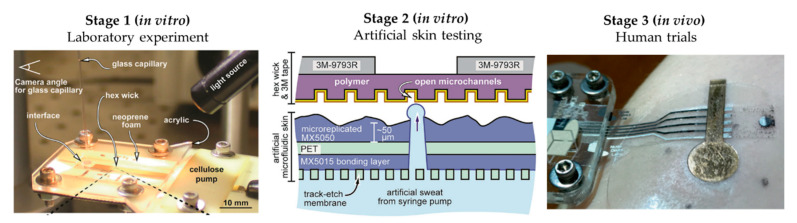
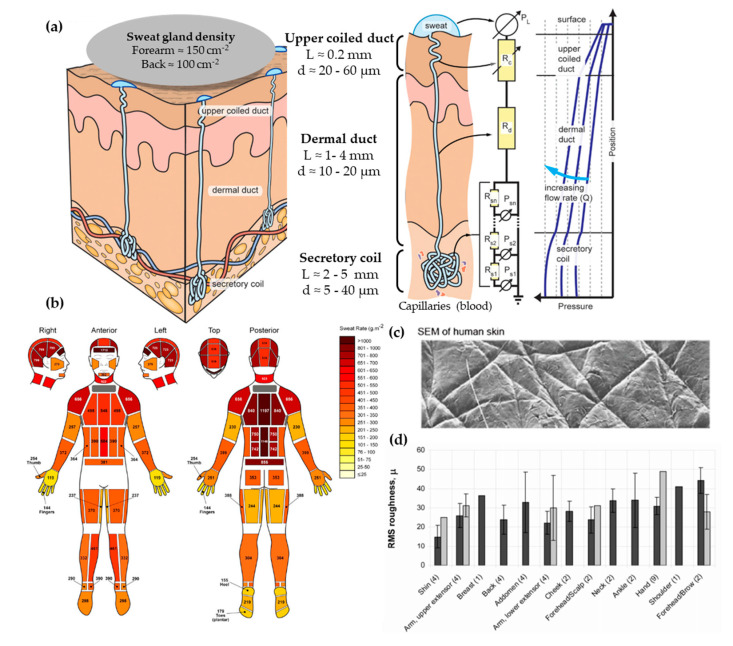
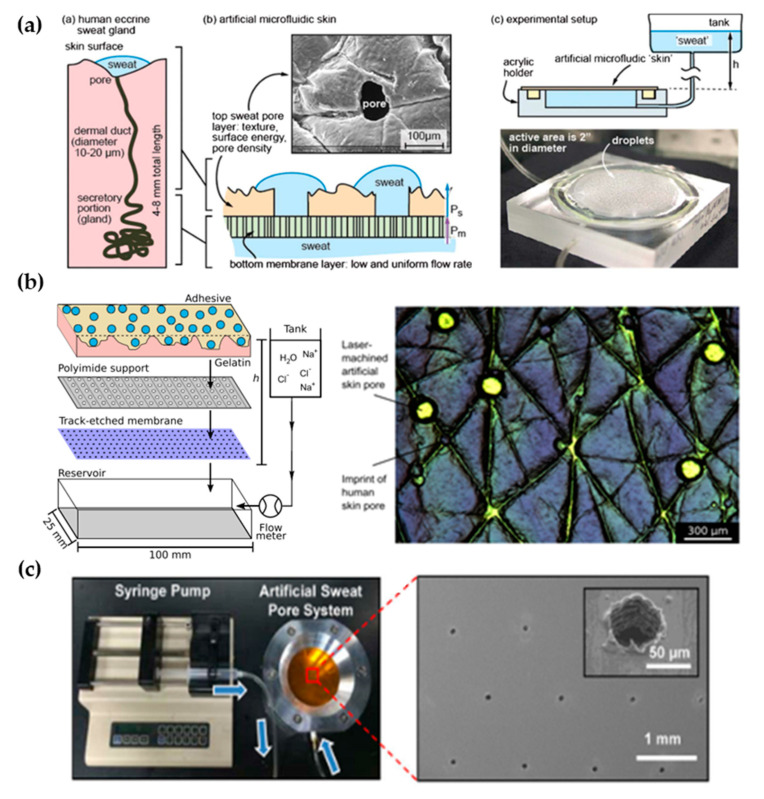
Skin models offer an in vitro alternative to human trials without their high costs, variability, and ethical issues. Perspiration models, in particular, have gained relevance lately due to the rise of sweat analysis and wearable technology. The predominant approach to replicate the key features of perspiration (sweat gland dimensions, sweat rates, and skin surface characteristics) is to use laser-machined membranes. Although they work effectively, they present some limitations at the time of replicating sweat gland dimensions. Alternative strategies in terms of fabrication and materials have also showed similar challenges. Additional research is necessary to implement a standardized, simple, and accurate model representing sweating for wearable sensors testing.
皮肤模型为人体试验提供了一种体外替代方案,避免了人体试验的高成本、变异性和伦理问题。特别是由于汗液分析和可穿戴技术的兴起,汗液模型近来受到了关注。复制汗液关键特征(汗腺尺寸、出汗率和皮肤表面特征)的主要方法是使用激光加工的膜。尽管它们效果良好,但在复制汗腺尺寸时存在一些局限性。在制造工艺和材料方面的替代策略也面临类似挑战。为了实现一个用于可穿戴传感器测试的标准化、简单且准确的出汗模型,还需要进行更多研究。