Department of Human Nutrition, University of Otago, PO Box 56, Dunedin 9054, New Zealand.
Department of Medicine, University of Otago, PO Box 56, Dunedin 9054, New Zealand.
Nutrients. 2021 Feb 18;13(2):657. doi: 10.3390/nu13020657.
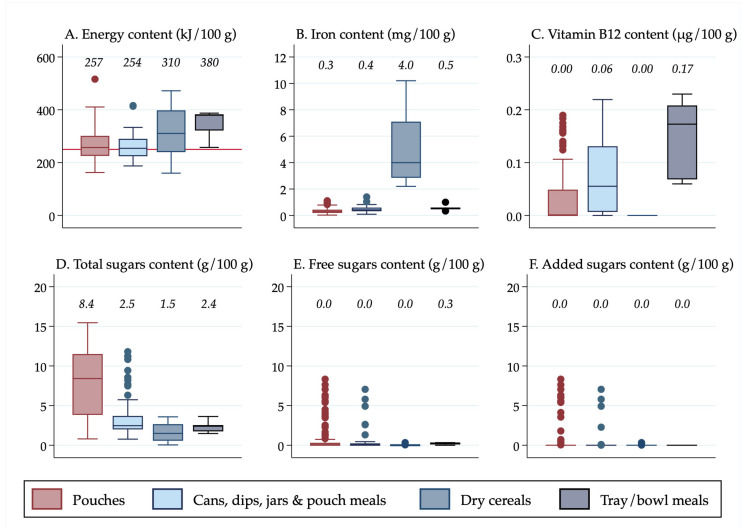
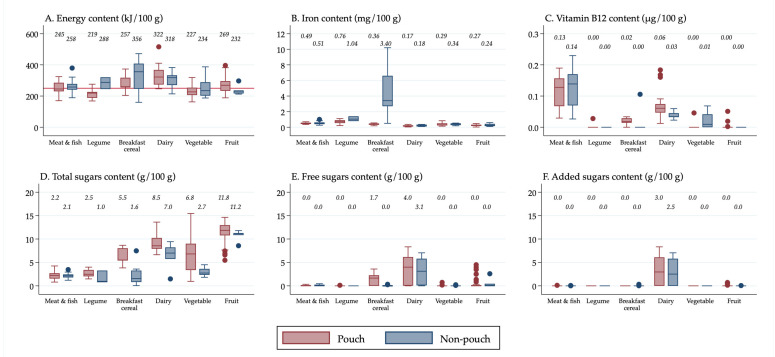
There has been an important shift in the New Zealand infant food market over the past decade, with the majority of complementary foods now sold in "pouches". Along with the increasing market share of commercial infant food pouches internationally, there have been growing concerns about their nutritional quality. However, research examining the nutritional quality of these pouches compared to other forms of commercial infant foods in New Zealand has not been undertaken. Nor have any studies reported the free sugars or added sugars content of these foods. To address this knowledge gap, a cross-sectional survey of infant foods sold in New Zealand supermarkets was conducted in 2019-2020. Recipes and nutrient lines were developed for the 266 foods identified (133 food pouches). The energy, iron, vitamin B12, total sugars, free sugars, and added sugars content of infant food pouches and other forms of commercial infant foods per 100 g were compared, both within food groups and by age group. Infant food pouches contained similar median amounts of energy, iron, and vitamin B12 to other forms of commercial infant foods but contained considerably more total sugars (8.4 g/100 g vs. 2.3 g/100 g). However, median free sugars and added sugars content was very low across all food groups except for "dairy" and "sweet snacks". All "dry cereals" were fortified with iron whereas none of the infant food pouches were. Therefore, consuming food pouches to the exclusion of other commercial infant foods may place infants at risk of iron deficiency if they do not receive sufficient iron from other sources.
在过去十年中,新西兰婴儿食品市场发生了重要转变,大多数补充食品现在以“袋装”形式销售。随着商业婴儿食品袋在国际市场上的份额不断增加,人们对其营养质量的担忧也与日俱增。然而,关于这些袋装食品与新西兰其他商业婴儿食品的营养质量的研究尚未开展。也没有任何研究报告这些食品的游离糖或添加糖含量。为了解决这一知识空白,我们在 2019-2020 年对新西兰超市销售的婴儿食品进行了横断面调查。为确定的 266 种食品(133 种食品袋)制定了配方和营养成分线。比较了婴儿食品袋和其他形式的商业婴儿食品每 100 克的能量、铁、维生素 B12、总糖、游离糖和添加糖含量,既包括食品组内,也包括年龄组内。与其他形式的商业婴儿食品相比,婴儿食品袋的能量、铁和维生素 B12 含量中位数相近,但总糖含量(8.4 克/100 克比 2.3 克/100 克)高得多。然而,除了“乳制品”和“甜零食”外,所有食品组的游离糖和添加糖含量中位数都非常低。所有“干麦片”都强化了铁,而没有一种婴儿食品袋强化了铁。因此,如果婴儿不从其他来源获得足够的铁,仅食用袋装食品而不食用其他商业婴儿食品,可能会面临缺铁的风险。