Department of Cell and Chemical Biology, Leiden University Medical Center, 2333 ZC Leiden, The Netherlands.
Department of Surgery, Leiden University Medical Center, 2333 ZC Leiden, The Netherlands.
Int J Mol Sci. 2021 Feb 18;22(4):2010. doi: 10.3390/ijms22042010.
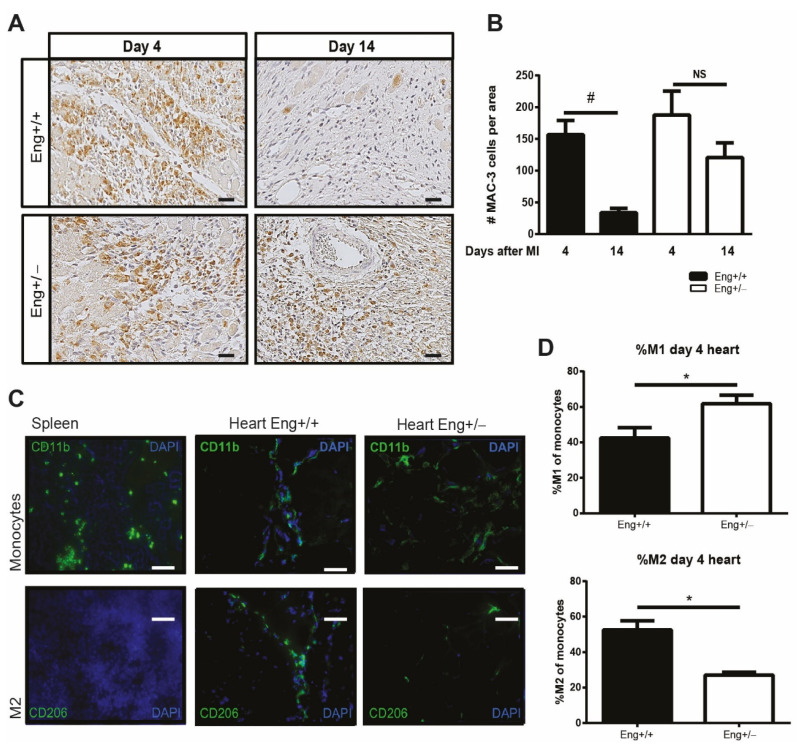
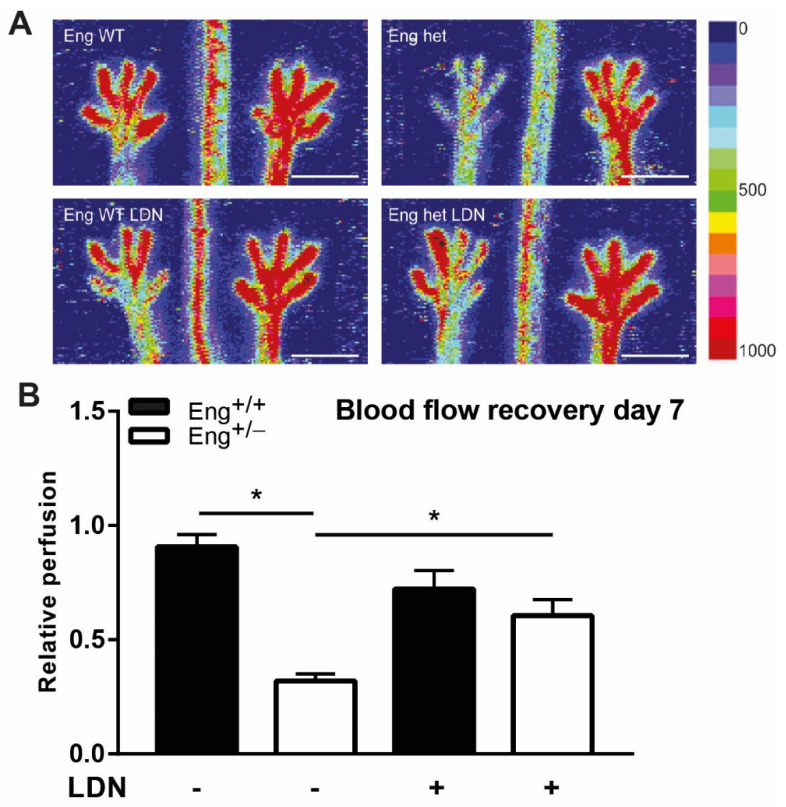
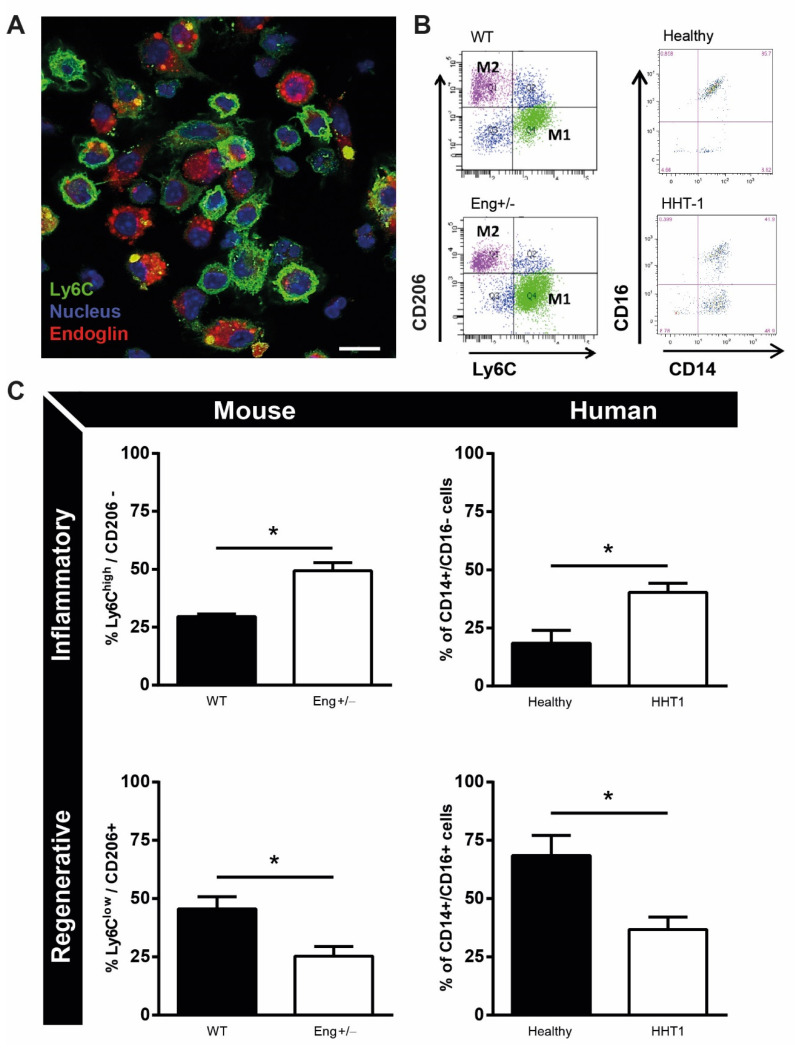
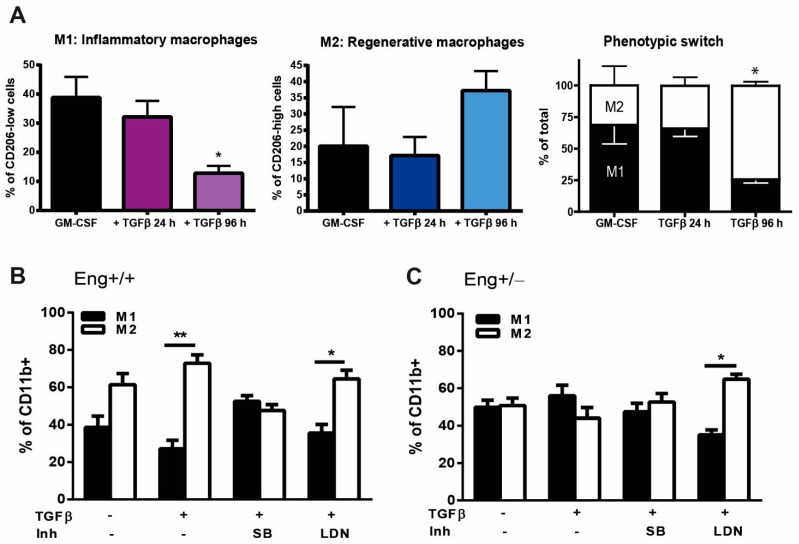
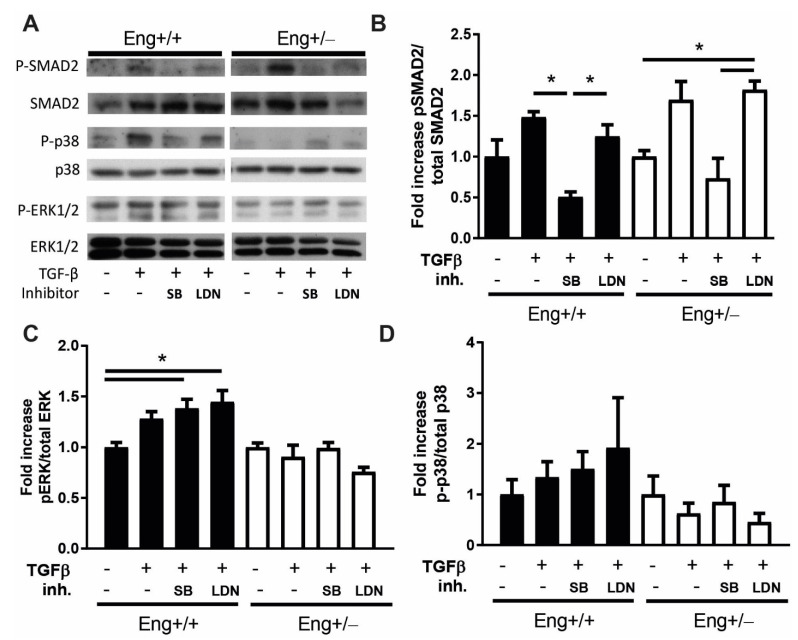
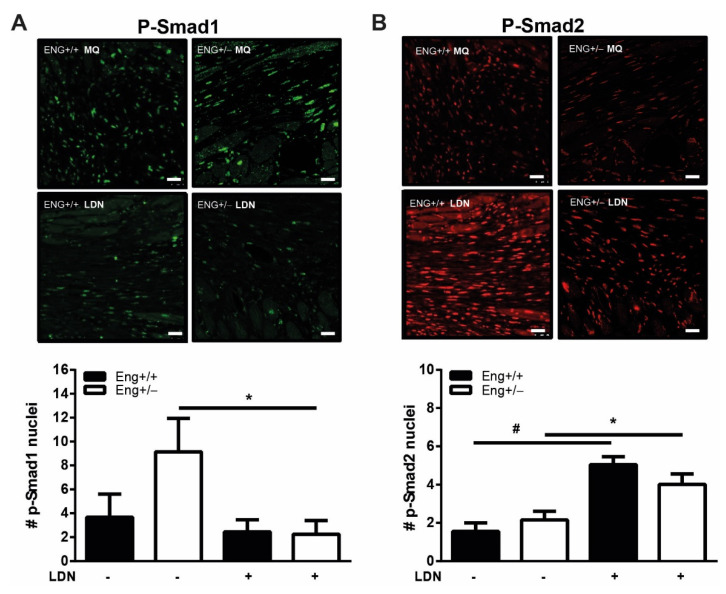
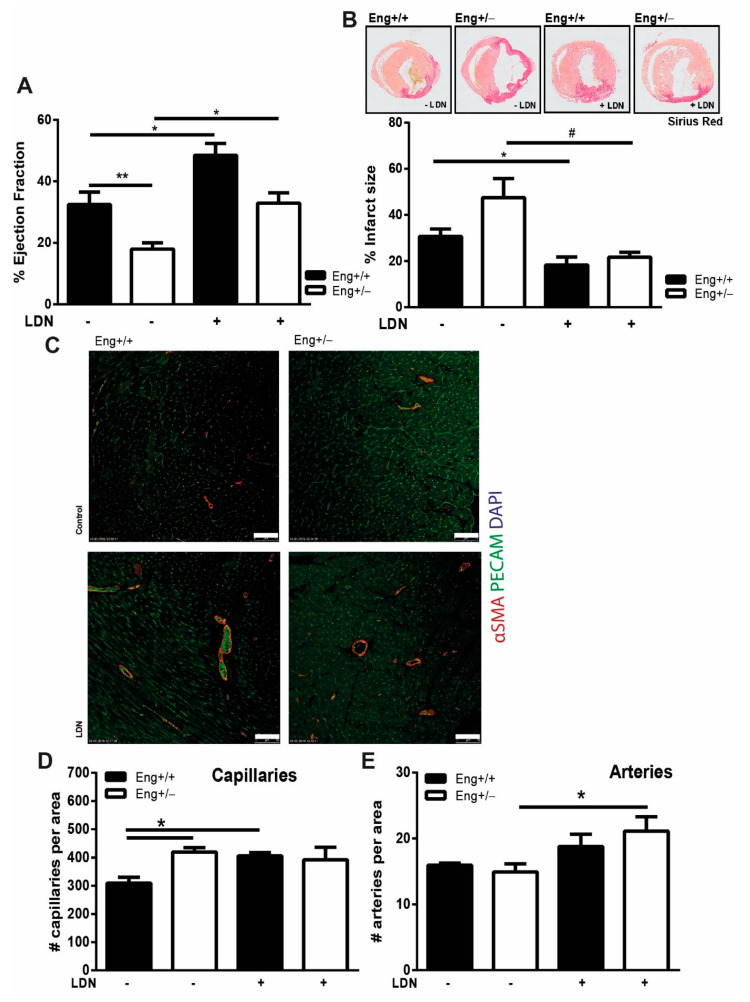
Hereditary hemorrhagic telangiectasia type 1 (HHT1) is a severe vascular disorder caused by mutations in the TGFβ/BMP co-receptor . Endoglin haploinsufficiency results in vascular malformations and impaired neoangiogenesis. Furthermore, HHT1 patients display an impaired immune response. To date it is not fully understood how haploinsufficient immune cells contribute to HHT1 pathology. Therefore, we investigated the immune response during tissue repair in mice, a model for HHT1. +/- mice exhibited prolonged infiltration of macrophages after experimentally induced myocardial infarction. Moreover, there was an increased number of inflammatory M1-like macrophages (Ly6C/CD206) at the expense of reparative M2-like macrophages (Ly6C/CD206). Interestingly, HHT1 patients also showed an increased number of inflammatory macrophages. In vitro analysis revealed that TGFβ-induced differentiation of monocytes into M2-like macrophages was blunted. Inhibiting BMP signaling by treating monocytes with LDN-193189 normalized their differentiation. Finally, LDN treatment improved heart function after MI and enhanced vascularization in both wild type and mice. The beneficial effect of LDN was also observed in the hind limb ischemia model. While blood flow recovery was hampered in vehicle-treated animals, LDN treatment improved tissue perfusion recovery in mice. In conclusion, BMPR kinase inhibition restored HHT1 macrophage imbalance in vitro and improved tissue repair after ischemic injury in mice.
遗传性出血性毛细血管扩张症 1 型(HHT1)是一种严重的血管疾病,由 TGFβ/BMP 共受体的突变引起。内皮糖蛋白单倍不足导致血管畸形和新生血管生成受损。此外,HHT1 患者表现出免疫应答受损。迄今为止,不完全清楚单倍不足的免疫细胞如何导致 HHT1 病理学。因此,我们研究了组织修复过程中的免疫反应在 HHT1 模型 +/- 小鼠中,实验性诱导心肌梗死后,巨噬细胞浸润时间延长。此外,炎症性 M1 样巨噬细胞(Ly6C/CD206)的数量增加,而修复性 M2 样巨噬细胞(Ly6C/CD206)的数量减少。有趣的是,HHT1 患者也表现出炎症性巨噬细胞数量增加。体外分析显示,TGFβ诱导单核细胞分化为 M2 样巨噬细胞的能力减弱。通过用 LDN-193189 处理单核细胞抑制 BMP 信号可使它们的分化正常化。最后,LDN 治疗改善了 MI 后的心脏功能,并增强了野生型和 +/- 小鼠的血管生成。LDN 治疗在下肢缺血模型中也观察到了有益的效果。在接受载体处理的动物中,血流恢复受到阻碍,而 LDN 治疗改善了 +/- 小鼠的组织灌注恢复。总之,BMPR 激酶抑制在体外恢复了 HHT1 巨噬细胞失衡,并改善了缺血性损伤后 +/- 小鼠的组织修复。