Denninger Alexander, Westedt Ulrich, Wagner Karl G
Department of Pharmaceutical Technology, University of Bonn, Gerhard-Domagk-Straße 3, 53121 Bonn, Germany.
AbbVie Deutschland GmbH & Co. KG, Knollstrasse, D-67061 Ludwigshafen, Germany.
Pharmaceutics. 2021 Feb 22;13(2):285. doi: 10.3390/pharmaceutics13020285.
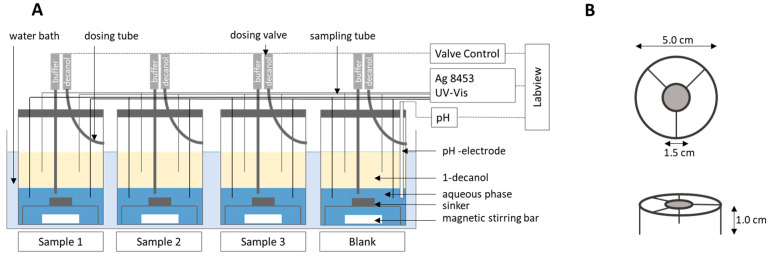
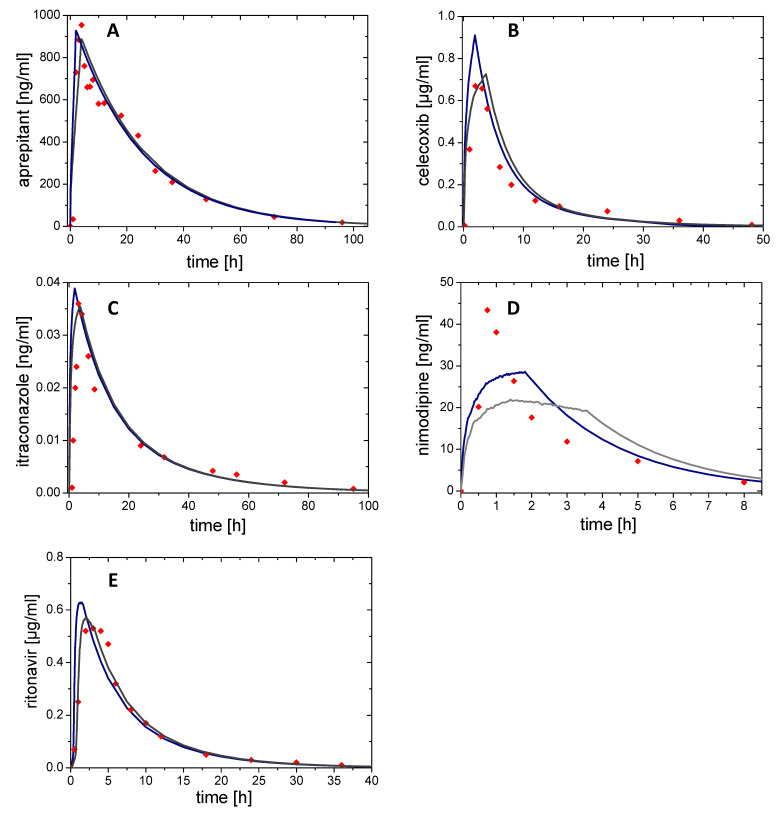
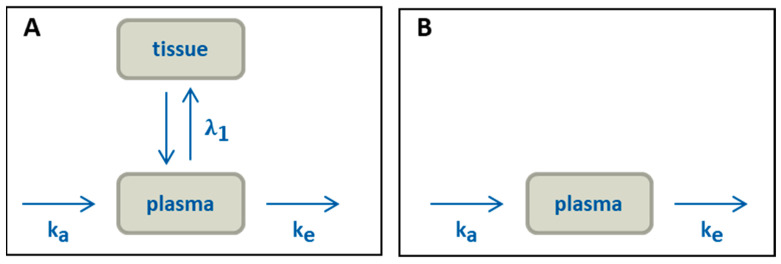
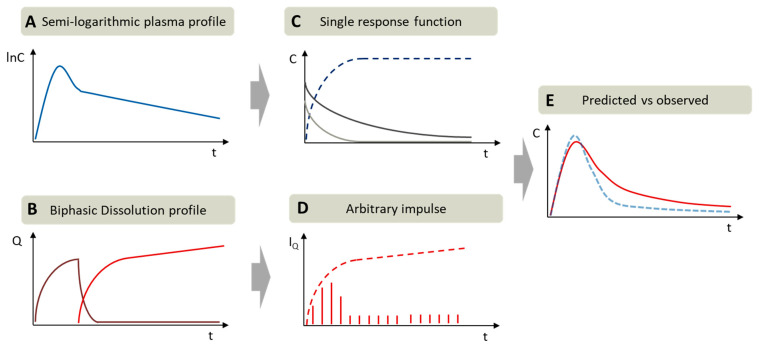
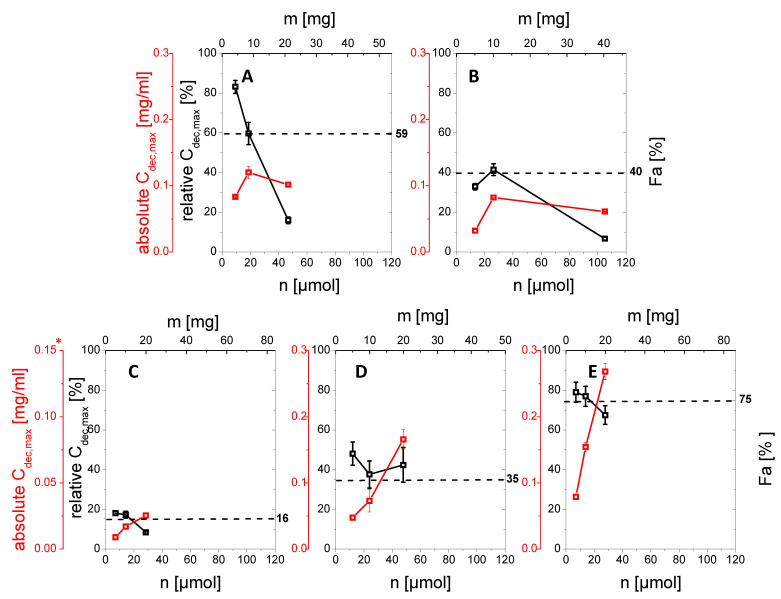
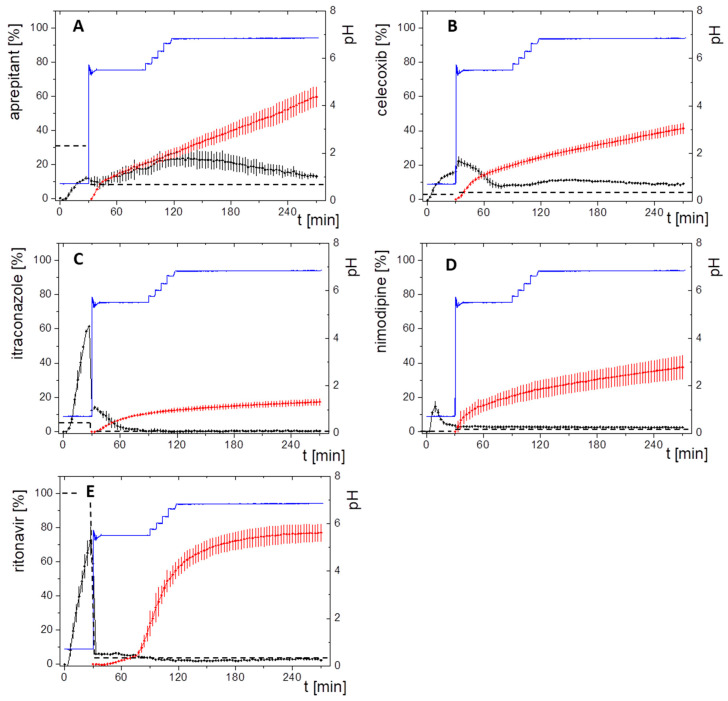
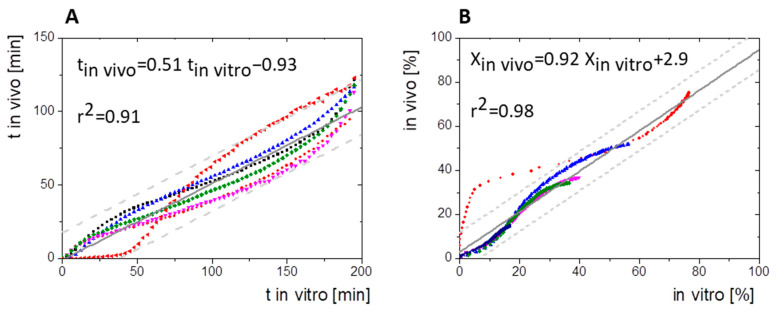
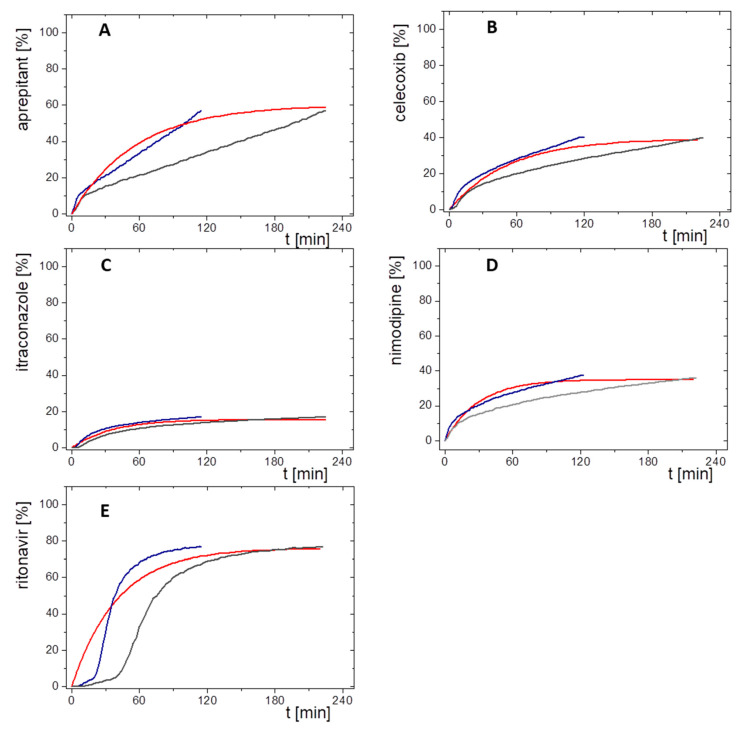
The present study intended to confirm the in vivo relevance of the BiPHa+ biphasic dissolution assay using a single set of assay parameters. Herein, we evaluated five commercial drug products formulated by various enabling formulation principles under fasted conditions using the BiPHa+ assay. The in vitro partitioning profiles in the organic phase were compared with human pharmacokinetic data obtained from literature. In the first part, a meaningful in vitro dose of the formulations was assessed by determining the maximum drug concentration in the artificial absorption sink during dissolution (organic 1-decanol layer, ). Then, the maximum concentration of the partitioned drug in the organic layer was correlated with the in vivo fraction absorbed, which was derived from published human pharmacokinetic data. Fraction absorbed represents the percentage, which is absorbed from the intestine without considering first pass. It was found that the maximum drug concentration in the organic phase obtained from an in vitro dose of ten milligrams, which is equivalent to 15-25 µmol of the respective drug, led to the highest congruency with the fraction absorbed in vivo. In the second part, the in vivo relevance of the BiPHa+ dissolution data was verified by establishing a shared in vitro/in vivo relationship including all formulations. Based on the in vitro kinetics of the BiPHa+ experiments human in vivo plasma profiles were predicted using convolutional modelling approach. Subsequently, the calculated pharmacokinetic profiles were compared with in vivo performance of the studied drug products to assess the predictive power of the BiPHa+ assay. The BiPHa+ assay demonstrated biorelevance for the investigated in vitro partitioning profiles using a single set of assay parameters, which was verified based on human pharmacokinetic data of the five drug products.
本研究旨在使用单一组测定参数来证实BiPHa+双相溶出度测定在体内的相关性。在此,我们使用BiPHa+测定法在禁食条件下评估了五种基于不同赋形原理配制的市售药品。将有机相中的体外分配曲线与从文献中获得的人体药代动力学数据进行比较。在第一部分中,通过确定溶出过程中人工吸收池(有机1-癸醇层)中的最大药物浓度来评估制剂有意义的体外剂量。然后,将有机层中分配药物的最大浓度与体内吸收分数相关联,该吸收分数源自已发表的人体药代动力学数据。吸收分数表示从肠道吸收的百分比,不考虑首过效应。结果发现,从十毫克的体外剂量获得的有机相中的最大药物浓度,相当于各自药物的15 - 25微摩尔,与体内吸收分数具有最高的一致性。在第二部分中,通过建立包括所有制剂的体外/体内共同关系来验证BiPHa+溶出数据在体内的相关性。基于BiPHa+实验的体外动力学,使用卷积建模方法预测人体体内血浆曲线。随后,将计算得到的药代动力学曲线与所研究药品的体内性能进行比较,以评估BiPHa+测定法的预测能力。BiPHa+测定法使用单一组测定参数证明了所研究的体外分配曲线的生物相关性,这是基于五种药品的人体药代动力学数据得到验证的。